




Tinubu’s Washington Gambit: Minerals, Trump and the FBI Files Shadowing 2027
The firm, Von Batten-Montague-York, alleged that highly placed Nigerians had expressed confidence that the FBI and Drug Enforcement Administration would not release the records. It also cited claims...
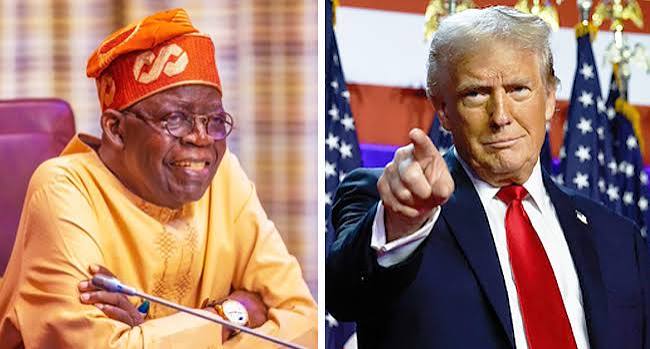
- The controversy surrounding President Bola Tinubu’s relationship with Washington intensified in September after a US lobbying firm working for former Vice President Atiku Abubakar questioned whether a proposed Tinubu–Donald Trump encounter and Nigeria’s emerging minerals partnership could have implications for the disclosure of the president’s historical FBI records.
The firm, Von Batten-Montague-York, alleged that highly placed Nigerians had expressed confidence that the FBI and Drug Enforcement Administration would not release the records. It also cited claims that the Nigerian Presidency believed a proposed meeting with Trump would proceed because the two sides had “settled the Americans”. The firm acknowledged that it had not independently verified the claims.
The allegations placed a proposed presidential encounter, Nigeria’s mineral investment diplomacy and Tinubu’s ongoing legal battle over the records into the same political conversation. They also raised questions about whether the administration’s growing engagement with Washington could have consequences beyond trade and investment.
The Presidency has rejected suggestions that Tinubu is prevented from travelling to the United States. Ademola Osodi, the president’s senior special assistant on foreign affairs and protocol, described the speculation as politically motivated and insisted that there was no impediment to Tinubu’s travel.
Tinubu ultimately did not attend the 81st United Nations General Assembly in New York, despite an earlier indication from Nigeria’s permanent representative to the UN, Jimoh Ibrahim, that the president intended to attend. Vice President Kashim Shettima led the Nigerian delegation instead.
The Presidency said Tinubu was on annual leave and needed to attend to domestic priorities, including the economy and security. His absence marked his third consecutive non-attendance at the General Assembly since 2023.
The diplomatic controversy deepened when Nigeria and the United States signed a framework agreement on September 24 to attract American investment into Nigeria’s solid minerals sector. The agreement was signed by Solid Minerals Development Minister Dele Alake and US Deputy Secretary of State Christopher Landau at the Nigerian Mission House in New York, on the sidelines of the General Assembly.
Nigeria’s government estimates the country’s mineral resources at approximately $700 billion. The framework covers geological exploration, mineral development and processing, infrastructure and technical capacity. It is intended to encourage commercial partnerships and investment, although the estimated value of the mineral endowment is not a measure of capital already committed.
The agreement gives Washington a potential partner in its effort to diversify strategic mineral supplies while offering Abuja an opportunity to attract investment beyond oil. For Tinubu, the potential economic benefits also carry domestic political significance as the country approaches the January 2027 presidential election.
A successful minerals programme could strengthen his claim that his administration is opening new economic opportunities. However, the electoral value of the agreement will depend on whether it produces actual investment, jobs, local processing and revenue rather than remaining a framework for future negotiations.
The proximity of the minerals agreement to the controversy over the FBI records has fuelled speculation about whether economic diplomacy and the president’s legal interests might intersect. The central allegation that Nigeria’s mineral resources could be part of an arrangement to prevent disclosure, has not been substantiated by documentary evidence made public in the reporting reviewed.
The records dispute itself is separate from the minerals negotiations. Tinubu’s lawyers have argued that US privacy and disclosure laws protect information in the FBI and DEA files and that the public interest does not justify releasing the unredacted material. The case stems from Freedom of Information Act requests by American transparency activist Aaron Greenspan.
In April 2025, a US federal judge rejected the FBI and DEA’s blanket refusal to confirm or deny the existence of responsive records. The ruling did not require the unconditional release of every document, leaving the agencies able to argue that particular material should remain withheld under applicable legal exemptions.
Tinubu’s legal challenge therefore turns on the scope of disclosure required by US law. The mining framework does not, on its face, determine the outcome of that litigation, and a commercial agreement between governments cannot automatically override the obligations governing a federal court case.
The political question is whether the expanding relationship between Abuja and Washington has influenced any decisions concerning the records. Establishing such a connection would require evidence of communications linking the minerals negotiations to the litigation, documented intervention by officials or testimony from participants with direct knowledge of the discussions.
The circumstances surrounding any proposed Tinubu–Trump encounter also remain significant. A private meeting between leaders would not, by itself, demonstrate an improper arrangement. Its relevance would depend on whether the meeting occurred, who participated, what was discussed and whether any commitments were made concerning the records or Nigeria’s mineral resources.
The unanswered questions place a premium on transparency from both governments. The full minerals framework, details of prospective investors, the terms of future concessions and the latest court filings would help clarify the commercial and legal issues independently of political speculation.
As the 2027 election approaches, Tinubu faces the challenge of converting international partnerships into domestic economic gains while managing renewed scrutiny of his historical US legal affairs. The minerals agreement could become an important component of his economic record, but it will be judged by its results and the transparency of its implementation.
For now, the allegations surrounding a possible Trump encounter and the suggestion of an understanding over the FBI files remain unverified. The established facts are that Nigeria has entered a new minerals investment framework with the United States, Tinubu has pursued legal protection for portions of the historical records, and his absence from UNGA has prompted political debate.
Whether these developments are connected by anything more than timing and diplomatic context remains the question at the centre of the controversy.






No Comment! Be the first one.