




Africa’s Digital Crime Economy: Ghana, Nigeria at the Centre of Global Crackdown on Online Scam Networks
Africa’s fight against transnational cybercrime has entered a critical phase following a coordinated international crackdown that disrupted suspected online scam networks operating in Nigeria, Ghana...
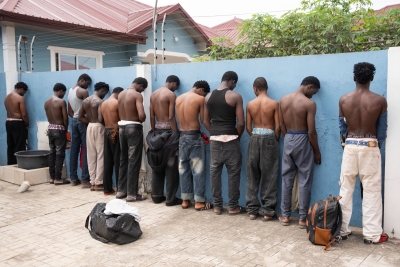
- International operation exposes the human-trafficking dimension of cybercrime, as authorities arrest 28 suspects, seize hundreds of devices and identify more than $11 million in potentially freezable funds
Africa’s fight against transnational cybercrime has entered a critical phase following a coordinated international crackdown that disrupted suspected online scam networks operating in Nigeria, Ghana and other parts of West Africa, exposing the links between digital fraud, human trafficking and the growing global criminal economy.
The operation, coordinated during a week of enforcement activities beginning October 6, 2026, brought together law enforcement agencies from Africa, Europe, North America and other regions, alongside major technology and financial services companies.

According to the United States Department of Justice (DOJ), the initiative resulted in 28 arrests, the seizure of hundreds of electronic devices, the identification of more than $11 million in potentially freezable funds and the removal of over 3.7 million accounts, pages and groups associated with suspected fraudulent activity.
But beyond the arrests and digital takedowns, the operation exposed a more disturbing dimension of the scam industry: the alleged exploitation of people trafficked into criminal operations and the industrial scale at which online fraud is organised, financed and exported across international borders.
Ghana emerged as a major focus of the enforcement campaign, while Nigeria’s participation highlighted the importance of domestic investigations, cross-border intelligence sharing and financial tracing in dismantling networks whose victims may be thousands of kilometres away.
For Africa, the developments raise urgent questions about cybercrime enforcement, digital financial integrity, human trafficking, the accountability of technology platforms and the protection of the continent’s legitimate digital economy.

Ghana operation exposes human-trafficking dimension
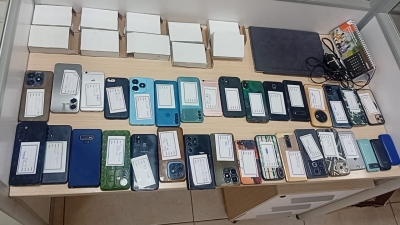
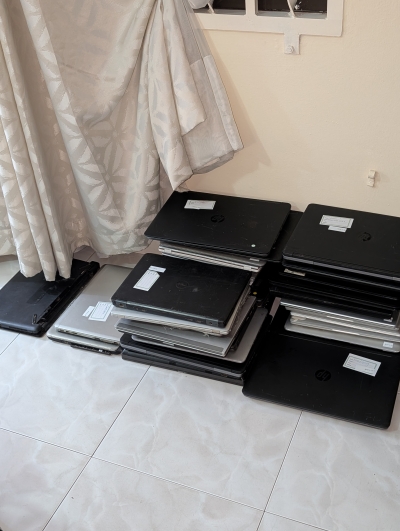
In Ghana, authorities arrested 19 individuals in Sasaabi, an Accra suburb, and seized 303 electronic devices during the operation, according to the US Department of Justice.
Investigators also identified 117 suspected human-trafficking victims who were awaiting repatriation to Nigeria. Separately, authorities identified 89 alleged scam victims who reportedly suffered losses estimated at approximately $8.3 million.
The figures illustrate how investigations into online fraud can uncover crimes extending well beyond the theft of money through digital platforms.
The Ghana operation was led by the Cyber Security Authority, the Ghana Police Service’s Criminal Investigation Department and the National Security Service, with support from the United Kingdom’s National Crime Agency (NCA), the Federal Bureau of Investigation (FBI) and Nigeria’s Economic and Financial Crimes Commission (EFCC).
The US Department of Justice also reported additional enforcement activity during the final week of September, when authorities conducted operations at six locations, made numerous arrests, identified 34 trafficking victims and seized 129 electronic devices.
Taken together, the operations point to the importance of examining suspected scam centres not simply as locations from which fraudulent messages originate, but as possible hubs involving recruitment, digital infrastructure, financial transactions and the exploitation of vulnerable individuals.
The reported identification of Nigerian nationals among trafficking victims also underscores the need for cooperation between Accra and Abuja on victim identification, protection, repatriation and the investigation of suspected traffickers.
Authorities will need to distinguish between individuals allegedly directing criminal operations and those who may have been coerced, deceived or exploited into participating in them.
That distinction is critical to ensuring that anti-cybercrime enforcement does not criminalise trafficking victims while leaving the organisers and financiers of the networks untouched.
Nigeria arrests nine as regional cooperation intensifies

In Nigeria, authorities arrested nine individuals during the enforcement period and seized 53 electronic devices, according to the DOJ.
The operation involved Nigeria’s Joint Case Team on Cybercrimes and the Nigeria Police Force National Cybercrime Centre, alongside international partners.
Nigeria’s participation is significant given the cross-border nature of the alleged offences and the need to trace funds, identify suspects, preserve electronic evidence and coordinate investigations across jurisdictions.
The crackdown also involved the EFCC, which participated in the Ghana operation, reflecting the importance of financial investigations in cases where digital fraud proceeds may move through bank accounts, cryptocurrency platforms, money-transfer channels and other financial intermediaries.
For Nigerian authorities, the challenge extends beyond arresting suspects at identified locations. Investigators must establish the roles played by alleged organisers, recruiters, account holders, payment intermediaries and technology users, while tracing proceeds and identifying victims across multiple countries.
Effective enforcement will therefore depend on the ability to combine cyber-forensic analysis with financial intelligence, international evidence-sharing arrangements and prosecutorial cooperation.
The operation also offers an opportunity for Nigeria to strengthen its response to cyber-enabled financial crime without undermining the activities of legitimate technology businesses, digital entrepreneurs and cross-border service providers.
From romance and investment fraud to digital extortion
The disrupted schemes reportedly included impersonation of law enforcement officers, digital arrest extortion, cryptocurrency investment fraud and other forms of online deception targeting victims internationally.
Among the most financially damaging schemes is cryptocurrency investment fraud, commonly associated with so-called pig-butchering operations.
Such schemes typically involve sustained manipulation of victims through social media, messaging applications or online relationships. Suspects may build trust over time before persuading victims to invest through fraudulent platforms or transfer cryptocurrency to wallets controlled by criminal operators.
Victims may initially see apparent profits displayed on fraudulent investment dashboards. When they attempt to withdraw their money, they can be confronted with additional demands for fees, taxes or deposits, often losing their original investments and subsequent payments.
Other schemes exploit fear and authority by impersonating police officers or government officials, threatening supposed arrest or legal consequences unless victims make immediate payments.
These operations can target people across income groups and jurisdictions, making them difficult to investigate when perpetrators, victims, digital infrastructure and financial proceeds are located in different countries.
The DOJ’s operation sought to disrupt multiple elements of this criminal ecosystem, including accounts and online groups allegedly used to identify victims, establish contact and sustain fraudulent campaigns.
Technology platforms become part of the enforcement front line
A notable feature of the crackdown was the participation of technology companies and cryptocurrency-related businesses alongside government agencies.
The DOJ identified Meta, Adobe, Binance, Coinbase, Google, Microsoft, OpenAI, Starlink and several cybersecurity, blockchain-analysis and threat-intelligence firms among the participating private-sector partners.
According to information supplied to the department by participating companies, more than 3.7 million accounts, pages and groups targeting people in the United States, the United Kingdom and elsewhere were removed.
The companies also provided leads concerning more than 30 suspected scam centres, which contributed to enforcement activity, arrests, the identification of trafficking victims and cryptocurrency seizures.
Private-sector partners identified more than $11 million in funds that could potentially be frozen.
The figures demonstrate the growing importance of public-private cooperation in investigations involving online infrastructure and digital financial systems.
Technology platforms can identify suspicious account clusters, remove fraudulent pages, preserve relevant information and provide leads to investigators through applicable legal processes. Cryptocurrency analytics firms can help trace transactions and identify connections between wallets associated with suspected illicit activity.
However, removing accounts does not necessarily dismantle the organisations behind them. Criminal operators may establish replacement profiles, migrate to other platforms or use alternative payment channels.
Sustained enforcement therefore requires investigations into the people, finances and infrastructure supporting the operations, alongside safeguards to ensure that enforcement measures are proportionate and based on reliable evidence.
The operation was hosted in London by the United Kingdom’s National Crime Agency and involved agencies from countries including Australia, Canada, Ghana, India, New Zealand, Nigeria and the United States, as well as INTERPOL.
The breadth of participation reflects the recognition that online fraud cannot be addressed effectively through isolated national responses.
The financial scale of the global scam economy
The economic consequences of online investment fraud provide further context for the international crackdown.
According to the FBI’s Internet Crime Complaint Center, investment scams were reported 72,984 times in 2025, with cryptocurrency investment fraud accounting for 72 per cent of that category.
The US agency’s figures show reported losses from investment scams rising from $3.96 billion in 2023 to $5.8 billion in 2024. Reported losses involving investment scams with a cryptocurrency connection increased by 24 per cent in 2025, exceeding $7.2 billion.
These figures relate to reports received by US authorities and should not be interpreted as a comprehensive measure of losses worldwide. The FBI has also warned that reported figures may underestimate the actual scale of fraud because some victims do not report their experiences.
The DOJ cited a separate government estimate placing the annual value of funds stolen by scam syndicates worldwide at nearly $64 billion by the end of 2023.
The figures highlight the scale of the financial incentives driving organised online fraud and the importance of tracing proceeds, freezing recoverable assets and pursuing the people who control criminal networks.
For African economies, the implications extend beyond losses suffered by foreign victims. Cybercrime can damage confidence in legitimate businesses, increase compliance costs for financial institutions, undermine trust in digital payments and expose vulnerable populations to recruitment and exploitation.
It can also create reputational risks for countries whose names are associated with criminal activity, even where the overwhelming majority of citizens and businesses operate legitimately.
Why the crackdown matters for Africa
The operation places West Africa within a broader international effort to confront the convergence of cybercrime, organised financial fraud and human trafficking.
Its implications for Nigeria and Ghana are particularly significant because the two countries must balance robust enforcement with the protection of legitimate digital commerce and the rights of individuals affected by criminal operations.
First, the reported trafficking cases underline the need to integrate victim protection into cybercrime investigations. People found in scam centres should be assessed individually to establish whether they were voluntary participants, alleged offenders, trafficking victims or individuals whose circumstances require further investigation.
Second, financial investigations must move beyond the immediate operators of suspected scam centres. Identifying the ultimate beneficiaries of fraudulent proceeds, tracing cross-border transfers and establishing links between suspected organisers and financial intermediaries are essential to securing lasting disruption.
Third, regional authorities need reliable channels for sharing intelligence, preserving electronic evidence and coordinating prosecutions. Differences in legal procedures and the location of evidence can complicate investigations when victims, suspects and financial assets are spread across multiple jurisdictions.
Fourth, technology and financial companies must continue to strengthen safeguards against account abuse, fraudulent investment promotions and the use of their services to facilitate criminal activity. Cooperation with law enforcement should be accompanied by appropriate privacy protections, legal oversight and procedures for challenging mistaken account restrictions.
Finally, public education remains essential. Consumers should be wary of unsolicited investment opportunities, guaranteed returns, requests to transfer cryptocurrency to unfamiliar wallets and demands for payment from individuals claiming to be law enforcement officers.
Beyond arrests: the test is sustained accountability
US Assistant Attorney General A. Tysen Duva said the operation demonstrated the value of cooperation between international law enforcement agencies and private industry.
FBI Director Kash Patel also highlighted the arrests, device seizures and identification of potentially recoverable funds as evidence of the benefits of coordinated enforcement.
The NCA similarly stressed that fraudsters operate across borders and that effective responses must reach criminal networks and the infrastructure on which they depend.
Yet the ultimate measure of success will extend beyond the number of accounts removed or suspects arrested.
Investigators must establish criminal responsibility through evidence, prosecutors must pursue viable cases, courts must determine guilt in accordance with the law, and authorities must identify and return recoverable proceeds where legally possible.
The reported trafficking victims will also require appropriate protection, assistance and, where applicable, safe repatriation.
For Nigeria, Ghana and the wider African region, the operation presents both a warning and an opportunity: a warning about the increasingly organised nature of online fraud, and an opportunity to strengthen regional cooperation, financial transparency, cyber resilience and victim protection.
The central challenge is to ensure that the disruption of individual scam centres becomes part of a sustained strategy against the wider criminal networks, financial channels and exploitative practices that enable the industry to survive.
Without that continuity, the removal of millions of accounts may weaken particular operations while leaving the underlying business model intact.







No Comment! Be the first one.