





₦109.5bn Fraud Trial: Court Reserves Ruling on Ahmed Idris’ Statements as EFCC Pushes for Admission of Evidence
The ₦109.5 billion alleged fraud trial involving former Accountant-General of the Federation, Ahmed Idris, has reached a critical evidentiary stage, with the Federal Capital Territory High Court in...
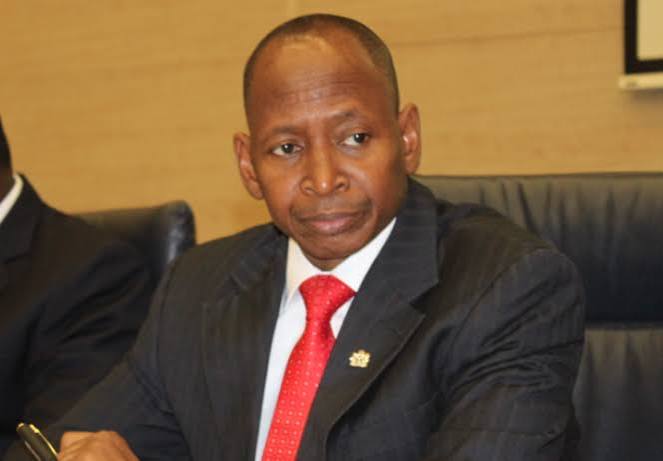
The ₦109.5 billion alleged fraud trial involving former Accountant-General of the Federation, Ahmed Idris, has reached a critical evidentiary stage, with the Federal Capital Territory High Court in Abuja reserving its ruling on whether statements obtained from the former public official by the Economic and Financial Crimes Commission (EFCC) can be admitted as evidence.
The development followed the adoption of final written addresses by the prosecution and defence yesterday, in a trial-within-a-trial that has delayed the substantive proceedings for nearly four years.
Justice Yusuf Halilu reserved the ruling for a date to be communicated to the parties after hearing arguments over the voluntariness of 14 statements allegedly made by Idris on 13 different dates during investigations into the alleged diversion of public funds.
The EFCC urged the court to admit the statements, arguing that the prosecution had established that they were voluntarily made. Idris’ defence team, however, asked the judge to reject the statements and accompanying video recordings, alleging that they were obtained through inducement and deception.
EFCC, Defence Clash Over Admissibility of Evidence
During the proceedings, EFCC prosecuting counsel, Rotimi Jacobs (SAN), maintained that the statements were voluntarily made in the presence of witnesses who subsequently testified during the trial-within-a-trial.
Jacobs argued that the presence of Idris’ personal details in the statements supported the prosecution’s position that the documents were not dictated to him. He also maintained that the statements contained no indication that the commission had promised not to prosecute the former accountant-general.
The prosecution urged the court to admit the statements, arguing that it had discharged its burden of demonstrating their voluntariness through witness testimony.
Idris’ counsel, Chris Uche (SAN), disputed that position, urging the court to reject the statements and accompanying video evidence. The defence alleged that the statements were obtained through inducement and that assurances made during the investigation influenced their production.
The dispute prompted the court to order a separate trial-within-a-trial on November 22, 2022, to determine whether the statements were made voluntarily and could lawfully be admitted in the substantive proceedings.
Both sides subsequently called witnesses to support their respective positions before filing and adopting their final written addresses.
Nearly Four Years of Procedural Delays
The evidentiary dispute has kept the main trial on hold since November 2022, despite the seriousness of the allegations and the public interest surrounding the case.
In June 2026, the defence concluded its presentation of witnesses in the trial-within-a-trial, paving the way for the adoption of final written addresses in October.
The latest proceedings therefore represent a significant procedural milestone, although the court has yet to determine whether the contested statements are admissible.
The ruling will establish whether the prosecution can rely on the disputed documents and recordings as part of its evidence in the substantive trial. It will not, by itself, determine whether Idris or his co-defendants are guilty of the charges.
Background: Alleged Diversion of ₦109.5bn
The EFCC is prosecuting Idris alongside his former technical assistant, Geoffrey Olusegun Akindele; Mohammed Kudu Usman; and Gezawa Commodity Market and Exchange Limited on a 14-count charge involving the alleged stealing and fraudulent diversion of ₦109.5 billion in public funds.
The prosecution alleges that the defendants participated in transactions involving public funds during Idris’ tenure as Accountant-General of the Federation, an office he held from June 2015 until his removal in May 2022 following an EFCC investigation.
Among the allegations is that Idris received ₦15 billion in gratification from Akindele in connection with the processing of 13 per cent derivation payments to Nigeria’s nine oil-producing states through the Office of the Accountant-General of the Federation.
The charge also alleges that ₦84.39 million belonging to the Federal Government was converted by the first and second defendants between February and November 2021.
Idris and his co-defendants pleaded not guilty to the charges.
The allegations remain unproven and are subject to judicial determination.
Asset Recovery and Financial Accountability
The case has also attracted attention because of assets reportedly linked by investigators to the alleged offences.
In December 2022, the EFCC obtained an interim forfeiture order covering cash, including US$899,900 and approximately ₦304.49 million, as well as 15 properties in Kano and Abuja reportedly linked to the investigation.
The commission subsequently announced recoveries exceeding ₦30 billion, although reports have noted uncertainty over whether that figure included all assets traced to the former accountant-general.
Among the properties reported in connection with the investigation was the Gezawa Commodity Market in Kano State, which Idris had publicly associated with himself.
Interim forfeiture proceedings and asset recoveries do not, on their own, establish criminal guilt. The legal status of individual assets and any eventual forfeiture remain subject to the relevant court processes.
Nevertheless, the case highlights the importance of asset tracing, beneficial ownership analysis and the preservation of potentially recoverable proceeds in major public-sector financial crime investigations.
Compliance Implications: Evidence, Public Funds and Asset Tracing
For anti-corruption agencies, financial institutions and public-sector compliance professionals, the proceedings underscore the importance of maintaining reliable documentary evidence and ensuring that investigative processes meet legal standards.
The dispute over the statements demonstrates that evidence-gathering procedures can become a decisive issue in complex financial crime prosecutions. Investigators must ensure that interviews are properly documented, statements are obtained in accordance with applicable law and supporting evidence is preserved in a form that can withstand judicial scrutiny.
The allegations also highlight the role of financial intelligence, transaction analysis and asset tracing in investigating suspected diversion of public funds. Where public money is allegedly channelled through intermediaries, investigators may need to establish the movement of funds, identify beneficiaries and determine whether assets are connected to the alleged offences.
For public institutions, the case reinforces the need for transparent payment approvals, segregation of duties, independent reconciliation of government accounts and effective monitoring of transactions involving substantial public expenditure.
What Happens Next?
The immediate next step is the court’s ruling on the admissibility of Idris’ disputed statements. The decision will determine whether the contested statements can be admitted into evidence and may allow the substantive trial to proceed beyond the evidentiary dispute that has stalled it since 2022.
For now, the ₦109.5 billion case remains unresolved. The prosecution must establish its allegations through admissible evidence, while the defendants retain the right to challenge the evidence and defend themselves in court.
The proceedings remain an important test of both the effectiveness of Nigeria’s anti-corruption enforcement framework and the judicial safeguards governing the prosecution of alleged financial crimes involving senior public officials.





No Comment! Be the first one.