





Greece Arrests 15 in €28 Million Fake Invoice and Tax Fraud Investigation
Greek authorities have arrested 15 people in connection with an alleged sophisticated tax fraud and money laundering scheme involving eight front companies and dozens of fictitious invoices, with...
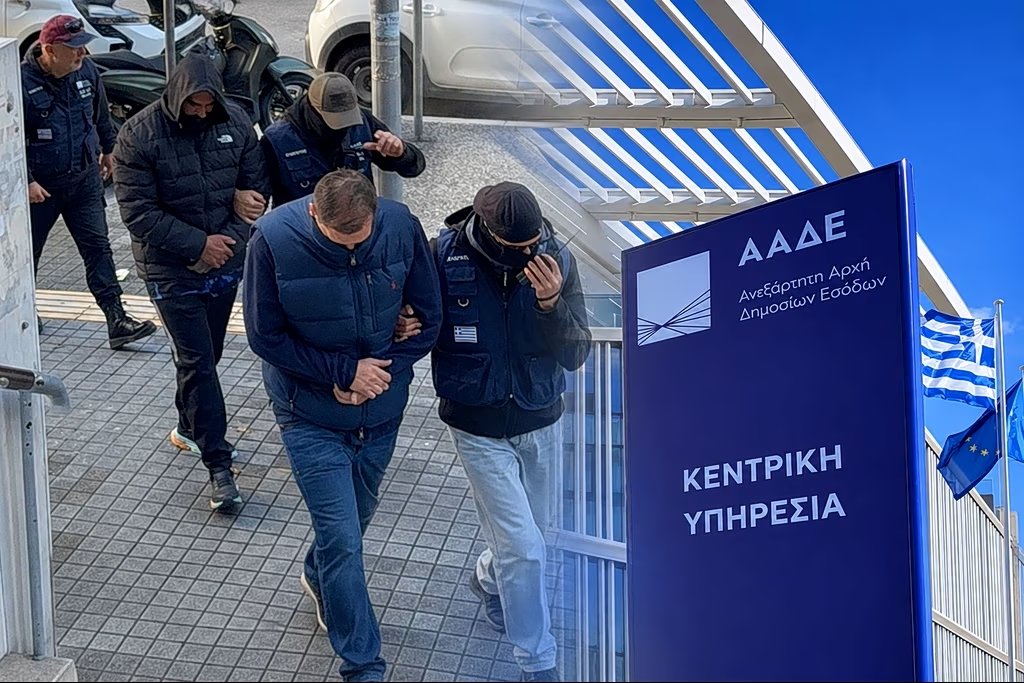
- Investigation exposes alleged network of shell companies, fictitious invoices, fraudulent tax refunds and possible banking-sector complicity.
Greek authorities have arrested 15 people in connection with an alleged sophisticated tax fraud and money laundering scheme involving eight front companies and dozens of fictitious invoices, with estimated losses to the state reaching €28 million.
According to a report, the suspects are scheduled to begin presenting their defence before an investigating judge on November today, with proceedings continuing into Tuesday.
Investigators allege that the network operated through three principal methods: evading value-added tax (VAT), issuing and using fictitious invoices, and submitting false tax returns to obtain refunds to which the companies were not entitled. The alleged illegal proceeds are estimated at €4.8 million.
The investigation has also raised concerns about potential professional and financial-sector involvement. Accountants who allegedly submitted the fraudulent tax returns and two bank branch managers suspected of facilitating the release of funds feature prominently in the case.
One accountant reportedly told investigators that her partner pressured her to submit fraudulent returns, offering approximately €5,000 for each filing. She alleged that he subsequently accessed her computer and used her personal Viber account without authorisation to transmit credentials associated with the tax filings.
The defence lawyers maintain that their clients deny the allegations and argue that some suspects were exploited without understanding the full extent of the alleged criminal operation.
The defendants face allegations including participation in a criminal organisation, tax evasion, fraud against the state, forgery and money laundering. The charges remain subject to judicial determination.
Compliance implications
The case highlights significant weaknesses that organisations must address in invoice verification, tax compliance, segregation of duties, access management and payment authorisation.
It also demonstrates how professional intermediaries and financial institutions can become potential conduits for financial crime when internal controls are compromised.
For compliance officers, the lessons include independent verification of suppliers, transaction-level invoice validation, monitoring unusual tax refund claims, restricting access to digital credentials and investigating suspicious relationships between employees, vendors and banking personnel.
The case reinforces a critical principle: fraudulent invoices are not merely accounting irregularities; they can serve as instruments for organised financial crime and money laundering.




No Comment! Be the first one.