





Bay of Bengal Faces Growing Geopolitical Rivalry as Regional Cooperation and Climate Governance Lag
Strategic competition involving India, China and other external powers is reshaping the region, while weak institutions, stalled connectivity projects and shared environmental threats expose the...
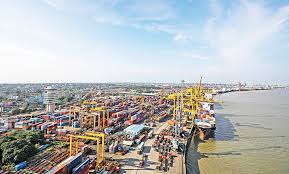
Strategic competition involving India, China and other external powers is reshaping the region, while weak institutions, stalled connectivity projects and shared environmental threats expose the urgent need for collective action.
The Bay of Bengal is emerging as an increasingly contested geopolitical and economic corridor, with competition over maritime security, energy resources, critical infrastructure and strategic influence threatening to undermine its potential for regional cooperation.
Dr Sreeradha Datta argues that countries bordering the Bay must move beyond geopolitical rivalry and develop a more coordinated regional governance framework.
Connecting South and Southeast Asia, the Bay is a vital international shipping and energy corridor. Its strategic importance has attracted growing interest from India, China and other external powers, particularly amid the wider geopolitical competition surrounding the Indo-Pacific.
However, the region’s growing strategic relevance has not translated into effective institutional cooperation.
Existing platforms, including the Bay of Bengal Initiative for Multi-Sectoral Technical and Economic Cooperation (BIMSTEC) and the Indian Ocean Rim Association (IORA), have struggled to translate regional ambitions into transformative outcomes.
Competition over fisheries, offshore oil and gas, maritime boundaries and port infrastructure further complicates cooperation. Bangladesh’s Matarbari deep-sea port, India’s maritime infrastructure expansion and stalled regional transport corridors illustrate both the economic opportunities and political obstacles.
Climate change has been identified as a potentially powerful foundation for regional cooperation. Cyclones, rising sea levels, coastal erosion, marine pollution and biodiversity loss transcend national boundaries, yet responses remain largely fragmented and reactive.
For compliance and corporate risk professionals, these developments carry important implications. Geopolitical tensions can disrupt shipping routes, infrastructure investments, energy supply chains and cross-border commercial relationships. Organisations operating across the region must strengthen country-risk assessments, third-party due diligence, supply-chain resilience and geopolitical scenario planning.
The central challenge is whether Bay of Bengal countries can transform shared economic and environmental interests into effective regional governance before strategic competition further fragments the region.




No Comment! Be the first one.