





What Does a Nigerian Certificate Mean Anymore?
The price is almost insulting. According to the Minister of Education, examination questions are being sold for as little as ₦3,000. Three thousand naira. In a country where families struggle...
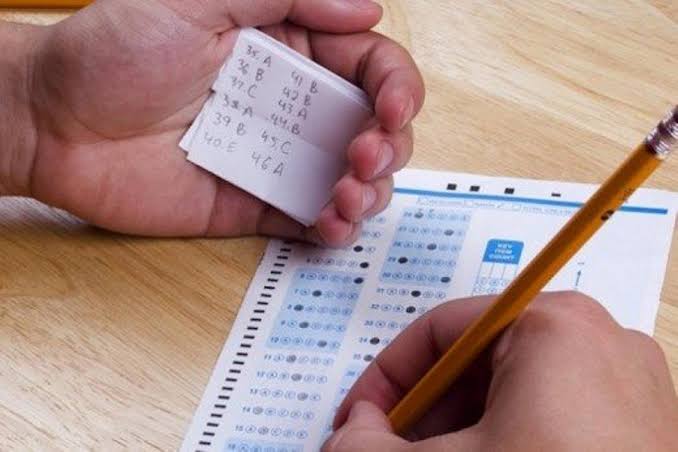
The price is almost insulting.
According to the Minister of Education, examination questions are being sold for as little as ₦3,000. Three thousand naira. In a country where families struggle to pay school fees, buy textbooks and keep children in school, somebody has found a way to turn the examination itself into a small cash business.
That should worry us far more than it does.
It is easy to read the story as another case of examination malpractice. Nigeria has seen plenty of those. Students have cheated before. Teachers have helped them. Invigilators have looked the other way. Examination papers have found their way into the wrong hands.
But the ₦3,000 figure points to something more uncomfortable. There is now a market for failure. And there are people making money from the fear of failing.
For a student who has spent months preparing for an examination, the discovery that someone else can simply pay for an unfair advantage changes the meaning of the entire exercise. What is the point of staying up late to study if somebody else can buy the questions? That is where the damage begins.
The certificate is becoming the destination….
Nigeria has spent years telling young people that education is their route to a better life.
Go to school. Get good grades. Enter university. Get a degree. Find a job. It sounds simple until you look closely at what happens along the way. Increasingly, the certificate itself has become the prize.
We ask whether a young person has a degree before asking what the person can actually do. Employers demand qualifications. Government agencies set academic requirements. Parents chase examination results. Schools advertise their pass rates.
The paper matters. The knowledge behind the paper sometimes gets much less attention. That distinction is becoming difficult to ignore.
A young person can leave school with an impressive result and still struggle with basic skills. A graduate can possess a university certificate and require extensive retraining before becoming useful in the workplace. A person can accumulate qualifications without necessarily acquiring the competence those qualifications are supposed to represent.
This is not an argument against certificates. It is an argument against pretending that a certificate and competence are the same thing. They are not.
The child is not the whole problem…
There is a tendency in Nigeria to put examination malpractice entirely at the feet of students. The student cheated. The student should be punished. The student lacks character. Perhaps. But that explanation is too easy.
A teenager did not create the system in which adults sell examination questions. A teenager did not decide that school results are a matter of family prestige. A teenager did not build the networks that allow examination materials to leak.
There are adults somewhere in that chain. Someone has access to the questions. Someone decides to copy or photograph them. Someone finds the buyers, collects the money, whilst another makes sure the material gets to the candidate.
By the time the student is sitting in the examination hall with answers already available, the problem is no longer simply about youthful dishonesty. It is an organised failure of trust.
And the consequences do not end when the examination is over.
What happens to the student who refuses to cheat?
This is the part that deserves more attention. Consider the student who actually follows the rules. He studies. He attends classes. He spends nights reading. His parents make sacrifices to keep him in school. He enters the examination hall believing that everybody is being tested under the same conditions. Then he discovers that another candidate has obtained the questions.
What lesson does he take from that experience?
We often tell young Nigerians to work hard, be patient and do the right thing. Those are reasonable things to tell them.
But young people are not stupid. They notice what works.
If dishonesty repeatedly produces better results than hard work, some will eventually conclude that the problem is not dishonesty. The problem is being honest in a system that does not reward it.
That is how a bad practice becomes normal. Not overnight. Slowly. One examination paper at a time.
The bigger question is trust…
An examination works because everybody agrees to believe in it. The student believes the questions are secure. The school believes the examination body is fair. Parents believe the result reflects performance. Employers believe the certificate means something. Universities believe the candidate has acquired the knowledge claimed by the qualification. Once that chain of trust breaks, the certificate begins to lose its value. And that is much more serious than one examination being compromised
Nigeria already has a difficult relationship with credentials. There have been repeated controversies over academic qualifications, certificates and other credentials presented by prominent people. Some have resulted in resignations or official investigations. Others have ended up in political or legal disputes.
Those cases should be treated individually. An allegation is not proof, and a disputed credential should not automatically be described as fraudulent. But the recurrence of these controversies does raise an uncomfortable question. Why is it so difficult for Nigerians to have complete confidence in the credentials people present, particularly when those people are seeking powerful public positions?
Verification should not be a political weapon. It should be routine.
The powerful should not get a different examination…
There is something particularly corrosive about having one standard for ordinary Nigerians and another for people with influence.
A young graduate can lose a job because an employer cannot verify a qualification. A student can be punished for examination malpractice. A civil servant can be denied an opportunity because of a missing credential.Those standards are understandable.
But the same insistence on verification should apply when the person involved is wealthy, politically connected or famous.
Nobody is saying that a university degree automatically makes somebody capable. It does not. Nobody is saying that the absence of a particular qualification makes somebody incapable of leadership. That would also be simplistic.
The point is much narrower. If you claim a qualification, it should be possible to verify it. That should not be controversial.
This is bigger than WAEC or any examination body….
It would be tempting to respond to the ₦3,000 scandal by demanding tighter examination security and moving on.
Of course, examination security matters. Questions should be protected. People with access to examination materials should be accountable. Schools and examination officials who deliberately facilitate cheating should face consequences.
But stronger security alone will not solve the deeper problem. Nigeria has to deal with the culture that makes the purchase of a fraudulent advantage attractive in the first place.
Parents have a role here. So do schools, teachers, examination officials and employers.
If a certificate is treated as more important than what a person can actually do, people will naturally find ways to obtain certificates.
The incentive is sitting there. We created it.
The cost does not stop at ₦3,000…
Three thousand naira may buy the questions. It cannot buy the knowledge that should have come from answering them honestly. That difference becomes important later.
A student who cheats through one examination may eventually move to another level. If the behaviour continues, the person can accumulate qualifications without acquiring the knowledge those qualifications are supposed to represent.
Then the consequences begin to move beyond school. The person becomes a graduate. The graduate enters the workplace. The workplace assumes the qualification means competence.
Sometimes it does. Sometimes it does not. That is when an education problem becomes an economic problem.
A country cannot build a productive workforce if its credentials cannot reliably tell employers what somebody knows. It cannot talk seriously about becoming a knowledge economy while struggling to protect examination questions. It cannot ask young Nigerians to compete globally while allowing a culture to develop in which passing the test matters more than learning what the test is supposed to measure.
We should be careful about what we celebrate…
Nigeria loves a good result. Schools publish their best-performing students. Parents celebrate distinctions. Newspapers announce examination successes. Universities hold elaborate graduation ceremonies.
There is nothing wrong with celebrating achievement. But perhaps we should become more interested in what sits underneath the result.
Did the student learn? Can the graduate write clearly? Can the engineer solve an engineering problem? Can the accountant understand the numbers? Can the teacher teach? Can the doctor make sound decisions? Can the public servant do the work the office requires?
Those questions are less glamorous than a certificate.They are also more important.
The uncomfortable truth….
The most disturbing part of the ₦3,000 story is not really the amount of money involved. It is the idea that an examination can become something you buy your way through.
Once that idea takes hold, the honest student becomes the person taking the bigger risk. That is a terrible message to send to young Nigerians.
They already live in a country where many things appear negotiable. A traffic offence can sometimes be negotiated. A government process can sometimes be accelerated through connections. A job can sometimes depend on who you know.
Education was supposed to offer something different. It was supposed to give a young person at least one arena where preparation mattered, where performance could be measured and where the rules were supposed to apply equally.
If that space disappears too, what exactly are we asking young people to believe in? This is why the reported sale of examination questions should not be dismissed as another story about students cheating.
It is a story about what happens when a society becomes more interested in the certificate than the education behind it.
The danger is not that some students may pass examinations they should have failed. The bigger danger is that the country may eventually stop knowing what its certificates are worth.
And once that happens, everybody pays for it.







No Comment! Be the first one.