




Ogun State Fiscal Red Flags: ₦17.98 Billion in Debt Payments, Just 2.28% of ₦1.04 Trillion Capital Budget Executed — Audit, Compliance And Public Funds Accountability Under Scrutiny
Ogun State’s first-quarter 2026 budget performance figures raise questions about fiscal priorities, debt management and the delivery of publicly funded infrastructure under Governor Dapo Abiodun....
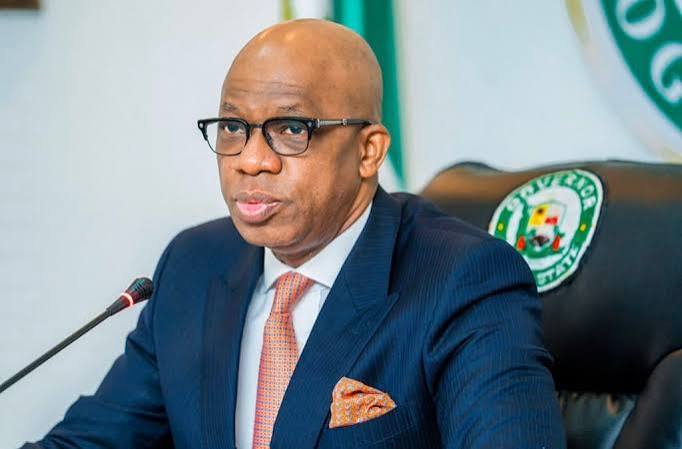
Ogun State’s first-quarter 2026 budget performance figures raise questions about fiscal priorities, debt management and the delivery of publicly funded infrastructure under Governor Dapo Abiodun. According to the state’s reported budget execution figures, the government paid ₦17.983 billion in public debt charges between January and March 2026, while capital expenditure amounted to ₦23.746 billion against an annual capital budget of approximately ₦1.043 trillion.
The figures present a significant gap between the state’s approved development spending and expenditure recorded during the first three months of the year. Capital expenditure represented approximately 2.28% of the annual capital allocation, while debt servicing consumed nearly three-quarters of the amount spent on capital projects during the same quarter. These figures do not, by themselves, establish that funds were misappropriated or that debt payments were improper; they do, however, make budget execution and expenditure transparency important areas for scrutiny.
The reported first-quarter debt charge increased from ₦14.765 billion in 2025 to ₦17.983 billion in 2026, a rise of approximately 21.79% year on year. Over the same period, total government expenditure fell from ₦153.825 billion to ₦99.499 billion, a decline of 35.32%. Debt servicing consequently accounted for 18.07% of total first-quarter expenditure in 2026, compared with 9.60% a year earlier.
The state’s 2026 budget provides further context. Presented in December 2025, the ₦1.669 trillion spending plan allocated approximately ₦1.044 trillion, or 63% of total expenditure, to capital projects. It also provided ₦99.977 billion for public debt charges. The capital programme was therefore a central component of the government’s stated development priorities, making actual implementation a key measure of fiscal performance.
The reported first-quarter capital expenditure of ₦23.746 billion was also substantially lower than the ₦89.387 billion recorded for the same period in 2025, representing a decline of approximately 73.43%. Meanwhile, first-quarter revenue was reported at ₦213.389 billion. These figures highlight the need to understand why expenditure contracted despite the scale of the approved capital programme and reported revenue receipts.
Ogun State’s debt position adds another dimension to the issue. In February 2026, the state’s Commissioner for Finance, Dapo Okubadejo, reportedly put the state’s debt stock at approximately ₦494 billion as of December 2025, comprising ₦194 billion in domestic debt and ₦300 billion in external debt. He attributed much of the increase in the naira value of external debt to currency depreciation and argued that borrowing had supported infrastructure development.
This explanation is relevant because rising debt-service costs do not automatically indicate financial misconduct. Exchange-rate movements, loan terms, repayment schedules and the timing of obligations can all influence debt charges. The key questions are whether borrowing remains sustainable, whether debt proceeds were applied to authorised purposes and whether the resulting projects deliver measurable public value.
Compliance, fraud risk and accountability implications
For compliance officers, forensic accountants, public-sector auditors and financial crime investigators, the figures warrant closer examination of the underlying budget execution report, debt schedules, loan agreements, payment records and capital-project registers. Independent reconciliation should establish whether the ₦17.983 billion in debt charges corresponds to valid contractual obligations and whether capital spending is supported by verifiable project milestones, contractor payments and evidence of work completed.
The reported gap between budget allocation and execution also calls for scrutiny of procurement approvals, contract awards, advance payments, project delays and variations. These are investigative priorities, not evidence that fraud has occurred. Any allegation of diversion or corruption would require transaction-level proof and appropriate due process.
The central compliance takeaway is that budget approval is not the same as budget delivery. The reported figures raise legitimate questions about the relationship between debt obligations and infrastructure implementation. Transparent publication of quarterly expenditure data, independent verification of completed projects, reconciliation of debt payments and clear explanations for capital underspending would help lawmakers, auditors, investors and residents assess whether public funds are being managed effectively.


No Comment! Be the first one.