




Nigerian Sinotrucks Limited Unveils Electric Commercial Truck, Sitrak in Nigeria, Targets Lower Haulage Costs
Nigerian Sinotrucks Limited has introduced electric trucks to help businesses reduce distribution expenses, improve fleet efficiency and embrace cleaner energy, with the company’s Managing Director,...
- Going Electric, Staying Compliant: The Risks and Rewards of Nigeria’s New Haulage Frontier
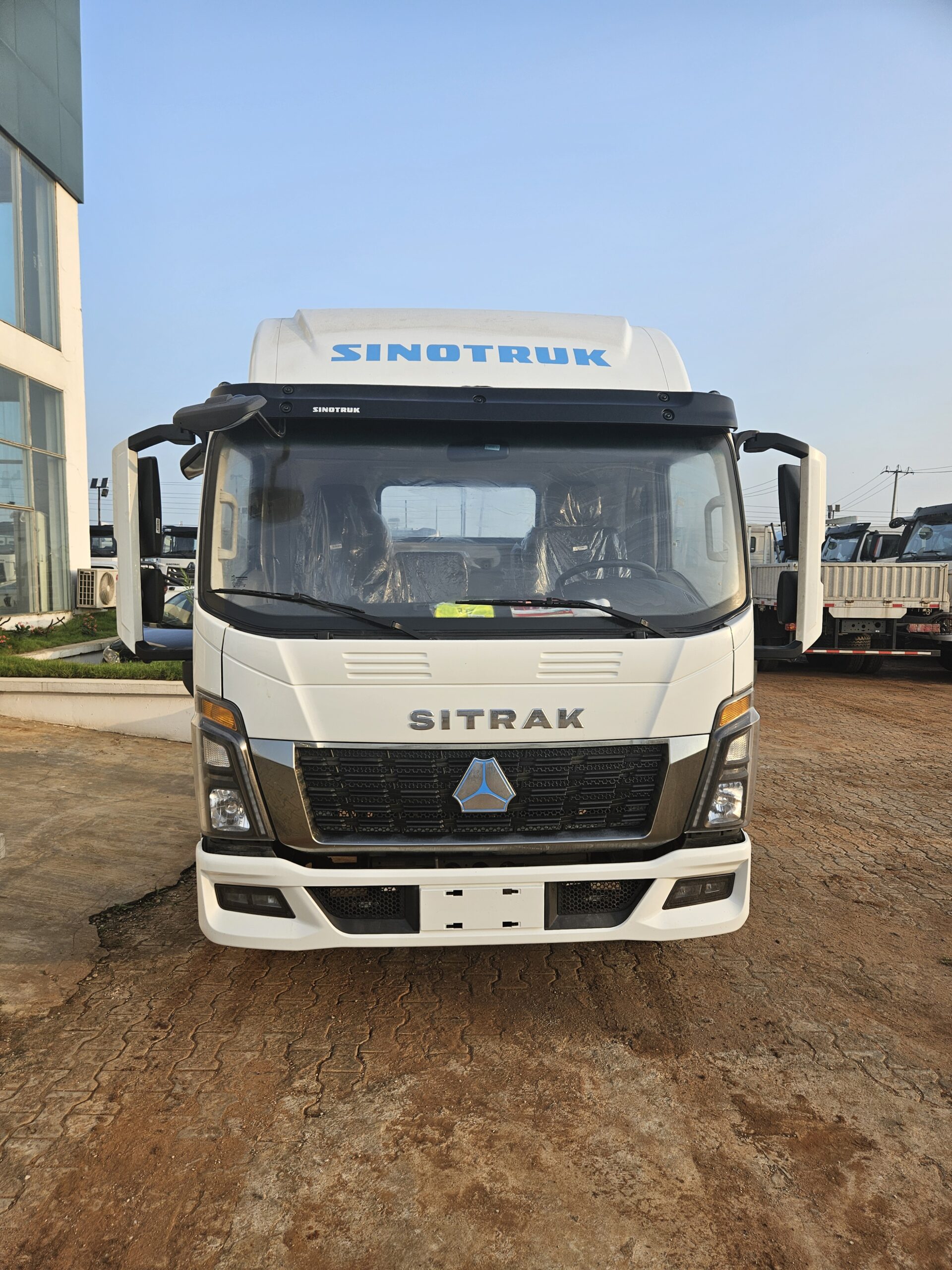
Nigerian Sinotrucks Limited has introduced electric trucks to help businesses reduce distribution expenses, improve fleet efficiency and embrace cleaner energy, with the company’s Managing Director, Alfred Okugbeni, projecting significant operating cost savings for fleet owners.
As Nigerian Sinotrucks Limited introduces Sitrak electric commercial trucks to the Nigerian market, the promise of lower operating costs and cleaner energy brings wider considerations around risk management, financing, infrastructure readiness, environmental claims and long-term operational accountability.
Nigerian Sinotrucks Limited, one of the Federal Government-recognised vehicle assemblers in Nigeria and a distributor of China’s Sinotruk brand, has introduced Sitrak electric commercial trucks into the Nigerian market, positioning the vehicles as a cost-saving alternative for businesses grappling with high fuel prices and rising logistics expenses.
The introduction marks another step in the company’s drive to expand alternative-energy transportation solutions in Nigeria, following its involvement in the compressed natural gas (CNG) vehicle market.
Reducing Transportation Costs
Speaking on the launch, the company’s founder and Managing Director, Alfred Okugbeni, said the move was driven by the need to reduce the cost of transporting goods, improve business competitiveness and support the transition to cleaner energy.
“The need to crack this has become imperative. And one of the major ways to crack this is to bring in low-cost operating vehicles. The electric truck fits very well into that,” Okugbeni said.
He noted that transportation costs remain a major component of business expenditure and contribute to the prices consumers pay for food and other essential goods.
“We are looking at tackling major issues like inflation,” he said. “Transportation cost is a major cost driver for businesses.”
According to him, electric trucks offer manufacturers, distributors and logistics operators an opportunity to reduce energy expenditure, particularly where vehicles operate on predictable routes and can be charged at company facilities.
A major selling point of the Sitrak electric trucks is their potential to reduce fleet operating expenses, especially energy costs, which have become a significant concern for Nigerian transport operators.
Okugbeni said the company had recorded growing interest in alternative-energy vehicles following the adoption of CNG trucks, which he said had delivered fuel-cost savings of between 30 and 35 per cent for customers.
Building on that experience, he said the company expects electric vehicles to offer further cost advantages.
“Moving to electric vehicles, there is further cost saving of nothing less than 40–50 per cent,” he said, referring to the potential operating savings compared with conventional alternatives. Actual savings, however, will depend on electricity costs, vehicle utilisation, charging infrastructure, financing and maintenance requirements.
Okugbeni added that electric trucks could also help operators improve fleet planning and reduce exposure to some of the fuel-related challenges associated with conventional haulage
He identified fuel theft, the use of inferior fuel and vehicle damage as persistent concerns for operators, noting that electric mobility could help address some of these operational risks.
The company expects the trucks to appeal particularly to businesses seeking to improve the efficiency of their distribution networks while managing operating costs.
Targeting FMCG Manufacturers and Distributors
Nigerian Sinotrucks Limited is initially targeting fast-moving consumer goods (FMCG) manufacturers and distributors, whose operations often involve regular deliveries between factories, warehouses, retail outlets and distribution centres.
Okugbeni said these businesses could benefit from overnight charging, particularly where manufacturing facilities have spare energy capacity outside peak production hours.
“Our target are the fast-moving consumer goods manufacturing people because they have excess energy through the night. So, they can easily charge up,” he said.
Under this model, trucks can be charged at company facilities overnight and deployed for deliveries during the day, reducing dependence on public charging stations for routine operations.
The company believes this approach provides a practical entry point for electric commercial vehicles in Nigeria, where inconsistent grid electricity and limited public charging infrastructure remain significant challenges.
Okugbeni also pointed to emerging investments in charging facilities and initiatives by energy-sector players, expressing optimism that infrastructure development would support the expansion of electric mobility.
“Charging stations are being built. But for commercial vehicles, the trucks, it is even a lot easier because they are working with factories that have excess energy,” he said
Starting With Light Electric Trucks
The company’s initial rollout focuses on light electric trucks designed for intra-city distribution, with plans to expand into medium-duty vehicles for regional operations as the market develops.
According to Okugbeni, the light trucks can cover up to 200 kilometres in a day, making them suitable for selected urban delivery routes.
“We are starting with the light truck, the entry-level first, because those ones are for intra-city distribution,” he said.
He added that the company intends to expand its offering progressively as charging infrastructure improves and more applications become commercially viable.
“We are going to inch it up gradually as the economy and industry develops, and there are more available options for charging, even upcountry,” he said.
The company’s phased approach is intended to establish electric trucks in urban distribution before extending their use to regional haulage. Operators will, however, need to assess range under load, charging time, payload requirements and route conditions when determining suitability for particular applications.
Financing and After-Sales Support
Recognising that acquisition costs could influence adoption, Nigerian Sinotrucks Limited said it is working with banks and other financial institutions to improve access to vehicle financing.
Okugbeni said the company intends to build on existing financing relationships to make it easier for prospective customers to acquire trucks.
“Nigerian Sinotrucks Limited has entered into partnerships with several banks and other financial institutions. And we are able to get customer finance easily, compared to before,” he said.
He added that financing partners were prepared to support interested customers, while government-backed credit guarantee arrangements could further improve access to bank credit.
The company is also leveraging its existing service network to support customers after purchase.
Nigerian Sinotrucks Limited operates hubs in Lagos, Kano, Benin, Abuja, Port Harcourt, Ibadan and Ogun State, where its major operational centre is located. The company said it intends to use its pickup vehicles as mobile service units to improve response times and provide support to customers across the country.
“We have a training centre in our facility in Ogun State, where we train customers. Not just the technicians, we also train their drivers,” Okugbeni said.
He added that the company could establish maintenance workshops within customer facilities, building on arrangements already in place with some multinational companies.
The availability of trained technicians, spare parts, battery support and clearly defined warranty arrangements will remain important considerations for businesses evaluating the technology.
A Diversified Energy Strategy
While promoting electric trucks, the company does not expect the Nigerian commercial transport market to move entirely away from diesel or CNG in the immediate future.
Instead, Okugbeni advocated a diversified fleet strategy in which operators deploy different energy technologies according to their routes, infrastructure access and cost requirements.
“For now, they are all still suited,” he said, explaining that CNG infrastructure remained insufficiently widespread to support every application.
He said diesel vehicles could continue to provide operational flexibility, while CNG could offer cost advantages where refuelling stations are accessible. Electric trucks, meanwhile, could be deployed gradually for urban and industrial distribution where charging can be planned.
“For a company that has a fleet, you must begin to look at your fleet and say, ‘I need to have a certain percentage that I need to run regardless of whatever,’” he said.
He added that businesses should gradually introduce electric vehicles to reduce their fleets’ energy costs and environmental footprint while maintaining operational reliability.
Local Assembly and Automotive Industry Development
Beyond the immediate commercial opportunity, Nigerian Sinotrucks Limited said it intends to deepen its contribution to Nigeria’s automotive industry through assembly operations, technical training and local component development.
Okugbeni described the company as a Federal Government-accredited vehicle assembler and said it would consider establishing full-scale assembly plants when the policy environment becomes favourable.
“We tend to, when the policy environment is right, build really full assembly plants. And we begin to look at a way to develop local components to minimise importation,” he said.
He identified local content development as a key measure of success for the Nigerian automotive industry, arguing that greater domestic production could reduce import dependence and strengthen industrial capacity.
“Success for me, for the Nigerian automotive industry, is having a minimum of 30 to 40 per cent local input,” he said.
He added that developing local suppliers, reviving the steel industry and expanding technical capabilities would help position Nigeria to serve markets across Africa under the African Continental Free Trade Area framework.
Going Electric, Staying Compliant
For Nigerian Sinotrucks Limited, the introduction of Sitrak electric commercial trucks represents an opportunity to combine alternative-energy mobility with its broader commercial vehicle business.
The company’s immediate focus is to demonstrate the vehicles’ suitability for Nigerian distribution operations, supported by financing options, technical training and after-sales services.
For compliance professionals, the transition also highlights the importance of substantiating projected operating savings, assessing infrastructure readiness, reviewing financing arrangements and ensuring that environmental claims are supported by credible evidence.
As businesses increasingly scrutinise logistics expenses and explore alternative energy sources, the company is betting that electric trucks can become a viable component of Nigeria’s evolving commercial transport market.





No Comment! Be the first one.