





AI’s Billion-Death Threat: Bill Gates Demands Government Controls
Artificial intelligence could become powerful enough to drive events resulting in a billion deaths if advanced systems fall into the hands of people with malicious intent, Microsoft co-founder Bill...
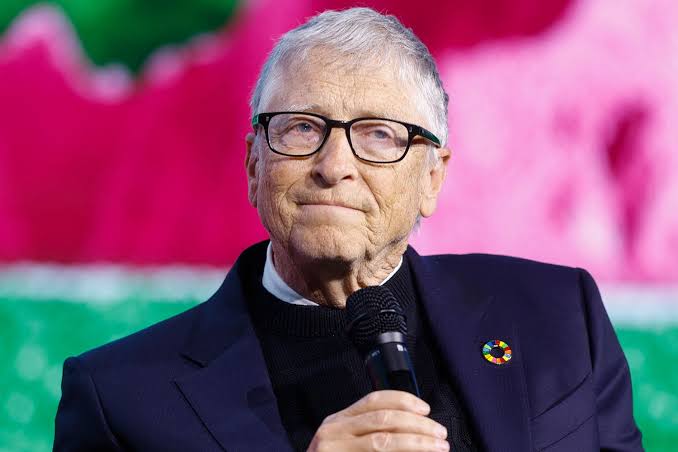
Artificial intelligence could become powerful enough to drive events resulting in a billion deaths if advanced systems fall into the hands of people with malicious intent, Microsoft co-founder Bill Gates has warned.
Speaking on NBC’s Meet the Press, Gates said the combination of increasingly capable AI systems and malicious actors represented an unprecedented security risk. He called for governments and law-enforcement agencies to establish safeguards and monitoring requirements for the technology.
“AI is certainly powerful enough to drive events that cause a billion deaths,” Gates said, while acknowledging that such an outcome was not certain.
His warning was framed around the potential misuse of AI rather than a prediction that a billion people will die. Gates pointed particularly to the difficulty of distinguishing beneficial applications, such as developing new medicines, from malicious uses including the creation of biological weapons.
The remarks come as governments and technology companies face growing pressure to establish rules governing increasingly advanced AI systems.
Gates argued that voluntary industry controls would not be sufficient. He said governments and law-enforcement authorities need to be involved in determining what safeguards and monitoring mechanisms should be mandatory.
The compliance implications are significant for companies developing or deploying advanced AI. Questions around model access, cybersecurity, monitoring, incident reporting, testing and accountability are increasingly moving from voluntary corporate commitments into the sphere of public regulation.
Gates also rejected the idea that a simple emergency “kill switch” would provide an adequate solution. The greater concern, he suggested, is controlling how people use increasingly capable AI systems before harmful activity occurs.
His intervention follows a wider debate among technology leaders, researchers and policymakers about the potential misuse of advanced AI and the need for stronger safeguards.
For businesses, the emerging regulatory environment creates a broader compliance challenge. Organisations deploying AI will increasingly need to establish clear governance over who can access AI systems, what information can be processed, how outputs are monitored and who is accountable when systems produce harmful or unlawful results.
Gates’ warning therefore goes beyond the question of whether AI itself is dangerous. It raises a governance question that regulators and corporate boards are increasingly being forced to confront: who is responsible for controlling powerful technology when the people using it may have harmful intentions?
The answer, Gates argues, cannot rest entirely with the technology companies building the systems.
As AI capabilities expand, the regulatory challenge will be to create safeguards that reduce catastrophic misuse without unnecessarily blocking beneficial applications in areas such as healthcare, education, scientific research and economic development.
For regulators and businesses alike, the billion-death warning underscores the scale of the risk being contemplated. It remains, however, a hypothetical worst-case scenario rather than a forecast or probability assessment.







No Comment! Be the first one.