





Sanctions Boomerang: China Turns Washington’s Favourite Weapon Back on US Firms
China has escalated its economic countermeasures against the United States, sanctioning seven US entities while simultaneously tightening controls on drone exports and launching its first national...
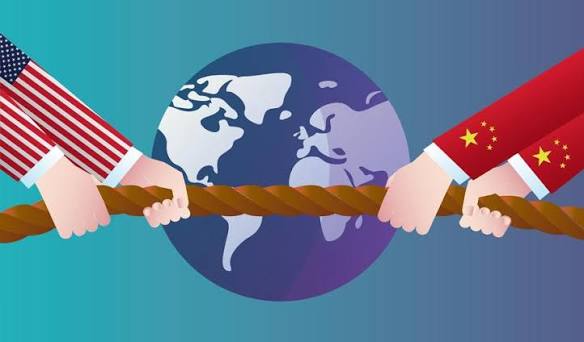
China has escalated its economic countermeasures against the United States, sanctioning seven US entities while simultaneously tightening controls on drone exports and launching its first national security investigation into foreign trade. The measures mark a significant shift from conventional tariff retaliation towards targeted sanctions, export controls and national security screening as instruments of economic statecraft.
China’s Ministry of Commerce barred Chinese organisations and individuals from conducting business with the seven designated US entities. Beijing said the action was in response to recent US restrictions affecting Chinese technology, telecommunications, drones, robotics, power infrastructure and other strategic sectors, as well as the addition of more than 40 Chinese entities to the US Uyghur Forced Labor Prevention Act Entity List.
The sanctions are accompanied by tighter licensing scrutiny for drones, drone components and related technologies destined for the United States. China has also restricted the participation of US agencies in mandatory certification inspections of Chinese factories.
The most significant compliance development, however, may be Beijing’s launch of its first foreign trade national security investigation. The 12-month probe will examine imported printers and copying equipment using foreign developed system software, assessing import volumes, dependence on foreign technology, domestic production capacity and potential national security implications.
The Sanctions Angle
The development signals a widening definition of sanctions exposure. Companies can no longer assess China US trade solely through the lens of tariffs and customs duties. Sanctions, export licensing, technology restrictions, entity restrictions and national security reviews are increasingly converging into one compliance environment.
This creates a difficult position for multinational companies with exposure to both jurisdictions. A transaction permitted under US law may encounter restrictions under Chinese countermeasures, while compliance with a US sanctions requirement could potentially conflict with Chinese blocking measures. China had already demonstrated this tension in May 2026, when its Ministry of Commerce issued a blocking order concerning US sanctions against five Chinese companies involved in Iranian oil trade.
For African companies trading with Chinese or US counterparties, the implications are also material. Businesses importing technology, machinery, drones, telecommunications equipment or strategic components from China, or dealing with Chinese suppliers connected to US restricted parties, may face compliance obligations across multiple and potentially conflicting regimes.
Compliance Takeaway
Sanctions compliance is becoming jurisdictionally two sided. Companies engaged in China linked trade should not screen only against US, UN or EU sanctions lists. Counterparty screening should increasingly consider Chinese sanctions and unreliable entity restrictions, export licensing requirements, ownership and control, end use, technology content and potential national security exposure.
The central compliance risk is no longer simply dealing with a sanctioned entity. It is being caught between competing sanctions and export control regimes.
Compliance Signal
High. The convergence of targeted sanctions, export controls and national security investigations indicates that geopolitical tensions are increasingly being translated into direct corporate compliance obligations.






No Comment! Be the first one.