




Nigeria’s Real Estate Gold Rush: A Genuine Wealth Creation Industry or a Breeding Ground for Fraud?
There is something particularly seductive about Nigerian real estate. A developer announces a new estate in Lekki, another unveils an ambitious project in Abuja, a motivational speaker promises...
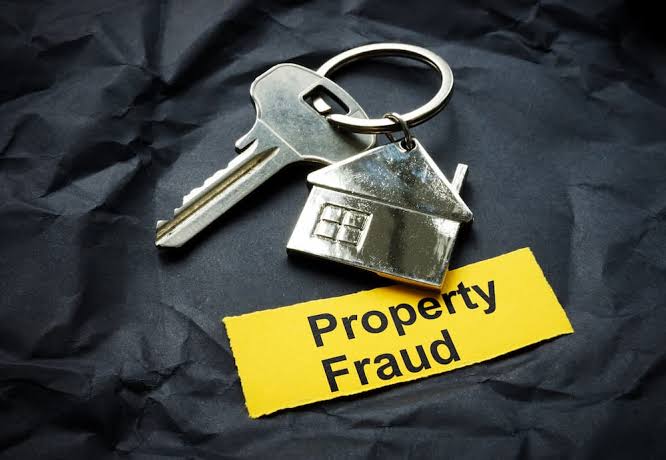
- From Stephen Akintayo and Gtext Homes to Grace Ofure, Lifecard International and the reported Adeola Fayehun disassociation, Nigeria’s property market is facing a crisis of confidence. Behind the luxury launches, celebrity endorsements and promises of overnight wealth are troubling questions about ownership, accountability and investors’ money.
There is something particularly seductive about Nigerian real estate. A developer announces a new estate in Lekki, another unveils an ambitious project in Abuja, a motivational speaker promises extraordinary returns, and social media fills with photographs of land allocations, luxury apartments and customers holding allocation letters. The message is almost always the same: real estate is the easiest route to financial freedom.
But is it?
Is Nigerian real estate genuinely the investment gold mine it is advertised to be, or has an industry built around one of the country’s most valuable assets become an attractive playground for questionable operators, aggressive marketers and financial deception?
The uncomfortable answer is that both realities exist. Nigerian real estate is a legitimate economic sector, with genuine developers, responsible estate managers and investors creating wealth. Yet, there is also a troubling record of disputed land ownership, forged documents, multiple allocations, uncompleted projects, questionable investment schemes and customers struggling to recover their money.
The problem is no longer merely anecdotal. It is documented in regulatory figures, EFCC investigations, court proceedings and complaints from ordinary Nigerians and members of the diaspora.
In May 2024, the Lagos State Government disclosed that the Lagos State Real Estate Regulatory Authority (LASRERA), established in 2020, had received 1,702 complaints relating to fraudulent real estate practices. Of these, 1,458 had gone through mediation, with 1,144 reportedly resolved. The agency said it had recovered ₦478.13 million and 18 properties for rightful owners, while 103 cases had been referred to appropriate authorities.
These figures are not equivalent to criminal convictions, but they reveal the scale of disputes confronting the property market.
One of the most publicly discussed controversies involves Stephen Akintayo, founder of Gtext Homes and a prominent Nigerian real estate entrepreneur.
In early 2025, reports emerged that legal practitioners had petitioned the Inspector-General of Police over alleged Dubai property transactions involving Akintayo, Gtext Homes and associated individuals. The reported petitions involved a combined $115,098.
One complaint concerned Ogonna Ugochukwu, a Nigerian nurse living in the United States. According to her lawyer, she became interested in a one-bedroom apartment at Regina Tower, Jumeirah Village Circle, Dubai, after encountering Akintayo through his real estate conferences and online activities. She reportedly paid $21,500 towards the transaction but subsequently experienced difficulties concerning the property and her money.
Another complaint involved Nigerian businessman and medical doctor Dr Adelosoye Alex Adedotun, who reportedly paid approximately $50,000 towards a Dubai apartment.
The allegations attracted attention because they involved international property marketing, Nigerian investors and a Dubai development. However, Gtext Homes and Akintayo’s legal representatives subsequently rejected the allegations, describing them as unfounded and disputing suggestions that the company or its founder had been indicted or convicted.
The important questions are whether the investors received the properties for which they paid, whether the transactions were properly documented and what the relevant Dubai authorities and developers can establish.
Another controversy concerns Grace Ofure Ibhakhomu and Lifecard International Investment Limited.
On October 25, 2026, it was reported that Lifecard had acknowledged delays involving property allocations, infrastructure development and refunds following complaints from subscribers. Customers alleged that the company had failed to allocate properties to fully paid subscribers and left some investments unresolved.
Ibhakhomu responded by attributing the difficulties to government intervention, land disputes, flooding, alleged encroachment, access problems and rising construction costs. She maintained that the company had acquired the land it marketed.
On October 31, 2026, she apologised to affected subscribers, acknowledged delays and announced site visits and allocation exercises covering developments including Spectacular Estate, Eden Court, Sprint Estate, Prosper Abuja, Advantage Estate, Grand Haven and Wealth Garden.
The announced exercises were scheduled to run from October 31 to December 7, 2026.
The controversy raises a fundamental question: what exactly does a subscriber own after paying for a property? A company can possess land and still fail to fulfil its contractual obligations. Equally, delayed allocation does not automatically establish criminal fraud. The distinction must be determined through contracts, ownership records and evidence.
The issue of public endorsements adds another dimension. Nigerian social media commentator Adeola Fayehun was drawn into the discussion because of her reported previous promotion of Lifecard. An October 2026 report described a TikTok video in which she reportedly addressed her earlier association and apologised.
Nevertheless, the episode raises a broader question about influencer accountability. When a public personality promotes a property company and subsequently distances themselves after customer complaints emerge, what responsibility do they have to people who relied on their recommendation? Is an apology enough? Should promoters disclose commercial relationships and help investors obtain answers?
A large social-media following is not a property-title certificate.
The Abuja property market provides even more disturbing examples of what can happen when ownership documents and land administration become contested.
In June 2025, the EFCC arraigned Rebecca Godwin-Isaac Omokamo, also known as Bilikisu Ishaku-Aliyu, her husband Isaac Yusuf-Ishaku and associated parties over alleged land fraud and money laundering involving more than ₦500 million.
The allegations concerned properties in Guzape and Katampe, including disputed documents relating to land belonging to Colleen Yesufu, a 79-year-old widow. The EFCC alleged that forged documents had been used to facilitate property transactions. The defendants pleaded not guilty.
Another Abuja investigation emerged in April 2025 when the EFCC arrested Nwobo Williams Chibuike over alleged fictitious land sales. According to the commission, he marketed plots in locations including Kurudu, Sabon Lugbe East Extension, Kpeyegyi and Jikwoyi Village Extension. Payments allegedly ranged from ₦3.5 million to ₦60 million.
These allegations illustrate a particularly dangerous form of property deception: buyers may believe they are purchasing physical assets that do not exist in the form or location advertised.
There are, however, cases where the courts have established wrongdoing.
In December 2024, Lagos housing officials disclosed that developer Ayobami Abdullahi Oseni had been sentenced to 10 years in prison after collecting approximately ₦25 million from 133 people for what was effectively one apartment being offered to multiple tenants. Authorities said the same accommodation had been monetised repeatedly, and the Lagos Government subsequently took possession of the building.
In March 2023, another significant conviction involved Mercy Yusuf and T.M. Properties Limited. The EFCC prosecuted the defendants over transactions involving a disputed Abuja property, Plot 1721 in Jahi District. The prosecution alleged that Yusuf fraudulently obtained $298,000 and approximately ₦40 million from Bacab Properties Limited by falsely claiming beneficial ownership.
On March 7, 2023, an FCT High Court convicted the defendants and ordered restitution of $298,000 and ₦41 million. This is an important distinction from cases involving pending petitions: here, there was a reported conviction following trial.
The EFCC’s more recent intervention demonstrates that the problem has not disappeared. On October 5, 2026, the commission handed over ₦107 million recovered from a disputed Lagos land transaction to an investor.
The transaction involved land at Iya Oloye Crescent, off Ikorodu Road, offered for ₦150 million in October 2024. According to the EFCC, the investor eventually paid ₦167.575 million through a law firm, an agent and a surveyor but could not take possession of the property.
The commission identified Adeola Ibrahim, Bolanle Bamgbose and others in connection with the investigation. Although ₦107 million was recovered, that amount was still ₦60.575 million short of the reported total payments.
The case demonstrates that even the involvement of legal and professional intermediaries does not automatically eliminate property risk.
What emerges from these cases is an industry vulnerable to several forms of deception: selling land without establishing ownership, allocating the same property to multiple buyers, collecting money for developments that never materialise and failing to honour contractual obligations.
Yet, it would be unfair to classify every delayed development as a scam. Construction costs rise, government policies change, landowners litigate and infrastructure projects encounter genuine obstacles. Criminal fraud, contractual breach and poor project management are different matters and must be investigated accordingly.
The industry also needs stronger consumer protection. Investors should independently verify title documents, conduct searches through the relevant land registry, engage their own property lawyers, establish the developer’s legal authority to sell and ensure that payment arrangements, allocation conditions and refund provisions are documented.
Regulators must also become more proactive. LASRERA has demonstrated that mediation and recovery can protect investors. The EFCC has demonstrated that investigations and asset recovery can produce results. The courts have demonstrated that fraudulent operators can be convicted. But continuing complaints suggest that enforcement must become more consistent and preventive.
So, is Nigerian real estate real or fraudulent?
It is real, but parts of its marketing and investment ecosystem have become dangerously difficult to trust.
The stories involving Stephen Akintayo and Gtext Homes, Grace Ofure and Lifecard, Adeola Fayehun’s reported disassociation, Rebecca Godwin-Isaac, Nwobo Williams Chibuike, Mercy Yusuf and Ayobami Abdullahi Oseni illustrate different aspects of the problem. Some involve allegations, others contractual disputes, while some have resulted in convictions. They must not all be placed in the same legal category.
Nigeria does not need fewer genuine property developers. It needs fewer opportunities for questionable operators to hide behind the glamour of the industry. It needs transparent land registries, independently verifiable transactions, enforceable contracts and meaningful consequences for deliberate deception.
Ultimately, the true measure of a real estate company is not the number of celebrities attending its launches, the international conferences its founder organises or the number of properties displayed on Instagram.
It is the number of legally verifiable properties it delivers, the contractual obligations it honours and the investors whose money and confidence it protects.
In Nigerian real estate, the dream is real. The opportunities are real. Unfortunately, so is the fraud. And until accountability becomes as profitable as marketing, the ordinary investor will remain the person carrying the greatest risk.




No Comment! Be the first one.