





Use It or Lose It: NCC Gives Telecom Operators December 31 Deadline to Deploy Idle Spectrum or Risk Losing Millions of Dollars in Investments
Nigeria’s telecommunications regulator is threatening to withdraw underutilised frequency allocations from operators that fail to demonstrate meaningful network deployment by December 31, 2026....
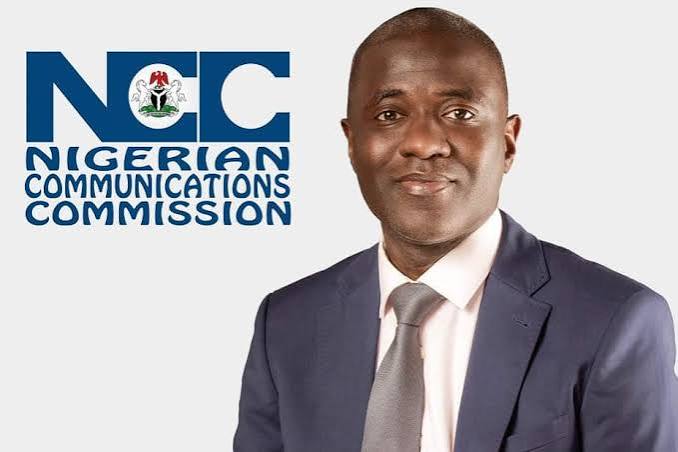
Nigeria’s telecommunications regulator is threatening to withdraw underutilised frequency allocations from operators that fail to demonstrate meaningful network deployment by December 31, 2026. The move could reshape the country’s telecoms market, expose operators with dormant spectrum investments to significant financial losses and accelerate infrastructure expansion, while raising important questions about competition, regulatory compliance, digital financial inclusion and the future of broadband connectivity.
Telecommunications operators in Nigeria face a critical regulatory deadline as the Nigerian Communications Commission (NCC) moves to enforce more effective utilisation of radio frequency spectrum, warning that companies unable to demonstrate meaningful deployment and service delivery could lose their allocated frequencies.
The December 31, 2026 deadline places renewed pressure on operators holding valuable spectrum licences without sufficient evidence of network deployment, infrastructure investment and improved service delivery.
Under the reported regulatory position, the Commission could revoke and reassign underutilised spectrum without compensation or replacement, potentially affecting operators that acquired expensive frequency allocations but have struggled to translate them into operational telecommunications services.
The development represents a significant shift towards a more performance-driven approach to spectrum administration, with the regulator seeking to ensure that scarce national telecommunications resources deliver measurable economic and public benefits.
Millions of dollars at stake as operators face regulatory pressure
Spectrum is one of the most valuable resources in the telecommunications industry. It enables wireless communication, mobile broadband, voice services and the deployment of advanced technologies such as 4G and 5G.
Telecommunications companies invest substantial amounts to secure spectrum licences, but acquiring frequencies does not automatically translate into better connectivity. Operators must also invest in base stations, fibre transmission, power infrastructure, equipment and network expansion.
The situation involving Mafab Communications illustrates the challenges.
Mafab secured a 100 MHz block in the 3.5 GHz frequency band for approximately $273.6 million during Nigeria’s December 2021 5G spectrum auction, emerging alongside MTN Nigeria as one of the original winners.
However, delays in deploying its 5G network led to regulatory extensions and subsequent arrangements to transfer its spectrum holdings, including additional frequencies in the 2.1 GHz band, to MTN Nigeria.
The development illustrates how spectrum trading and transfers could provide an alternative to outright revocation where an operator lacks the financial or technical capacity to deploy its allocation independently.
MTN Nigeria and Airtel Nigeria have also attracted attention over the utilisation of their 5G spectrum holdings, demonstrating that the challenge is not necessarily restricted to smaller operators.
Rising data consumption exposes Nigeria’s infrastructure ga
The NCC’s position comes amid a substantial increase in demand for internet connectivity.
Monthly data consumption reportedly increased from approximately 517,670 terabytes in January 2023 to 1.73 million terabytes in September 2026.
Despite this growth, Nigeria’s 5G population coverage stood at approximately 13 per cent in April 2026.
The figures highlight a significant gap between the country’s expanding digital economy and the availability of telecommunications infrastructure capable of supporting reliable, high-capacity connectivity.
For millions of Nigerians, poor network quality, congestion, inconsistent broadband access and limited connectivity in underserved communities remain persistent challenges.
The regulator’s position is that valuable spectrum allocations should translate into actual network deployment, greater geographical coverage and improved quality of service rather than remain commercially underutilised.
Spectrum regulation, competition and market concentration risks
While the proposed enforcement approach could encourage operators to accelerate investment, it also raises important competition concerns.
If struggling operators are compelled to surrender spectrum or transfer their holdings to larger competitors, the market could experience further concentration of valuable telecommunications resources.
Smaller operators may find it difficult to compete with established companies that have greater financial resources, extensive infrastructure and stronger access to capital.
The NCC will therefore need to balance enforcement with policies that encourage spectrum sharing, leasing and transparent transfers.
Allowing smaller internet service providers and regional operators to access unused spectrum through commercially viable arrangements could expand broadband availability without requiring every company to participate in expensive spectrum auctions.
However, such arrangements must be subject to appropriate competition safeguards to prevent dominant operators from accumulating excessive control over critical frequency resources.
New investment framework seeks to reward infrastructure expansion
Alongside the reported December deadline, the NCC is developing an Incentive-Based Spectrum Investment Framework (IBSIF), intended to link spectrum-related incentives to additional and measurable investments in telecommunications infrastructure.
Under the proposed framework, operators could receive incentives in exchange for verifiable investments in network deployment, geographical coverage, capacity expansion and service quality
The Commission is also considering extending spectrum licence tenures from 10 years to 15 years to provide greater investment certainty and encourage long-term infrastructure commitments.
The proposal includes independent technical and financial verification to establish whether operators are making genuine additional investments rather than simply reclassifying existing expenditure.
Stakeholder consultations were ongoing in November 2026, with the NCC’s consultation paper setting November 30 as the deadline for submissions.
The proposed investment framework should be distinguished from the reported December 31 enforcement deadline. The former is still under consultation, while the latter concerns the utilisation of existing spectrum allocations.
Implications for fintech, banking and financial inclusion
The development has implications beyond telecommunications companies.
Nigeria’s financial services industry increasingly depends on reliable mobile connectivity to deliver digital banking, electronic payments, agency banking, mobile money and financial technology services.
Poor network coverage and unreliable connectivity can disrupt payment processing, compromise customer experiences and limit access to financial services, particularly in rural and underserved communities
For fintech companies, banks and payment service providers, improved broadband infrastructure can strengthen the reliability of digital financial channels, support real-time transactions and expand access to financial services
It can also support more effective deployment of digital identity verification, electronic customer onboarding and technology-driven AML/CFT controls.
However, expanding digital connectivity must be accompanied by stronger cybersecurity safeguards. As more financial activities migrate to mobile and internet-based platforms, telecommunications infrastructure becomes increasingly important to the resilience of Nigeria’s financial system.
The designation of telecommunications infrastructure as Critical National Information Infrastructure further underscores the strategic importance of protecting networks against cyberattacks, sabotage and service disruptions.
The regulatory challenge ahead
The NCC’s reported deadline presents a significant test of its ability to balance spectrum enforcement, infrastructure investment, competition and consumer protection
The Commission will need transparent utilisation benchmarks, credible technical assessments and clear procedures for determining whether spectrum is genuinely underutilised.
It must also ensure that operators are not penalised for deployment delays arising from factors beyond their reasonable control, including difficulties obtaining rights of way, infrastructure-sharing challenges, power constraints and other regulatory bottlenecks.
Ultimately, spectrum policy should serve the broader public interest rather than simply generate revenue from licence auctions or punish operators unable to meet deployment expectations.
As the December 31 deadline approaches, Nigeria’s telecommunications industry faces a defining question: should valuable national spectrum remain with operators that cannot demonstrate meaningful utilisation, or should it be reassigned to companies capable of converting it into better connectivity, wider broadband access and measurable economic value?
For millions of Nigerians struggling with poor internet access, the ultimate measure of the NCC’s policy will not be the number of licences revoked, but whether the country’s telecommunications infrastructure becomes more accessible, reliable, competitive and resilient.







No Comment! Be the first one.