




SEC Orders Immediate Asset Freeze on Three Terrorism-Sanctions Designees, Warns Capital Market Firms of Licence Revocation
The Securities and Exchange Commission (SEC) has directed all Capital Market Regulated Entities (CMREs) to immediately freeze funds, assets and economic resources belonging to three newly designated...
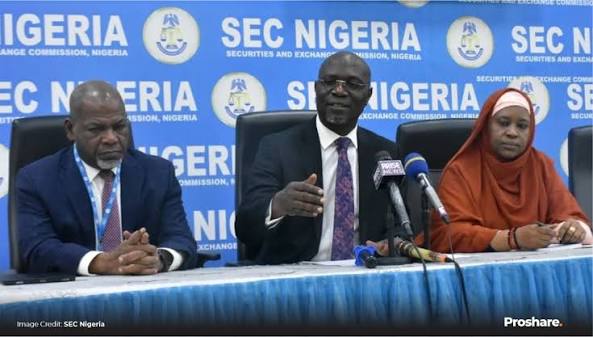
The Securities and Exchange Commission (SEC) has directed all Capital Market Regulated Entities (CMREs) to immediately freeze funds, assets and economic resources belonging to three newly designated individuals on Nigeria’s terrorism financing sanctions list, warning that non-compliance could attract regulatory fines, suspension of operations or revocation of operating licences.
The directive, contained in circulars issued on yesterday, follows the designation of three individuals by the Nigeria Sanctions Committee (NigSAC), pursuant to amendments to the United Nations Security Council’s ISIL (Da’esh) and Al-Qaida sanctions list.
The newly designated individuals are Emilie Edwige Konig (QDi.340), Oumar Diaby (QDi.342) and Peter Cherif (QDi.376). According to the SEC, the designations relate to alleged involvement in terrorism financing, recruitment, facilitation and support activities connected with Islamic State and Al-Qaida-affiliated organisations.
Under the directive, capital market operators must immediately identify and freeze, without prior notice, all funds and economic resources belonging to the designated individuals within their possession or control. They are also required to report frozen assets, compliance actions and attempted transactions to the NigSAC Secretariat, while filing Suspicious Transaction Reports (STRs) with the Nigerian Financial Intelligence Unit (NFIU).
The Commission further directed operators to report potential name matches in financial transactions, including matches identified in historical records, cease dealings with designated persons and maintain continuous transaction monitoring.
The SEC warned that violations would constitute breaches of the Investments and Securities Act, 2025 and its Anti-Money Laundering, Counter-Terrorism Financing and Counter-Proliferation Financing Regulations, 2023.
In a separate development, the Commission notified operators that three previously designated individuals had been removed from the sanctions list: Bassam Ahmad Al-Hasri (QDi.399), Iyad Nazmi Salih Khalil (QDi.400) and Shafi Sultan Mohammed Sultan Al-Ajmi (QDi.338).
However, delisting does not automatically eliminate the need for risk assessment. The SEC directed operators to apply enhanced customer due diligence and appropriate ongoing monitoring where relevant relationships exist, while ensuring that restrictions arising from other applicable legal measures remain in place.
Compliance Implications for Capital Market Operators
The directive creates immediate operational and regulatory obligations for Nigeria’s capital market. Compliance departments must update sanctions-screening databases, review existing customer relationships, examine beneficial ownership structures and screen historical transactions for potential matches involving the newly designated individuals. Institutions must identify and freeze assets belonging to confirmed designated persons within their possession or control, without prior notice, while reporting relevant findings and attempted transactions to the NFIU and NigSAC. Failure to implement these measures could expose operators to regulatory sanctions, financial penalties, suspension of operations and possible revocation of operating licences.
Beyond immediate asset-freezing obligations, the development places greater responsibility on boards, chief compliance officers, money laundering reporting officers and senior management to demonstrate effective AML/CFT/CPF governance. Firms must maintain documented evidence of sanctions screening, investigations, freezing instructions, suspicious transaction reports and regulatory notifications. Historical transaction reviews are particularly important because potential exposure may involve previously established customer relationships, associated entities, beneficial owners and intermediaries. Equally, operators must distinguish genuine matches from false positives to avoid unlawfully restricting legitimate customers. The removal of previously designated individuals also requires timely database updates, subject to any independent legal restrictions.
The wider implications extend to correspondent banking relationships, international investor confidence and Nigeria’s standing in the global financial system. Weak sanctions controls could expose financial institutions to reputational damage, regulatory intervention and restrictions in international financial relationships. Capital market operators should therefore strengthen automated screening capabilities, ensure continuous monitoring of regulatory alerts and conduct periodic independent assessments of their sanctions-compliance frameworks. Board-level oversight, staff training, effective escalation procedures and auditable compliance records are essential to demonstrating regulatory readiness.
The SEC’s directive ultimately reinforces a fundamental regulatory expectation: financial institutions must be able to identify designated persons, prevent prohibited access to financial resources, report suspicious activity and maintain verifiable evidence of compliance. Sanctions compliance is no longer merely a periodic screening exercise; it is an ongoing operational and governance responsibility.




No Comment! Be the first one.