



Reps Quiz DMO, TCN Over ₦54.57tn Borrowing, ₦446.7bn Unrecovered Debt
The House of Representatives Public Accounts Committee has summoned officials of the Debt Management Office (DMO) and the Transmission Company of Nigeria (TCN) to explain alleged financial...
- Public Accounts Committee seeks explanations over alleged borrowing above approved budget estimates and outstanding government receivables, raising questions about financial controls, statutory compliance and accountability.
The House of Representatives Public Accounts Committee has summoned officials of the Debt Management Office (DMO) and the Transmission Company of Nigeria (TCN) to explain alleged financial irregularities identified in the Auditor-General of the Federation’s 2024 report.
The hearings, scheduled for Monday and Tuesday, October 12 and 13, 2026, will examine the DMO’s reported failure to comply with approved borrowing estimates between 2020 and 2024, as well as TCN’s alleged failure to recover ₦446.70 billion owed to the Federal Government by various public institutions.
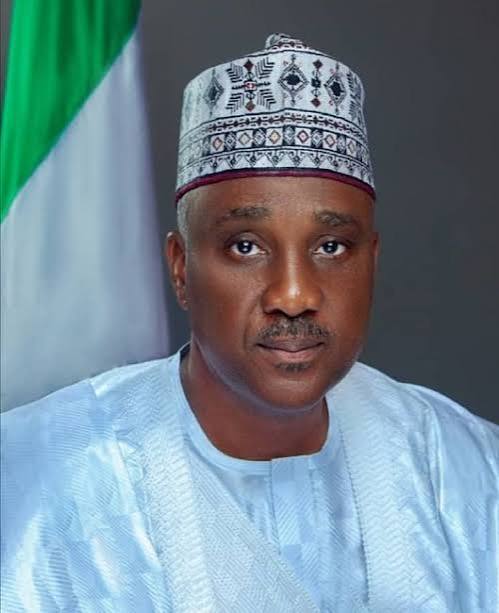
The committee, chaired by Bamidele Salam, is seeking explanations as part of its constitutional oversight responsibilities and efforts to enforce compliance with public financial management regulations.
A notice of invitation dated September 29, 2026, directed the agencies to submit requested documents at least 72 hours before their scheduled appearances and required their accounting officers and relevant subject-matter experts to attend the hearings.
The issues under review raise questions about compliance with budgetary approvals, debt management controls, revenue recovery procedures and the responsibility of public institutions to maintain accurate financial records.
DMO Faces Questions Over ₦54.57tn Borrowing Variance
According to the Auditor-General’s Annual Report on Non-compliance and Internal Control Weaknesses in Ministries, Departments and Agencies for the year ended December 31, 2024, the DMO allegedly contracted fresh domestic and foreign loans totalling ₦88.67 trillion between 2020 and 2024, against ₦34.89 trillion provided for debt financing in the Federal Government’s approved budgets
The reported difference of ₦54.57 trillion has prompted questions about whether borrowing activities remained within approved fiscal limits and whether the necessary authorisations and documentation were in place.
From a compliance standpoint, the key issue is whether the borrowing was properly authorised, accurately reported and consistent with applicable budgetary provisions and debt-management procedures.
Government borrowing is subject to legal and institutional controls intended to ensure that public liabilities are incurred through appropriate approval processes and documented financial arrangements. The DMO’s responsibility for managing public debt makes accurate reporting and adherence to approved borrowing plans central to its mandate.
The committee is expected to establish the circumstances surrounding the reported discrepancy and determine whether the variance resulted from additional approvals, differences in the classification or timing of transactions, or potential breaches of applicable requirements.
The figures cited in the audit report do not, on their own, establish that the entire difference represents unlawful borrowing. The DMO’s explanations and supporting records will be important in determining the nature and extent of any non-compliance.
TCN Under Scrutiny Over ₦446.7bn Outstanding Deb
The committee will also question TCN over its alleged failure to recover ₦446.70 billion out of ₦882.75 billion reportedly owed to the Federal Government by public agencies and institutions
The outstanding amount raises concerns about the effectiveness of debt collection procedures, the monitoring of receivables and the financial controls governing transactions between government entities.
TCN is expected to explain the status of the outstanding obligations, the recovery measures undertaken and the reasons the amounts remain unpaid.
A comprehensive account would need to distinguish between debts that are overdue, amounts subject to reconciliation or disputes, and sums for which recovery arrangements have already been established
The compliance concern is whether TCN has maintained adequate records, pursued recovery within the applicable framework and reported outstanding balances accurately. Where weaknesses are established, corrective measures may be required to strengthen collection procedures and prevent government revenue from remaining tied up indefinitely.
The hearing also highlights the importance of coordination among public institutions where outstanding obligations affect government finances.
Legislative Oversight and Accountability
The Public Accounts Committee examines the Auditor-General’s findings and seeks explanations from public institutions over suspected financial irregularities, weaknesses in internal controls and failures to comply with financial regulations
Sections 88 and 89 of the 1999 Constitution, as amended, provide the National Assembly with powers to conduct investigations within its constitutional mandate and require relevant persons to provide evidence or documents.
The hearings will provide an opportunity for the DMO and TCN to respond to the audit findings before the committee determines what further action may be necessary.
The outcome could include recommendations for improved financial controls, recovery of outstanding funds or further investigation where evidence warrants it. Any finding of wrongdoing, however, must be distinguished from the initial audit query and established through the appropriate process.
Ultimately, the proceedings will test whether public institutions can demonstrate that borrowing, debt management and revenue recovery are supported by proper authorisation, reliable documentation and effective internal controls.
For the DMO, the priority is to reconcile the reported borrowing figures with approved budgets and relevant authorisations. For TCN, it is to account for outstanding receivables and demonstrate effective recovery efforts.
The broader accountability question is whether audit findings will translate into verifiable corrective action, stronger financial discipline and better protection of public resources.




No Comment! Be the first one.