




SHOULD NIGERIANS RECORD THE POLICE?
The law now says yes. The harder question is what happens next. For years, the smartphone camera has been one of the few tools available to an ordinary Nigerian confronted by the power of the...
The law now says yes. The harder question is what happens next. For years, the smartphone camera has been one of the few tools available to an ordinary Nigerian confronted by the power of the state.
At a checkpoint. During a stop-and-search. On a busy road. At the scene of an arrest. The Nigerian Police have the authority to stop you. The citizen has a phone.
That simple imbalance has made the question of whether Nigerians can record police officers far more than a debate about cameras. It is a question about accountability, evidence, privacy, public safety and the limits of state power.
In March 2026, the Federal High Court in Warri, Delta State, gave the debate an important legal answer.
In Maxwell Nosakhare Uwaifo v. Inspector-General of Police & Others, Justice H. A. Nganjiwa affirmed that Nigerian citizens have the right to record police officers performing their duties in public, including during stop-and-search operations, provided the citizen does not physically obstruct or interfere with the officers. The court also ruled that officers conducting public operations must be properly identifiable, including through visible names and force numbers.
The judgment awarded the applicant ₦5 million in compensation and ₦2 million in costs. It also directed the relevant police authorities to issue guidance affirming the public’s right to record and report police activities in public spaces.
For citizens, the message is significant: Recording a police officer performing a public duty is not, by itself, a crime.
But that does not mean every act of filming, every publication of footage, or every interaction involving a camera is automatically lawful. That distinction is becoming increasingly important.
A right recognised by the courts…
The Warri case arose from an encounter experienced by lawyer Maxwell Nosakhare Uwaifo while travelling from Benin to Warri in May 2025.
According to the court record, he encountered men operating what appeared to be a police checkpoint. When he attempted to record the encounter with his phone, he said he was threatened with arrest. He also complained that the officers involved were not properly identifiable.
The court ultimately held that citizens have the right to record police officers performing their duties in public for purposes including documenting and subsequently disseminating information, provided they do not physically interfere with police operations.
The ruling went beyond the camera. It addressed the identity of the people exercising state power.
The court declared that police officers engaging in patrols, stop-and-search operations and other public interactions must wear uniforms displaying their names and force numbers, and ordered measures against non-compliance. That is an important principle.
A citizen should know who is exercising coercive state authority over him.
And where there is a dispute about what happened, there should be a reliable record of the encounter.
The police have previously supported recording….
The current controversy is not the first time the Nigeria Police Force has addressed the issue.
In December 2023, then-Force Public Relations Officer Olumuyiwa Adejobi stated publicly that Nigerians could photograph or record police officers on duty and that harassment of people doing so was not acceptable.
The police have also recognised the potential value of recording.
A 2025 report quoted a police officer explaining that citizens could record officers for evidence, while also raising a legitimate operational concern: recording should not expose officers or an operation to danger. That distinction matters.
A camera can promote accountability. But a camera can also affect an operation.
The answer cannot simply be “never record.” Nor should it be “record everything regardless of circumstance.”
The real question is whether the recording interferes with lawful police activity.
Why the debate has returned…
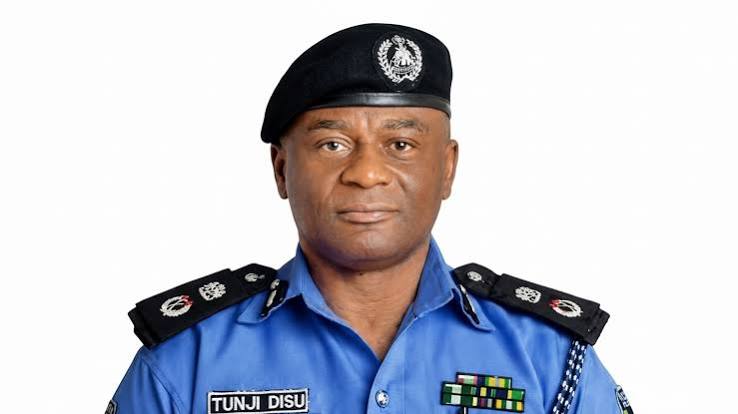
The issue resurfaced in September 2026 after Inspector-General of Police Olatunji Disu expressed concern about what he described as widespread recording of police officers, including situations outside the performance of their official duties.
The IGP acknowledged the constitutional right to record officers performing their duties in public but called for restraint, particularly against turning officers into material for social-media skits.
The Nigeria Police Force subsequently clarified that the IGP was not seeking to prevent citizens from recording officers on duty. Force spokesperson Aliyu Giwa said the concern was about misuse of recordings and emphasised responsible technology use rather than a ban on filming.
The Nigerian Bar Association has similarly entered the conversation.
NBA President Oyinkansola Badejo-Okusanya has defended the principle of recording police officers while they perform lawful public duties, while also calling for clearer boundaries protecting officers’ privacy.
That may be where the debate needs to move. Away from the simplistic question—“Can I record a policeman?”. And towards the more useful question: “What are the rights and responsibilities of everyone involved when a police encounter is being recorded?”
The camera is not a licence to interfere..
The court’s ruling does not give citizens permission to obstruct police operations.
A person may record from a position that does not physically interfere with an officer carrying out a lawful duty. That distinction is explicit in reporting of the judgment.
That means a camera should not become an excuse for deliberately blocking an officer, interfering with an arrest, entering a restricted operational area or creating a dangerous situation. The same principle should apply to the police.
The presence of a camera does not automatically transform a citizen into a suspect. A phone being pointed at an officer is not, by itself, evidence of obstruction. The challenge for policing is therefore not simply to tolerate cameras, but to develop clear operational guidance on how officers should respond when citizens record them.
Recording is not the same as publishing…
There is another distinction that deserves greater public attention.
The right to record a public police activity does not necessarily mean that every recording can be published without consideration of children, witnesses, private information or people who have nothing to do with the alleged misconduct other laws and rights.
A recording may contain victims, children, witnesses, private information or people who have nothing to do with the alleged misconduct.
It may also be edited in a way that removes critical context.
A 30-second social-media video can therefore become something very different from the original evidence.
This is where journalism, responsible citizenship and social-media content creation part company.
A responsible recorder preserves the original footage. A responsible journalist verifies it. A responsible publisher establishes the context.
And a responsible viewer should understand that a viral clip may show an important moment without showing the entire event.
The next frontier is evidence…
The most important consequence of the right to record may ultimately be what happens after the recording. A video only becomes powerful evidence when it can be authenticated, preserved and properly presented.
Questions immediately arise. Who owns the original? Has it been edited? When was it recorded? Who has possessed the device? Has the footage been uploaded, compressed or altered? Can the people shown in the footage be identified? These questions become especially important when a recording is relied upon in disciplinary proceedings or court management and the need for stronger systems around the preservation of police and.
The Guardian Newspapers recently reported concerns from legal experts about evidence management and the need for stronger systems around the preservation of police and citizen-generated footage. One proposal discussed was independent, tamper-resistant storage for police body-camera footage.
That suggests a broader lesson for Nigeria: Accountability requires more than cameras. It requires systems.
From smartphones to body cameras…
There is also a bigger institutional question. If citizens are increasingly expected to document police activity, should the police themselves be expected to systematically document their interactions with citizens?
Body-worn cameras could provide an official record alongside citizen recordings. But the technology raises its own questions.
Who controls the footage? Can an officer delete it? When must it be disclosed? How long should it be retained? Who independently audits the system? What happens when credible answers, body cameras can become another technology without a camera is switched off? How are privacy and sensitive investigations protected?
Without credible answers, body cameras can become another technology without accountability. With proper safeguards, however, they could provide evidence for both sides of a disputed encounter.
So, should Nigerians record the police?
The legal position emerging from the Warri judgment is clear enough on the central point: Yes, Nigerians may record police officers performing their duties in public, provided they do not physically obstruct or interfere with lawful police activity.
But the responsibility does not end when the recording button is pressed.
Citizens should use cameras responsibly. Police officers should respect lawful public scrutiny. Authorities should protect evidence. Journalists should verify before publishing. Platforms and users should distinguish documentation from humiliation or entertainment. And institutions should build systems that turn evidence into accountability.
Ultimately, the issue is bigger than whether Nigerians should point their phones at policemen. It is about the relationship between power and scrutiny.
A democratic society cannot demand that citizens obey the law while making the exercise of public power invisible. Nor can it allow every encounter with a public official to become unrestrained social-media content.
The principle should be simpler: Public power should be accountable. Citizens should exercise their rights responsibly. And evidence should be protected.
The smartphone has changed the balance. The law has now recognised that reality. The next challenge is ensuring that the camera does not merely record what happened, but helps establish the truth about what happened.
That is where accountability begins.




No Comment! Be the first one.