





Inside Nigeria’s Politics of Patronage, Access and Succession
Politics has always been about people, relationships and trust. Nigeria makes that even more obvious. A recent APC campaign list has prompted questions about who gets invited into the room and who...
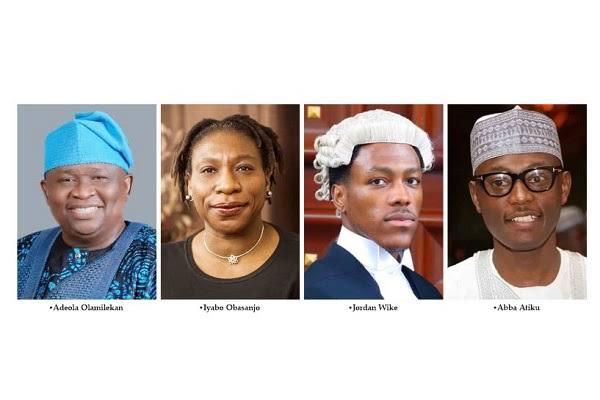
- A list of names for a presidential campaign committee has opened an old Nigerian political argument: who gets access, who gets overlooked and who has the right surname? In Ekiti, the debate has become particularly pointed. Beneath the usual political noise are serious questions about transparency, patronage, succession and how much of Nigeria’s political system still runs on relationships rather than rules.
Politics has always been about people, relationships and trust. Nigeria makes that even more obvious. A recent APC campaign list has prompted questions about who gets invited into the room and who does not. In Ekiti, the argument has quickly moved beyond party politics into a bigger question: is political opportunity earned, inherited, negotiated or simply handed down?
Analysis
There is a temptation to dismiss arguments about political lists as the usual quarrelling that follows every appointment. That would be a mistake.
The names that make a presidential campaign structure tell a story. So do the names that are left out.
The controversy around the latest APC Presidential Campaign Council composition has revived an old Nigerian political reality: access to power is rarely just about competence. Family, loyalty, political usefulness, relationships and the strength of one’s political godfather can all matter.
That is not peculiar to Nigeria. Politics everywhere runs on networks. The uncomfortable part is what happens when those networks become so powerful that they start determining who gets opportunities before competence is even considered.
The Ekiti argument is particularly interesting because former governor Ayo Fayose appears to have deliberately invested in the political future of his sons. Chukwu and now Jomiloju Fayose have been positioned within political structures at different points.
There is nothing inherently wrong with that.
In fact, it would be difficult to condemn the Fayose’s while celebrating the emergence of other politicians whose surnames are already well known in Nigerian politics. Kaduna’s Bello El Rufai, Oyo’s Dapo Lam Adesina and Olamijuwonlo Alao Akala, Ogun’s Olumide Osoba, Lagos’ Ibrahim Babajide Obanikoro and other politically connected younger figures have all benefited from something most young politicians do not have at the beginning of their careers. A political network.
That is where the argument becomes uncomfortable.
If having a father who knows the right people is simply an accepted part of political life, then the honest conversation is not whether political families should exist. They always will. The question is whether the system has enough room for people who do not have one.
The father problem
The phrase “you need a father to go farther” sounds like one of those cynical Nigerian political jokes that everyone laughs at because everyone knows there is some truth in it. But it deserves more serious examination.
A young politician with an established political father begins several steps ahead. There may be introductions to party leaders, access to funders, invitations to strategic meetings and opportunities to contest positions that would otherwise take years to reach.
Another young person may be equally intelligent, equally ambitious and perhaps more capable. But nobody knows his name.
That is not necessarily corruption. It is something subtler. It is access inequality. And access inequality is a governance problem when political institutions are supposed to provide opportunities based on transparent and defensible criteria.
The Ekiti question
The argument surrounding Ekiti becomes sharper because only a small number of Ekiti indigenes reportedly appeared on the PCC Central Committee.
The distinction between “Ekiti indigenes” and “people recommended by the Ekiti APC structure” is important. They are not the same thing. The political argument is that some of the people on the list did not get there because the state party structure nominated them. The same chorus is sung across Nasarawa, Lagos, Ondo, Ekiti and several other APC States. It raises an obvious question. Who actually made the decisions? Was the list negotiated with state party leaders? Were governors consulted? Were former governors consulted? Were the names based on professional expertise, electoral influence, loyalty, geography, youth representation or simply presidential confidence?
There is nothing wrong with a president choosing people he trusts. But where a party is spending public political energy preparing for a national election, transparency about the selection process matters.
Not because every appointment needs a public examination. Because unexplained political patronage eventually becomes a source of resentment inside the party itself.
Where is Governor Oyebanji in this equation?
The absence of several figures associated with Governor Abiodun Oyebanji’s administration has also generated questions about the governor’s influence over the federal campaign structure.
The absence of a person’s name does not prove that a governor was excluded from the process. Nor does it prove that Abuja ignored the state government. But politically, perception matters.
If the governor’s strongest political operators are missing from a structure being assembled for a presidential campaign in his own state, people will naturally ask whether the governor was consulted and what role he played.
That is not conspiracy theory. It is basic organisational politics.
The same question can be asked of other governors whose states are represented on the national campaign structure. Who recommended the names? Who approved them? Who was consulted? And who was not?
The compliance gap
This is where the story becomes more interesting for a ComplianceToday.
Political parties are not banks. Their appointment processes cannot simply be subjected to the same regulatory controls as a financial institution. But the principles of good governance still apply.
A well governed political organisation should have some mechanism for managing conflicts of interest, recording decision making, preventing abuse of position and ensuring that party resources are not captured by a narrow group.
Nigeria has repeatedly struggled with the difference between formal rules and actual political practice.
The rules may say one thing. Relationships can produce another outcome. That is the compliance gap.
It is also why political patronage becomes dangerous when nobody can explain the basis for decisions.
A system does not have to be corrupt to be opaque.
The young people watching from outside..
Perhaps the most revealing part of this debate is the frustration among young political aspirants.
There is a growing class of Nigerians who are educated, digitally sophisticated and politically interested but remain largely outside the rooms where decisions are made.
They are often called “Data Boys”, social media warriors, digital campaigners or political technocrats.
They can analyse voting patterns. They can run digital campaigns. They can build audiences overnight.
But when the real appointments are made, many discover that influence on Twitter is not the same thing as influence inside a political party. That is a hard lesson.
And it explains why some young people are becoming cynical about politics. They are told to participate. Then they discover that participation does not necessarily lead to access.
Political parties have a succession problem
There is another issue hiding underneath the argument. Nigeria’s major political parties have not yet solved the question of succession.
Older political leaders remain extremely influential because they control relationships, structures and access. Younger politicians are often expected to wait their turn.
But who decides when the turn comes? That is where mentorship can become patronage.
A leader may genuinely be preparing younger people for public service. Another may simply be creating loyalists who will protect his interests.
From outside, both can look identical. The difference is whether the younger politician is being developed to become an independent leader or being positioned as an extension of the older one.
That distinction matters enormously for democratic institutions.
And then there is Asiwaju..
The argument that “everything is politics with Asiwaju” is itself a political interpretation, not a fact that can simply be established from the list.
But there is a fair analytical point underneath it.
President Bola Ahmed Tinubu has spent decades building political networks. His political style is deeply rooted in relationships, loyalty and long-term positioning.
Anyone studying Nigerian politics knows that his appointments and political alliances rarely exist in isolation.
The question is not whether that is inherently good or bad. The question is whether the system around those relationships has enough institutional checks to prevent personal networks from becoming substitutes for transparent party structures. That is where the compliance conversation should sit.
Merits of Political Patronage
There is a case to be made for political mentorship. Experienced politicians know how government works. They understand party structures, electoral realities and the sometimes-brutal mechanics of political organisation. Bringing their children or protégés into politics can be a legitimate form of succession planning.
Some political families also produce competent public servants. A surname does not make somebody incompetent.
Rejecting a person simply because his father was powerful would be another form of unfairness. The real problem is not political families. It is political families without competition.
The Risks
The danger comes when family connections become the main gateway to political opportunity.That can create a closed system where talented outsiders never get the chance to prove themselves.
It can also weaken accountability. A politician protected by a powerful sponsor may become less responsive to ordinary party members.
Over time, the party stops looking like an institution and starts looking like a collection of political households. That is unhealthy for democracy.
Compliance Takeaway
The APC campaign list has produced a familiar Nigerian argument about who belongs in the room. But beneath the politics is a governance question worth asking seriously. Can political parties create systems where relationships matter, but relationships do not become the only qualification for access?
Nigeria does not need to pretend that political godfathers, families and networks will disappear. They will not.
What it needs is enough institutional transparency to make sure that the son of a former governor and the young person with no political surname can, at least occasionally, compete on something other than who their father knows.
Because in the end, the most uncomfortable question from this entire episode may also be the simplest: Who is your father, and what happens if the answer is nobody?





No Comment! Be the first one.