




When Road Enforcers Break the Rules: Nigeria’s Traffic Compliance Problem Runs Both Ways
Nigeria’s road problem is usually described as indiscipline. That description is convenient, but incomplete. Every day, motorists drive against traffic, ignore traffic lights, park where they...
Nigeria’s road problem is usually described as indiscipline. That description is convenient, but incomplete.
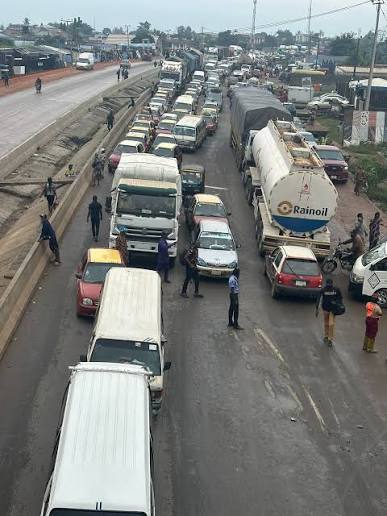
Every day, motorists drive against traffic, ignore traffic lights, park where they should not, overload vehicles, drive dangerously and, in some cases, get behind the wheel after drinking. Commercial drivers are hardly immune. Some stop wherever passengers want to enter or leave, some drive aggressively to compete for passengers, while others operate vehicles that should probably not be on the road in the first place.
The consequences are familiar. Traffic builds. Fuel is wasted. Deliveries arrive late. Workers lose hours. Emergency vehicles struggle to move. Crashes happen. But there is another part of the Nigerian road compliance problem that deserves much closer attention. The people enforcing the rules are also subject to the law. And sometimes, the question is whether they are following it.
The distinction matters because road enforcement is not a free hand given to anyone wearing a uniform. The powers of the Federal Road Safety Corps, Vehicle Inspection Officers and state traffic agencies come from statutes, regulations and, increasingly, court decisions. Where those powers stop, enforcement should stop too.
The Federal Road Safety Commission Establishment Act 2007 gives the FRSC a broad mandate. It covers traffic management, prevention and minimisation of road crashes, supervision of highway users, traffic regulation, clearing highway obstructions and public education. The Commission also has responsibilities covering speed limits, driving licences, seat belts, mobile phone use and other road safety matters. The FRSC states that its personnel can arrest and prosecute people reasonably suspected of committing traffic offences. That is considerable authority. But considerable authority also means considerable responsibility.
The question for enforcement agencies is therefore not only whether a motorist has broken a rule. It is whether the officer has acted within the power granted by law, followed the required procedure and imposed a sanction that the law permits.
The VIO controversy in Abuja provides perhaps the clearest recent example.
In 2024, the Federal High Court in Abuja ruled in a fundamental rights case that the Directorate of Road Traffic Services, commonly known as VIO, lacked statutory authority to stop, impound or confiscate vehicles and impose fines on motorists. The case followed a complaint by a motorist whose vehicle had allegedly been stopped and confiscated by VIO officials.
The VIO appealed.
In December 2025, the Court of Appeal in Abuja dismissed that appeal and affirmed the lower court’s decision. The appellate court also awarded costs against the VIO.
That judgment deserves more attention than it has received because it exposes a basic compliance principle.
An agency cannot create its own powers simply because it believes those powers would make enforcement easier. If the law does not grant the power, the uniform does not create it.
The Abuja ruling, however, should not be lazily applied to every VIO operation in Nigeria.
Lagos, for example, has its own statutory framework. The Lagos State Ministry of Justice responded to the Abuja judgment in February 2026 by making precisely that point. It said the decision was not of general nationwide application and argued that Lagos State has legislation governing vehicle inspection and roadworthiness enforcement. The ministry cited provisions of the Lagos State Transport Sector Reform Law that give the State Vehicle Inspection Service responsibilities including vehicle inspection, roadworthiness certification and cooperation with other agencies in enforcing traffic rules.
That distinction is important. It also makes the Lagos case more interesting, not less.
Lagos does not operate in a legal vacuum. Its traffic laws expressly regulate matters such as vehicle routes, parking, direction of travel and traffic management. The Lagos State Road Traffic Law 2012, for example, provides for restrictions on particular classes of vehicles and prohibits driving or parking in circumstances specified by the law.
LASTMA also publishes a schedule of traffic offences and penalties. Its published rules include sanctions for illegal parking, crossing a centre line, disobeying traffic control personnel and violations involving commercial vehicles.
The compliance question is therefore straightforward. If the law permits a penalty, was the correct offence established? Was the correct procedure followed? Was the authorised penalty imposed? Was the motorist given the opportunity to challenge the allegation where the law provides for one? And, perhaps most importantly, did the enforcement action improve traffic flow or make the situation worse?
These questions matter because roadside enforcement can itself produce congestion.
A traffic officer who stops a vehicle in an already crowded lane may technically be dealing with an offence while simultaneously creating another traffic problem. A vehicle being detained in the wrong place can obstruct traffic. A confrontation between an officer and motorist can bring movement to a standstill.
There is an irony here. An agency established to improve traffic can, through poor enforcement practice, contribute to the very disorder it was created to prevent.
That does not mean every LASTMA, VIO or FRSC officer is acting improperly. Many officers work in difficult conditions and deal with motorists who are openly hostile, reckless or unwilling to accept responsibility. But institutional responsibility cannot be reduced to the behaviour of individual motorists.
The same standard should apply to everybody. A driver who goes one way because it is convenient is breaking the rules. An officer who exercises a power the law does not provide is also creating a compliance problem. A motorist who refuses to obey a lawful instruction should face consequences. An enforcement officer who exceeds lawful authority should face consequences too. That symmetry is essential to public confidence. Without it, enforcement starts looking less like regulation and more like a roadside negotiation.
This is where corruption allegations become especially damaging. Motorists frequently complain about demands for unofficial payments, arbitrary penalties and inconsistent treatment. Such allegations should not be presented as established facts without evidence. But neither should they simply be dismissed as the usual complaints of motorists who do not want to pay legitimate penalties. The answer is transparency.
Where a traffic offence attracts a fine, the offence should be clearly identified. The legal basis should be available. The amount should be known. Payment should go through an accountable system. Receipts should be issued. Disputes should have a defined channel.
The more cash based and discretionary the process becomes, the greater the opportunity for abuse. This is not just a question of motorists’ rights. It is an economic issue.
Nigeria already pays heavily for road disorder. A blocked lane delays hundreds of vehicles. A poorly enforced junction can hold up an entire corridor. A commercial vehicle caught in unnecessary delay burns fuel, loses productive hours and may complete fewer trips. The same applies to enforcement.
If roadside enforcement is predictable, lawful and efficient, it can improve movement. If it is arbitrary, confrontational or poorly located, it can become another source of delay. That is why road compliance should be treated as a system rather than a morality lesson.
The private motorist has obligations. The commercial driver has obligations. The vehicle owner has obligations. The traffic management authority has obligations. The inspection officer has obligations. FRSC has obligations. State governments have obligations. And all of them operate within the Constitution and the laws made under it.
The uncomfortable reality is that Nigeria has a compliance problem on both sides of the road. Some motorists behave as though traffic rules are optional. Some enforcement officers behave as though statutory limits are optional. Neither attitude produces an orderly road system.
The country does not need more roadside drama. It needs clearer rules, lawful enforcement, reliable penalties, proper procedures and mechanisms that allow motorists to challenge enforcement when an officer gets it wrong.
There is nothing particularly complicated about the principle. The person driving the car must obey the law. The person stopping the car must obey it too.
Until that becomes the culture, Nigeria’s road problem will remain bigger than reckless drivers, drunken motorists and traffic jams. It will be a failure of compliance from the road user to the regulator, with ordinary Nigerians paying the bill in lost time, lost income, damaged vehicles, legal disputes, congestion and, at the worst end of the scale, lives.


As usual, well thought out. I would like to suggest an executive summary opener as many of our people may not want to go the full hog. A 100 word or so executive summary does a lot to improve the rate at which people read you and it may even make some want to read the full version. A headline is not enough.