





USAID Money Trail: EFCC, FBI Dig Into Where The Millions went
The most interesting part of the EFCC and FBI investigation into USAID funded programmes in Nigeria is not the word “diversion.” That is still an allegation. Investigators have not said how much...
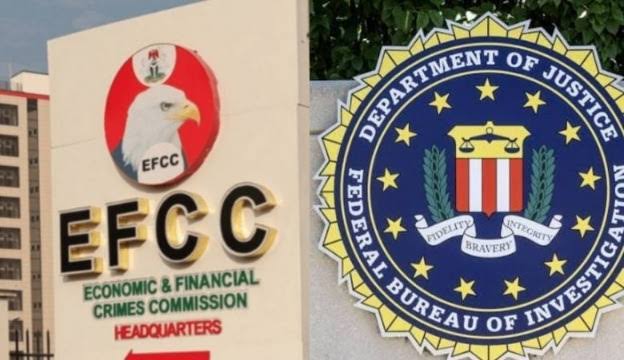
The most interesting part of the EFCC and FBI investigation into USAID funded programmes in Nigeria is not the word “diversion.” That is still an allegation. Investigators have not said how much money is involved, named the organisations under scrutiny or established that funds were actually stolen.
The more important question, for now, is simpler. What happened to money that had already been released when the programmes it was meant to finance were shut down?
That is where the investigation gets uncomfortable.
The Economic and Financial Crimes Commission and the United States Federal Bureau of Investigation are now working together to examine the handling of funds provided to organisations implementing United States supported health programmes in Nigeria, particularly interventions covering HIV and tuberculosis. The renewed cooperation followed a September 10 meeting between an FBI delegation and officials at the EFCC’s Lagos Zonal Directorate 2.
The US government’s decision to discontinue some USAID programmes in 2025 created the immediate problem. Money had already moved. Contracts had been entered into. Organisations had begun implementing projects. Some had established one stop centres for HIV treatment. Then the funding arrangements changed. What followed is now being examined by investigators.
Marcus Maccain, the FBI Assistant Law Enforcement Attaché, told the EFCC that some organisations were suspected of mismanaging or diverting funds provided before the programmes were terminated. Jeremy Kennon, a Special Agent with the US Department of State’s Office of Inspector General, separately said reviews had raised concerns about inflated budgets and other financial irregularities in Kano State and several other states.
Those are serious claims. They are also claims that still have to be tested.
That distinction matters because development funding has a habit of producing impressive numbers and reassuring programme language while making the underlying money trail difficult for outsiders to see. A project can report beneficiaries, treatment centres, workshops and activities without making it particularly easy to answer a more basic question: how much money came in, where did it go, what remained, and what happened to the balance when the project ended?
That is precisely the territory the EFCC says it intends to enter.
Bawa Usman Kaltungo, Acting Zonal Director of the EFCC’s Lagos Zonal Directorate 2, said the commission would trace the funds to their ultimate beneficiaries and establish how the money was spent. Investigators will also examine whether the funds were used for their intended purposes and whether any portion was mismanaged or diverted after the programmes were cancelled. The investigation is expected to cover states where the affected organisations operated.
That sounds straightforward. In practice, it is not.
Following donor money after a programme has ended requires more than looking at a bank statement. Investigators need the original grant agreement, payment schedules, procurement records, invoices, payroll information, contracts with suppliers, records of subgrants and evidence that the goods or services paid for were actually delivered.
They also need to understand what happened when the programme stopped.
Was an expense committed before termination but paid afterwards? Were goods purchased but never distributed? Were staff retained after funding ended? Did implementing organisations transfer money between projects? Were consultants or contractors paid for work that was no longer required? Were assets bought with programme money properly accounted for? Did money remain in accounts controlled by organisations after the underlying activity had ceased?
These questions are not accusations. They are basic questions in any serious financial investigation. And they matter even more when the programme involves health services.
The US and Nigerian governments had supported programmes aimed at HIV and tuberculosis, with money channelled through organisations responsible for delivering services. Some of the organisations established one stop centres for HIV treatment. The funding was therefore not simply sitting in an abstract development account. It was connected to services that affected real people.
That makes the investigation more complicated than a conventional fraud case.
If money was mismanaged, investigators have to determine whether the problem was deliberate diversion, poor financial management, weak procurement, inflated costs, contractual disputes or something else. Those distinctions matter. An organisation spending money badly is not automatically evidence that someone stole it.
The same caution applies to the reported inflated budgets.
Kennon said reviews uncovered concerns over inflated budgets in Kano and other states. But a budget being described as inflated does not, by itself, prove a criminal offence. Investigators still have to establish who prepared it, who approved it, what the underlying costs were, whether the figures were deliberately manipulated and whether anybody benefited improperly.
That is why the financial trail will matter more than the rhetoric around the case.
The EFCC has increasingly presented financial tracing as a central part of its enforcement work. In this case, its partnership with the FBI gives investigators access to another layer of information and potentially makes it easier to follow transactions across jurisdictions.
The FBI has made clear that it wants something more permanent from the relationship. Maccain said the agency was seeking stronger engagement with the EFCC, while Kennon said the FBI wanted a long-term working relationship involving information sharing in both directions.
Financial crime involving development money rarely respects the boundary between the country where funds originate and the country where projects are implemented. Payments can move through banks, contractors, consultants, suppliers and related entities. Records may sit in different jurisdictions. The organisation receiving the grant may not be the organisation ultimately receiving every naira.
This is where traditional grant monitoring can become inadequate.
A donor may have strong controls before money is released. There may be due diligence on the implementing organisation, financial reporting requirements and periodic audits. But controls can weaken when circumstances change suddenly. A programme is cancelled. A contract is terminated. Staff leave. Assets remain. Funds sit in accounts. Vendors have already been paid. And everybody assumes somebody else is responsible for closing the books.
That gap is where financial risk grows. The USAID case is therefore worth watching even before investigators announce any arrests or recoveries. It raises a less dramatic but more useful question about how Nigeria and international donors manage the end of a funded programme.
The end of a programme should be treated as a financial control event, not simply an administrative one.
There should be a clear reconciliation of every payment, every outstanding commitment, every asset purchased and every balance remaining. Funds that no longer have a legitimate programme purpose should be identified and dealt with. Implementing partners should be able to show where the money went without having to reconstruct the trail years later. That sounds obvious. It often is not.
The investigation also puts implementing organisations under a different kind of scrutiny. For years, the compliance conversation around NGOs and development partners has focused heavily on eligibility, reporting and donor requirements. The harder question is whether the financial systems behind those reports can withstand forensic examination. The EFCC and FBI are now effectively asking that question.
It would be premature to conclude that the USAID funds were diverted. The investigation may ultimately find wrongdoing. It may find poor accounting. It may find inflated costs without evidence of criminal diversion. It may also find that some organisations handled the money properly and can account for every naira.
The point of an investigation is to find out. What makes this case important is that it exposes the vulnerable period after funding decisions change. Donor money does not become unaccountable simply because a programme has been cancelled. If anything, that is when the controls need to become tighter.
For the EFCC and FBI, the task now is to follow the money without getting ahead of the evidence. The real test will be whether they can establish, transaction by transaction, what was received, what was spent, what remained and where the money eventually went.
That trail will tell the story better than any press statement can.







No Comment! Be the first one.