




US Sanctions ICC President and Senior Prosecutor, Triggering UN Alarm Over Judicial Independence
• Washington targets ICC President Tomoko Akane and senior trial lawyer Abdoulaye Seye, escalating its campaign against the court and prompting concern from the UN Secretary-General. Meat of the...
• Washington targets ICC President Tomoko Akane and senior trial lawyer Abdoulaye Seye, escalating its campaign against the court and prompting concern from the UN Secretary-General.
Meat of the Story…
The United States has imposed sanctions on International Criminal Court President Tomoko Akane and senior trial lawyer Abdoulaye Seye, escalating Washington’s confrontation with the Hague-based court and triggering renewed concerns over the independence of international judicial institutions.
US Secretary of State Marco Rubio said the two officials were targeted because they had participated in ICC efforts to investigate, arrest, detain or prosecute officials whose governments had not consented to the court’s jurisdiction. The ICC condemned the action, warning that sanctions against judicial actors risk undermining the rule of law and the international legal order.
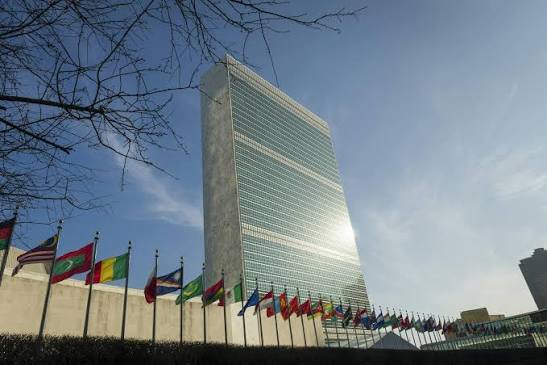
UN Secretary-General António Guterres subsequently expressed serious concern over the designations, describing the ICC as a key pillar of international criminal justice despite its institutional separation from the United Nations.
Analysis
The sanctions mark another escalation in the Trump administration’s campaign against the ICC. Washington has objected particularly to the court’s investigations involving Israeli officials and its broader assertion of jurisdiction over nationals of countries that are not members of the court.
Akane, a Japanese judge and president of the ICC, and Seye, a Senegalese senior trial lawyer, were sanctioned on August 18. Seye was part of the prosecution team involved in seeking an arrest warrant for Israeli Prime Minister Benjamin Netanyahu and has also been nominated for election as an ICC judge.
The United States is not a member of the ICC and has consistently rejected the court’s jurisdiction over US nationals. Washington has also argued that the ICC’s actions against officials from non-member states infringe national sovereignty.
The sanctions nevertheless carry significant practical consequences. The targeted individuals are subject to asset blocking in the United States and restrictions that effectively cut them off from the US financial system. The Treasury Department also issued a general licence allowing transactions involving Akane and Seye to be wound down through September 17.
The development is particularly significant from a sanctions compliance perspective because the targets are senior judicial officials rather than conventional state actors, organised crime figures or commercial entities.
Compliance Implications
The designations reinforce the importance of understanding the legal basis and scope of US sanctions before conducting transactions involving designated individuals.
US persons are generally prohibited from dealing in property or property interests of sanctioned persons unless authorised by OFAC. Foreign financial institutions and multinational companies can also face significant operational and reputational consequences when transactions touch the US financial system.
The ICC episode also highlights the need for financial institutions to distinguish between sanctions risk and broader legal or reputational risk. A designation may create immediate transaction restrictions, but counterparties may also impose additional controls because of the political sensitivity surrounding the sanctioned individual or institution.
Banks, payment providers, professional services firms and international organisations should therefore assess whether their existing screening systems adequately capture individuals designated under rapidly changing geopolitical sanctions programmes.
The situation also demonstrates the importance of reviewing general licences and wind-down provisions. Transactions involving sanctioned parties may not necessarily be prohibited in every circumstance where a general or specific licence provides an authorisation, but such permissions can be time-limited and subject to detailed conditions.
Why the Update Matters
The latest sanctions deepen a growing dispute between Washington and the international criminal justice system.
The United States has now sanctioned multiple ICC officials, including judges and prosecutors, as part of its opposition to the court’s investigations. The ICC has described the measures as an attack on judicial independence, while the UN has raised concerns about their wider implications for international criminal justice.
The response from US allies also illustrates the geopolitical sensitivity of the measures. Japan described the sanctions against Akane as “very unfortunate”, while the Netherlands, which hosts the ICC, reaffirmed its support for the court and said international tribunals must be able to carry out their mandates independently.
For compliance professionals, the dispute demonstrates how sanctions policy can increasingly intersect with international law, diplomacy and institutional independence.
It also creates a more complex operating environment for organisations that work with international courts, human rights bodies, legal professionals and other institutions exposed to US sanctions jurisdiction.
Compliance Takeaway
Sanctions screening should extend beyond traditional financial crime targets. Organisations should monitor developments involving international judicial officials, government representatives, politically exposed persons and other individuals who may become subject to targeted sanctions because of geopolitical disputes.
Where a sanctioned individual is connected to an international organisation, legal institution or humanitarian body, compliance teams should examine the applicable OFAC designation, underlying executive authority, general licences and any relevant wind-down provisions before processing transactions.
The ICC case also demonstrates why sanctions compliance requires continuous monitoring. A politically driven designation can rapidly change the risk profile of an individual, institution or transaction, creating consequences for banks and counterparties far beyond the jurisdiction in which the sanction was imposed.
Category:
Sanctions Compliance, OFAC, US Sanctions, International Criminal Law, Regulatory Risk, Financial Crime Compliance, Geopolitical Risk, Judicial Independence, Human Rights, International Law






No Comment! Be the first one.