





The Watch on the Wrist May Be Worth More Than the Story Behind It
Analysis A customer walks into a luxury store and buys a watch worth tens of thousands of dollars. There is nothing suspicious about that by itself. The customer may be a collector. The purchase may...
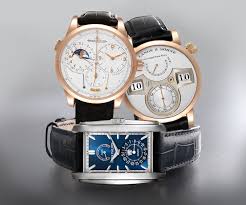
- Luxury retail is becoming an uncomfortable AML blind spot. A watch, diamond, piece of jewellery or designer accessory can be more than something expensive to wear. It can be a compact way to store, move and resell value, and the warning signs often appear only when the whole transaction is examined.
Analysis
A customer walks into a luxury store and buys a watch worth tens of thousands of dollars.
There is nothing suspicious about that by itself.
The customer may be a collector. The purchase may be perfectly affordable. The buyer may simply like watches.
The problem starts when the story around the purchase stops making sense.
Why is a newly incorporated company paying for a watch that is delivered to its owner’s friend? Why is a customer paying with three different cards belonging to three different people? Why is someone apparently unconcerned about the price, model or condition but very interested in how quickly the watch can be collected and resold?
And why does the same customer keep buying watches with strong resale value, then selling them almost immediately?
These are the questions AML red flag analysis on luxury retail puts on the table. The product itself is not necessarily the risk. The pattern surrounding the product is.
Why luxury goods attract attention
Luxury watches, jewellery, precious stones and designer accessories have characteristics that make them attractive beyond their ordinary consumer value.
They can be expensive, portable, internationally recognisable and relatively easy to resell.
A house is valuable, but moving a house across a border is impossible. A bank account leaves records. A piece of jewellery can fit inside a pocket.
That does not make every luxury buyer a money launderer. Far from it.
The important distinction that price alone is not a red flag. A high value purchase becomes more interesting when it does not fit the customer’s known financial position, occupation, history or stated reason for buying it. That distinction matters for compliance teams.
A wealthy collector buying several watches is not automatically suspicious.
A customer with no obvious financial capacity suddenly buying several highly liquid watches deserves a closer look.
The payment can tell the real story
In some cases, the most interesting part of the transaction is not what was bought.
It is who paid.
A customer might divide a purchase between several cards. Cash might be combined with a corporate account. Another person or company might provide part of the money.
There can be perfectly innocent explanations.
But compliance staff need to establish what those explanations are.
If a customer is standing at the counter while somebody else pays, who is the actual buyer? If a company is paying for jewellery, why is the jewellery being delivered to an individual? If three unrelated people fund one purchase, what is the relationship between them?
These are not questions that should be answered by guesswork.
The underlying principle is to identify the source of funds, the real purchaser and, where relevant, the ultimate beneficial owner.
ComplianceToday also highlights a particularly useful red flag: overpayment followed by a request to send the excess money somewhere else.
That is where a seemingly ordinary retail transaction can become a potential mechanism for moving money.
The safer approach is straightforward. Refunds should normally go back through the verified original payment route. Any exception should have a documented reason and additional checks.
The company buying the jewellery
Corporate purchases deserve a closer look when the item appears to be for personal use.
A company can legitimately buy luxury goods. It may purchase corporate gifts, acquire items for inventory or operate in the luxury goods business.
But consider a newly established company with little visible trading activity buying an expensive watch and sending it to the owner’s associate.
The company structure may be perfectly legitimate. It may also be doing work that has little to do with the stated business. That is why beneficial ownership matters.
The compliance team needs to understand who owns the company, what the company actually does, why it is making the purchase and who will ultimately receive the asset.
The legal entity should not become a curtain that hides the person behind the transaction.
Delivery is part of the transaction too
Luxury retailers sometimes focus heavily on the point of sale.
That can be a mistake.
Where the watch or jewellery is going can be just as revealing as how it was paid for. A customer purchases an expensive item but asks for it to be delivered to a hotel.
Another transaction is sent to a freight forwarder. A third goes to an address in another country that has no obvious connection with the customer.
None of these circumstances proves wrongdoing. But when they are combined with third party payment, unusual ownership structures or inconsistent customer information, they start to tell a different story.
ComplianceToday recommends connecting billing information with delivery details, recipient identity, jurisdiction and collection records. That is especially important for retailers operating both physical shops and online channels.
The return can be as important as the sale
AML controls often concentrate on money coming in. The return process deserves similar attention.
Imagine an expensive watch is purchased, returned shortly afterwards and the refund is requested to another account.
Or the person returning it is not the original purchaser. Or the product is returned at another branch. Or there is no convincing explanation for the change.
Again, none of this automatically proves money laundering. But it can change the risk assessment.
The transaction should be connected to the original invoice, customer, payment instrument, product serial number and delivery record.
That is where product-level information becomes useful.
A luxury watch has a serial number. A diamond may have certification. A designer product may have a purchase record.
Those details can help retailers understand where an asset came from and where it subsequently went.
The resale market changes the equation
This is perhaps the most interesting part of the luxury goods problem. Some products are almost designed for liquidity.
Certain watches, jewellery and precious stones have established secondary markets. Their value is widely understood and they can be sold without the bureaucracy attached to property or financial securities.
A customer repeatedly buying products with strong resale demand, ignoring personal preferences and selling them quickly afterwards may therefore be doing something other than collecting.
ComplianceToday describes rapid resale as a potential indicator that the product was being used as a temporary store of value rather than for personal enjoyment.
That does not mean retailers should try to decide whether somebody is a genuine collector. It means they should look at the evidence.
What models are being purchased? How often? At what value? How quickly are they returned or resold? Are the same intermediaries involved? Are the same addresses, cards, devices or companies appearing?
The pattern is often more useful than any single purchase.
Thresholds will not solve this
One of the weaker AML approaches is to treat every transaction below a particular threshold as low risk. Criminals understand thresholds too.
A large purchase can be divided into several smaller transactions. Purchases can be spread across branches, employees, companies or different payment instruments.
ComplianceToday warns against relying solely on transaction thresholds and recommends connecting activity through shared identifiers such as payment instruments, billing addresses, delivery locations, email accounts and devices.
That is a more realistic approach. A ₦50 million transaction deserves attention. So can five ₦10 million transactions if they are connected.
What this means for banks
The risk does not sit only with luxury retailers. Banks and payment providers can see part of the same picture.
A bank may see several cards funding one luxury purchase. A payment provider may see an unusual refund. A financial institution may see a newly incorporated company suddenly spending large amounts on personal goods.
The retailer may know what was bought. The bank may know where the money came from. The logistics company may know where the item went. The resale business may know where it ended up. The information is fragmented. That is the real compliance problem.
Compliance Takeaway
Luxury retail AML is not about treating wealthy customers as suspicious. It is about spotting transactions that do not make sense when the pieces are put together.
Customer profile, source of funds, payment method, beneficial ownership, product selection, delivery address, returns, resale- taken separately, each may be innocent. Taken together, they can reveal an attempt to move or disguise value.
The best control is therefore not a rigid rule saying, “Expensive watch equals suspicious.” It is a connected view of the customer and the transaction.
Retailers should make sure sales, payments, delivery, returns, repairs and resale records can be connected where appropriate. Staff should know what behaviour needs escalation, but they should document facts rather than accuse customers of criminal conduct.
For banks, the lesson is similar. Do not assume the retail transaction is somebody else’s problem simply because the bank sees only the payment.
The movement of value is what matters.
A luxury watch may be worn on the wrist. For AML purposes, it may also be the most portable part of a much larger financial story.







No Comment! Be the first one.