





The Big Story- Nigeria’s ₦20 Trillion Revenue Leak: The Compliance Failure Behind a Perennial Fiscal Crisis
Meat of the Story… Nigeria’s fiscal crisis may be less about the country’s inability to generate revenue than about its ability to collect, account for and remit what it generates. A 2026...

- Nigeria may be losing between ₦15 trillion and ₦20 trillion annually through systemic weaknesses in revenue collection, remittance and accounting, according to a 2026 fiscal reform proposal. The figure is not an audited finding of stolen money, but it exposes a much larger compliance problem: government agencies can collect, deduct, retain or spend public revenue before it reaches the constitutional destination.
Meat of the Story…
Nigeria’s fiscal crisis may be less about the country’s inability to generate revenue than about its ability to collect, account for and remit what it generates.
A 2026 policy paper by former Nigerian Bar Association president Olisa Agbakoba and his firm, Olisa Agbakoba Legal, estimates that Nigeria could be losing between ₦15 trillion and ₦20 trillion every year through systemic revenue leakages. The paper attributes the problem to structural weaknesses in the collection and remittance of public revenue and argues that the constitutional framework governing the Federation Account is not being fully implemented.
That estimate should not be presented as proof that ₦20 trillion is being stolen annually. It is a policy estimate of potential fiscal leakage. The distinction is critical. But the underlying problem is not theoretical.
Nigeria’s own audit and extractive-sector records have repeatedly documented billions and, in some cases, trillions of naira in unremitted revenue, deductions, unexplained balances, disputed liabilities and expenditure undertaken outside the Federation Account.The result is a peculiar Nigerian fiscal paradox. Government can report higher revenue while the government itself remains starved of cash.That is the compliance story.
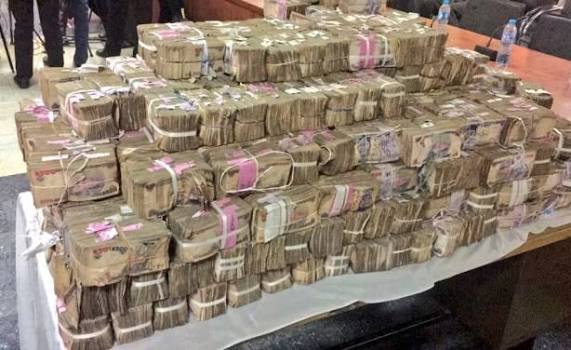
Analysis: The Money Does Not Always Disappear. Sometimes It Never Gets to the Pool
Nigeria’s Constitution provides the basic architecture. Section 162(1) requires revenues collected by the Federal Government, subject to specified exceptions, to be paid into the Federation Account. The constitutional principle is therefore straightforward: revenue belonging to the Federation should enter the common pool before it is distributed in accordance with the constitutional framework.
The compliance problem begins when agencies, corporations and other collecting entities create layers of deductions, expenditure, retention, reconciliation and offsetting before the money reaches that pool.
The Auditor-General’s reports provide repeated evidence of this problem. In its audit of 2017, the Office of the Auditor-General reported that revenue-generating agencies collected about ₦6.4 trillion, but approximately ₦1.5 trillion was deducted and not remitted to the Federation Account. The report identified NNPC, FIRS and the Department of Petroleum Resources among the agencies involved. NNPC alone was reported to have generated ₦2.41 trillion and deducted about ₦1.3 trillion before remitting the balance.
This is not necessarily equivalent to theft. Some deductions may relate to legitimate costs or statutory obligations, while others may be disputed or subsequently reconciled. But from a public-finance compliance perspective, the critical question is different: Who had the authority to deduct the money, under what law, on whose approval, and where was the deduction independently reconciled? That is the control question Nigeria has struggled to answer consistently.
The ₦20 Trillion Claim Needs a Compliance Footnote….
The ₦20 trillion figure requires careful handling. It is an estimate advanced by Agbakoba’s 2026 policy paper, not a figure established by the Auditor-General as an annual amount of stolen public funds. The paper describes a broader Federation Account crisis, arguing that revenue fails to reach the constitutionally prescribed destination because of deductions and other structural weaknesses. That distinction makes the story stronger, not weaker.
Nigeria does not need to prove that ₦20 trillion is physically being stolen every year before taking the underlying control failure seriously.
The more defensible conclusion is that Nigeria has a material fiscal leakage problem whose full annual value is difficult to establish because the country’s revenue architecture itself does not always produce a single, transparent chain from collection to remittance to allocation.
That is a classic compliance problem. If the first control objective is impossible to verify, the subsequent controls become weaker.
The World Bank Metric: A More Concrete Warning……….
There is another number that makes the issue harder to dismiss. The World Bank’s fiscal analysis has shown the extraordinary scale of deductions and other adjustments occurring before revenue becomes available for distribution and spending.
The World Bank’s October 2025 Nigeria Development Update recorded major increases in gross federation revenue, while noting that the fiscal numbers used for analysis are net of costs of collection, deductions and other adjustments. This accounting distinction is important.
A government can announce impressive gross revenue figures while the amount ultimately available to the Federation is materially smaller.
That means Nigeria needs to stop asking only: How much did the country collect? It also needs to ask: How much was collected, how much was deducted, who deducted it, under what authority, how much was remitted, how much remained outstanding, and how much was subsequently reconciled?
That is the revenue equivalent of an AML transaction trail.
NEITI Shows How Large the Deduction Architecture Can Become…
Nigeria’s extractive sector provides perhaps the clearest illustration.
NEITI’s 2021 Oil and Gas Industry Report recorded total revenue of approximately ₦23.04 trillion in its analysis of revenue collection and remittance.
Of that amount, approximately ₦6.93 trillion was classified as deductions at FAAC, while another ₦963.6 billion represented subnational payments and ₦1.95 trillion was identified as an amount unremitted by NNPC.
The report put total deductions and related amounts at approximately ₦9.85 trillion, leaving about ₦13.20 trillion transferred to the Federation. That means the issue is not simply that somebody failed to deposit money. There is a much larger question about the architecture through which public revenue is intercepted, deducted, allocated, reconciled or retained before it becomes distributable Federation revenue. The difference is enormous.
NNPC: The Most Persistent Revenue-Control Problem….
Nigeria’s oil sector provides the most consequential historical example.
For years, disputes over NNPC remittances have been at the centre of Nigeria’s fiscal accountability debate.
In 2013, then Central Bank Governor Lamido Sanusi alleged that NNPC had failed to remit $49.8 billion in oil sales revenues over a 19-month period from January 2012 to July 2013. The controversy generated subsequent reconciliation exercises and competing interpretations of what constituted revenue, deductions, operational costs and amounts actually due to the Federation. The lesson from that episode is important.
The controversy was not simply about whether money existed. It was about whether government could independently establish the amount that should have entered the Federation Account.
Where the collector controls the data required to determine the amount collectible, the amount collected and the amount remitted, the collecting institution effectively becomes both participant and gatekeeper in the accounting process.
That is precisely the type of control concentration that financial-sector compliance frameworks are designed to prevent.
The $42.37 Billion Question…
The NNPC story has not disappeared. A longstanding dispute involving approximately $42.37 billion in alleged under-remittances covering 2011 to 2017 remained unresolved in 2025, with NNPC disputing the allegation. Reuters reported that the issue remained part of the broader effort to clean up the company’s financial records. This figure reveals something important.
If a dispute over tens of billions of dollars can survive for years because the parties disagree over what was collected, what was deductible and what was payable, Nigeria has a financial-control architecture problem, irrespective of which side ultimately prevails.
A functioning public-revenue system should make such reconciliation considerably easier.
The Auditor-General’s Records: The Leakage Is Not New….
The historical audit trail extends beyond the petroleum sector. The Auditor-General’s 2018 report identified ₦54.69 billion in revenue and statutory deductions that were not remitted by MDAs during the period under review. That included approximately ₦48.55 billion in internally generated revenue and ₦5.42 billion in statutory deductions, including VAT, withholding tax and PAYE.
Again, these figures do not mean that ₦54.69 billion was stolen. They mean that money that should have been remitted was not remitted as required at the time of audit. That distinction is fundamental to responsible compliance journalism.
There are at least four different categories: Uncollected revenue. Money that government was entitled to collect but never collected.
Unremitted revenue. Money collected but not transferred to the appropriate government account.
Unauthorised or inadequately supported deductions. Money removed before remittance without adequate statutory or documentary support.
Fraudulent diversion….
Money deliberately misappropriated or converted for purposes unrelated to its lawful public purpose. These categories should never be collapsed into the single word “looting”.
Doing so makes the problem politically dramatic but analytically weaker.

Customs and the Persistent Remittance Gap…
The problem also extends to customs revenue. In 2026, the Nigeria Customs Service responded to audit queries concerning ₦125.8 billion in two categories of revenue that it had collected in 2017 but had not fully remitted to the Federation Account.
In one category, Customs collected approximately ₦691.2 billion but remitted ₦629.3 billion, leaving ₦62.2 billion.
In another, it collected approximately ₦691.6 billion but remitted ₦627.6 billion, leaving another ₦63.6 billion outstanding. The figures concern historical transactions and explanations have been provided by the agency.
But the compliance question remains. How many revenue streams can operate for years before the difference between collection and remittance is independently reconciled?

The Oil Theft Problem: Revenue That Never Becomes Revenue…
There is another category of fiscal leakage that sits upstream of remittance. Nigeria cannot remit revenue that never reaches the official measurement and collection system.
Oil theft, under-declaration of production, crude diversion, metering weaknesses, illegal refining and production losses have historically reduced the volume of petroleum available for taxation and government revenue.
In 2025, NNPC said pipeline theft had been nearly eliminated following improved security measures. Reuters reported that several years earlier, as little as 30% of crude oil reached export terminals, resulting in billions of dollars in lost revenue. This is a crucial distinction.
Not every fiscal loss happens inside an Abuja revenue account. Some losses occur before the revenue is ever booked. That means Nigeria’s fiscal-control framework must begin at the point of production, extraction, importation or taxable economic activity, not merely when cash reaches the Treasury.

Another Leak: Public Money Spent Before It Enters the Common Pool…
The compliance challenge becomes even more serious when agencies argue that money collected was spent on legitimate government obligations before remittance.
The Auditor-General’s 2019 report, for example, identified about $6.41 billion, equivalent at the stated exchange rate to approximately ₦1.96 trillion, that NNPC spent on joint-venture cash calls and other upstream projects without first paying the funds into the Federation Account. The audit stated that the expenditure was inconsistent with Section 162(1)’s requirement regarding Federation revenue.
The issue here is not necessarily whether the expenditure itself was useful. The issue is who authorised it and whether the constitutional appropriation and remittance process was bypassed. That distinction is central to public-sector compliance.
A government agency should not be able to convert “this expenditure is necessary” into “therefore the revenue does not need to enter the Federation Account”.Otherwise, the collecting agency becomes its own legislature, treasury and spending authority.
The Missing Money Problem Is Bigger Than Revenue Agencies…
Nigeria’s fiscal leakage story also includes outright corruption and diversion. Previous administrations have faced major cases involving public funds, petroleum assets, procurement, pensions and security expenditure.
The $2.1 billion arms procurement scandal is one of the most prominent examples. The EFCC said its investigation found that funds intended for military hardware, arms and ammunition had been diverted, with about $2.1 billion traced to private recipients and associated transactions. The agency subsequently reported convictions and asset recoveries.
The pension system produced another major case. The EFCC reported that former pension official Abdulrasheed Maina was convicted over a scheme involving more than ₦2.1 billion, with the court ordering restitution alongside other penalties.
The Malabu OPL 245 saga provides another example of how public assets can become entangled in alleged corruption and money laundering. The EFCC brought charges relating to the allocation and transfer of OPL 245 and alleged transactions involving more than $1.2 billion. The case has had a long and complicated legal history, and allegations should not be presented as established facts against defendants who were not convicted.
These cases are different from routine revenue leakage. But they belong in the same feature because they expose a broader weakness:
Nigeria has repeatedly struggled to protect public value at the point where money, assets and authority meet.
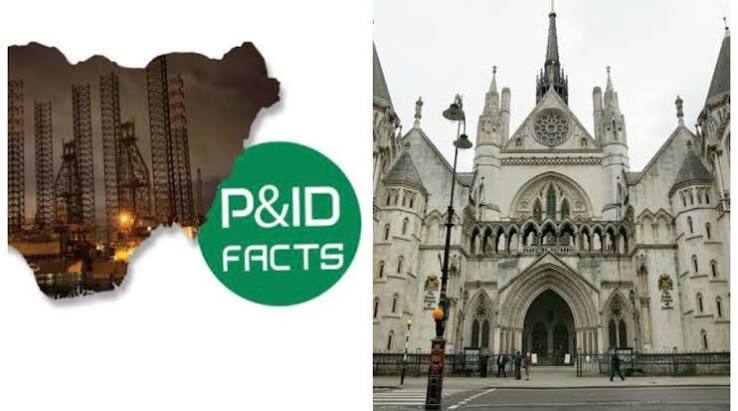
P&ID: When Fiscal Risk Becomes a Sovereign Liability….
The Process & Industrial Developments, P&ID, saga demonstrates another category of loss. Here, the risk was not simply money disappearing from a government account. It was the potential creation of a massive liability against the Nigerian state through a controversial gas-processing agreement and subsequent arbitration.
The EFCC has described the wider matter as a $9.6 billion fraud case, including allegations against companies connected to P&ID.
The episode illustrates an often-overlooked form of fiscal leakage: bad contracts can destroy public value without a naira being stolen from the Treasury.
Unfavourable concessions, poorly negotiated contracts, weak due diligence, inadequate beneficial-ownership checks, procurement failures and poorly managed litigation can impose costs on the state just as surely as direct diversion. For compliance professionals, this is the difference between financial crime risk and fiscal governance risk. Both can impoverish the public.
The TSA Was a Major Reform. But It Did Not Solve Everything….
Nigeria’s Treasury Single Account, TSA, was introduced to reduce the fragmentation of government cash and bring public funds under centralised treasury management. It was an important control reform.
But centralising bank balances does not automatically solve the problem of what gets deducted before the money reaches the account. That is why the current debate over Section 162 matters.
The TSA answers one question: Where should government cash sit?
The Federation Account question answers another: What money must enter the pool before government decides how it is distributed and spent? A system can improve the first while retaining weaknesses in the second.

The Compliance Failure: Too Many Revenue Collectors, Too Little Independent Reconciliation….
The structural weakness can be reduced to a simple control measure.
Economic activity, assessment, collection, deduction, remittance, reconciliation, Federation Account, allocation, expenditure and audit.
Nigeria has historically focused heavily on the collection stage. The bigger problem may be the interfaces. Who verifies the amount collected? Who independently confirms the deduction? Who confirms the legal basis? Who reconciles the collector’s books against the Treasury? Who confirms that the recipient actually received the remittance? Who investigates variances? Who imposes consequences when the same variance appears repeatedly? And critically: Who has access to the underlying data?
A compliance system that cannot answer these questions cannot reliably distinguish a legitimate deduction from a leakage.
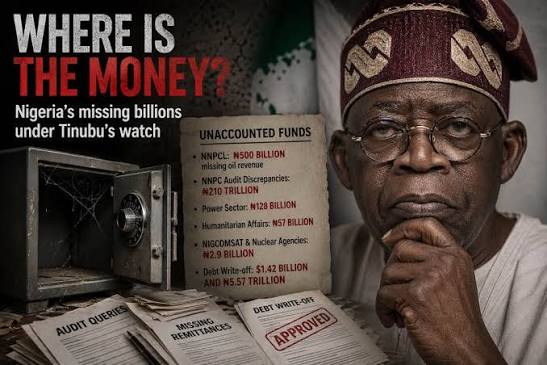
Why the ₦20 Trillion Estimate Should Trigger a Forensic Audit, Not Political Arguments……
The appropriate response to the ₦15 trillion to ₦20 trillion estimate is neither automatic acceptance nor dismissal. It should be treated as a hypothesis requiring forensic reconciliation. Nigeria should construct a national revenue reconciliation ledger covering every major revenue-generating entity.
For each agency, the government should publish: gross revenue assessed, gross revenue collected, statutory deductions, operational deductions, amounts retained, amounts remitted. Date of remittance, outstanding balances, reasons for outstanding balances, beneficiary of each deduction, legal authority for each deduction, subsequent reconciliation or recovery. That would allow the Nigeria determine whether ₦20 trillion is an exaggeration, an underestimate or a reasonable approximation of the total leakage.
Until that exercise is performed, the precise annual number will remain contestable. The existence of repeated, independently documented leakages is not.
The AML Connection: Nigeria’s Revenue System Has a Financial Intelligence Problem…
There is a strong AML dimension to this debate. A sophisticated financial crime programme follows money through a chain of transactions. Nigeria’s public finance system should do exactly the same.
Revenue should be traceable from the taxpayer or commercial activity to the collecting agency, from the agency to the Treasury, and from the Treasury through allocation to final expenditure.
Every unexplained break in that chain should produce an exception. That is essentially public-sector transaction monitoring. The technology now exists to create it.
Revenue authorities, the Office of the Accountant-General, CBN, NBS, Auditor-General, NEITI, NUPRC, FIRS, Customs and other relevant institutions should be capable of operating from interoperable data rather than separate financial universes. The objective should be a single source of truth for government revenue.
The Governance Problem: Recovery Is Not the Same as Prevention
Nigeria has demonstrated that it can recover stolen assets. The EFCC reported that it recovered more than₦794 billion and $261 million between November 2015 and 2018.
More recently, Reuters reported that the EFCC recovered nearly$500 million in proceeds of crime during the year to early 2025, alongside more than 4,000 convictions. These recoveries are important. But a compliance system should not measure success primarily by how much money is recovered after it disappears.
The more meaningful metric is: How much was prevented from disappearing in the first place?
Nigeria’s anti-corruption architecture remains heavily weighted towards investigation, prosecution, forfeiture and recovery. The fiscal-leakage problem requires a stronger emphasis on prevention, reconciliation, automated controls, audit trails and accountability at the point of collection.
A Decade of Leakages: Different Administrations, Similar Control Failures
One of the most revealing aspects of Nigeria’s fiscal history is that revenue controversies have survived changes in government. The names, agencies and political actors change. The control weaknesses often do not.
Under the Jonathan administration, the major NNPC remittance controversy emerged around the Sanusi allegations. Under the Buhari administration, the country saw extensive investigations into arms procurement, pensions, NNPC transactions and other public-finance cases. Under the current administration, the debate has shifted towards restructuring the Federation Account architecture, improving revenue mobilisation, resolving historical NNPC liabilities and strengthening fiscal transparency.
The evidence points to a systemic institutional problem spanning administrations. That is why treating the issue as another political corruption scandal would miss the bigger story.
What Nigeria Should Measure Instead….
A serious fiscal-compliance framework needs a new set of performance indicators. Revenue agencies should not be judged primarily by how much money they announce they have collected. They should be measured on collection-to-remittance ratios. They should be measured on remittance delays, unreconciled balances, unauthorised deductions, audit-query resolution rates, recovery of confirmed under-remittances and repeat audit infractions.
And agency executives should have accountability attached to these metrics.
The objective is simple. Make leakage visible before it becomes loss.
Why the Update Matters
Nigeria’s fiscal debate has traditionally focused on how much government spends and how much it borrows. The more fundamental question may be: How much of the money Nigeria is already entitled to actually reaches the public treasury?
Thisquestion becomes increasingly urgent as debt servicing, infrastructure needs, social spending and subnational financing pressures grow.
The World Bank’s fiscal projections show Nigeria’s revenue-to-GDP ratio improving significantly from the very low levels of earlier years, with total revenue projected at about 10% of GDP in 2026.
That progress will matter only if the additional revenue is captured, remitted, accounted for and efficiently spent. Otherwise, higher collection simply creates a larger pool from which leakage can occur.
Nigeria therefore faces two separate fiscal battles-. revenue mobilisation and revenue integrity. Nigeria cannot sustainably win the first while neglecting the second.
Compliance Takeaway
The ₦20 trillion estimate should be treated as a warning about Nigeria’s control environment, not as a confirmed annual theft figure.
The documentary evidence from the Auditor-General, NEITI, World Bank and historical enforcement cases demonstrates that the country has repeatedly experienced unremitted revenues, disputed deductions, unexplained balances, upstream production losses, unauthorised expenditure and outright diversion of public funds.
The next stage of Nigeria’s fiscal reform therefore needs to move beyond simply increasing taxes and government revenue.
It must build a closed-loop revenue compliance system in which every naira has a traceable journey from the point of collection to the Federation Account and ultimately to authorised expenditure.
The central lesson is stark: Nigeria does not only have a revenue problem. It has a revenue-control problem.
And until the country can independently reconcile what should have been collected, what was actually collected, what was deducted, what was remitted and what was ultimately spent, arguments about the size of the leakage will continue while the leakage itself continues.







No Comment! Be the first one.