





Peru’s Quiet Revolution in Asset Recovery Is Changing the Fight Against Organized Crime
While many countries still chase criminals, Peru is increasingly following the money. The shift is turning asset recovery into one of the country’s most effective weapons against corruption and...
While many countries still chase criminals, Peru is increasingly following the money. The shift is turning asset recovery into one of the country’s most effective weapons against corruption and transnational organized crime.
For decades, governments measured success against organised crime by the number of arrests they made. Peru is increasingly measuring success differently. It wants to know how much criminal wealth it can find, freeze, confiscate, and return to the public.
That change may sound technical, but it represents one of the most important shifts taking place in global financial crime enforcement.
The Basel Institute on Governance believes Peru has moved beyond treating asset recovery as something that happens after a criminal conviction. Instead, the country has steadily built legal and institutional tools that place financial investigations at the center of organized crime enforcement. It is an approach that many AML and compliance professionals have long argued is more effective than simply prosecuting offenders.
The logic is simple. Criminal organizations can survive arrests. Replacing leaders is often easier than replacing millions of dollars in seized assets. Take away the money, however, and criminal enterprises struggle to finance corruption, recruit members, purchase weapons, or expand their operations.
That philosophy increasingly defines Peru’s enforcement strategy.
The Basel Institute’s International Centre for Asset Recovery, known as ICAR, has worked alongside Peruvian prosecutors, judges, financial intelligence units, and investigators for years. Rather than offering broad policy advice from abroad, its specialists have embedded with local authorities to help develop investigations, strengthen legal frameworks, improve cross border cooperation, and train enforcement agencies on tracing illicit assets.
The results are beginning to show.
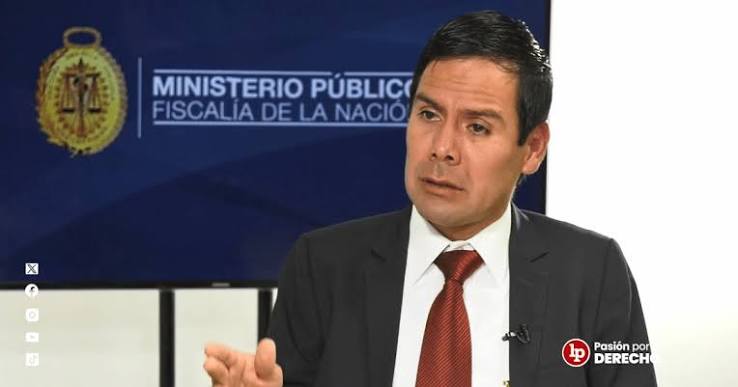
According to Peru’s Attorney General Juan Carlos Villena Campana, specialized prosecutors have recovered more than USD 94 million for the Peruvian state using the country’s Extinción de Dominio, or non-conviction based forfeiture regime. The law allows authorities to confiscate assets linked to criminal activity even when obtaining a criminal conviction is impossible, provided legal safeguards and judicial oversight are met
That legal tool has become one of Peru’s defining innovations.
In many corruption and organized crime investigations, suspects flee, die, disappear, or exploit procedural delays that can stretch criminal proceedings for years. Criminal cases may collapse without ever reaching a verdict, while illicit assets remain safely hidden behind shell companies, offshore accounts, or nominee owners.
Non-conviction based forfeiture changes that equation.
Instead of waiting for the criminal case to conclude, prosecutors can pursue the assets themselves, provided they demonstrate that the property represents proceeds of unlawful conduct. International organizations increasingly regard the mechanism as an important addition to traditional confiscation powers, particularly in complex cross border corruption cases.
Basel Institute experts argue that this approach reflects a broader understanding of how organized crime operates.
“These administrative steps are where asset recovery really happens, when dirty assets are transformed into resources that support law enforcement and serve the public good,” said Oscar Solórzano, Head of Latin America at the Basel Institute on Governance, during discussions on Peru’s latest restitution initiative.
That observation captures an important truth often overlooked in financial crime investigations.
Asset recovery is not simply about confiscation orders issued by judges. Success depends on tracing ownership, preserving evidence, coordinating foreign jurisdictions, enforcing court decisions, and ultimately returning recovered assets to the state in a transparent manner.
Those administrative steps rarely generate headlines. They determine whether justice produces tangible results.
Peru’s experience has also attracted international attention because it demonstrates how financial investigations can become the starting point, rather than the final stage, of organized crime investigations.
Following the Odebrecht corruption scandal, Peruvian prosecutors significantly expanded their use of financial intelligence, cross border cooperation, and forensic accounting techniques. Basel Institute advisers describe Peru as a regional model for proactive financial investigations that prioritize following illicit financial flows from the outset.
For compliance officers, the lessons extend well beyond Latin America.
Banks frequently treat suspicious transaction reporting as the final step in their AML obligations. Peru’s experience suggests those reports may instead become the first link in a much longer chain that leads to international asset recovery.
Every beneficial ownership record, customer due diligence file, sanctions screening result, and transaction monitoring alert can later become evidence supporting confiscation proceedings across multiple jurisdictions.
That places greater responsibility on financial institutions to maintain accurate customer records, preserve audit trails, and ensure politically exposed persons receive enhanced scrutiny throughout the customer relationship.
Another lesson is equally important.
Asset recovery succeeds only when institutions cooperate. Financial intelligence units, prosecutors, regulators, tax authorities, customs agencies, and foreign enforcement partners all need access to reliable financial information. A weak link anywhere in that chain creates opportunities for illicit wealth to disappear long before investigators can act.
Basel’s work reflects that reality. ICAR now supports enforcement agencies in more than 20 countries and helped partner authorities recover USD 62.9 million in illicit assets during 2025 alone. The program combines operational case support with legislative reform, international cooperation, and capacity building, recognizing that sustainable enforcement depends as much on institutions as individual investigations.
The broader AML implication is difficult to ignore.
Criminal organizations have become increasingly sophisticated in moving money across borders. Enforcement agencies are responding by becoming equally sophisticated in recovering it.
For compliance professionals, that means asset recovery is no longer a specialist legal issue. It has become a frontline AML priority.
The institutions that identify suspicious wealth early, document ownership accurately, and cooperate effectively with investigators are increasingly shaping the success of international financial crime enforcement.
Peru’s experience suggests the future of organized crime investigations may not be decided by who makes the arrest.
It may be decided by who follows the money first.







No Comment! Be the first one.