





NCDMB, Dangote Declare War on Box-Ticking Compliance, Demand Technology, Funding and Local Industrial Power
The Nigerian Content Development and Monitoring Board (NCDMB) and the Dangote Group have called for a shift from a compliance-driven approach to a more sustainable framework for Nigerian content...
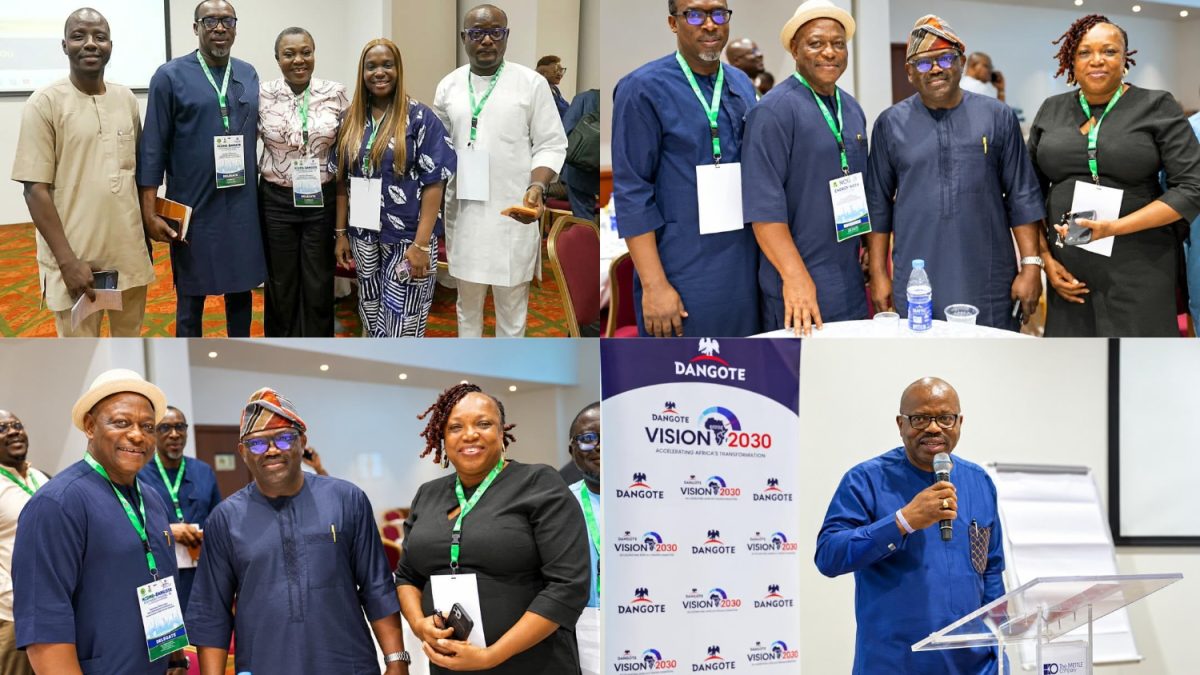
The Nigerian Content Development and Monitoring Board (NCDMB) and the Dangote Group have called for a shift from a compliance-driven approach to a more sustainable framework for Nigerian content development, emphasising the need for stronger regulatory accountability, technology transfer, accessible financing and indigenous industrial capacity.
The call was made at a strategic retreat of the NCDMB/Dangote Joint Technical Committee (JTC) in Lagos on Friday, themed “Beyond Compliance: Partnering for Sustainable Nigerian Content Development.” The meeting brought together industry stakeholders and government representatives to examine operational challenges, regulatory coordination and opportunities to expand indigenous participation across Nigeria’s oil and gas value chain.
The discussions underscored the need to move beyond meeting statutory requirements towards demonstrable outcomes, including local value retention, workforce development, domestic procurement, technology transfer and the long-term sustainability of industrial investments.
In his keynote address, the Executive Secretary of NCDMB, Engr. Felix Omatsola Ogbe, represented by the Senior Technical Adviser and Director of Project Certification and Authorisation Directorate (PCAD), Engr. Austin Uzoka, identified commitment, technology and financing as critical pillars for building a resilient Nigerian content ecosystem.
Ogbe challenged industry operators and other stakeholders to assess whether existing compliance practices were translating into sustainable domestic capacity, reliable supply chains and measurable economic benefits for Nigeria.
Using the development and operation of major industrial facilities as a point of reference, he stressed that building large-scale infrastructure must be accompanied by investments in the local capabilities required to operate, maintain and sustain those assets.
He highlighted the importance of developing credible Nigerian supply chains to support the continuous operations of the Dangote Refinery, warning that inadequate domestic capacity could limit local value addition and allow a significant proportion of the economic benefits of industrial investment to accrue outside the country.
The NCDMB chief also emphasised technology transfer and skills development, arguing that Nigerian enterprises must progressively acquire the expertise needed to manage complex industrial operations without indefinite dependence on foreign technical support.
He identified access to finance as another major constraint confronting indigenous businesses, noting that high borrowing costs and delays in securing funding could undermine project execution, business expansion and the ability of local companies to compete effectively.
Ogbe further called for measures to encourage more Nigerian investors to establish large-scale industrial facilities, including refineries, noting that expanding indigenous participation would strengthen Nigeria’s position in the regional and global energy market.
Regulatory compliance and supplier accountability
Providing further insight into the Board’s compliance framework, the Director of Planning, Research and Statistics and Chairman of the NCDMB/Dangote Joint Technical Committee, Mr. Omomehin Ajimijaye, urged contractors, vendors and service providers operating within the Dangote business ecosystem to meet applicable Nigerian content requirements, register on the Nigerian Oil and Gas Industry Joint Qualification System (NOGICJQS) and strengthen their participation in the sector.
Ajimijaye said the regulatory framework was intended to facilitate legitimate business growth and expand indigenous participation rather than create unnecessary administrative barriers.
He outlined four key compliance areas: Nigerian content planning, workforce localisation, local procurement and capacity development.
Under the framework, companies bidding for relevant projects are expected to submit Nigerian content plans showing how they intend to maximise indigenous participation. Employers are also required to prioritise qualified Nigerians, procure locally available goods and services, and invest in skills development and technology transfer in line with applicable requirements.
On expatriate employment, Ajimijaye explained that foreign personnel could be engaged where genuine skills gaps existed. However, companies were expected to establish those gaps in consultation with the Board and develop succession plans to prepare qualified Nigerians to assume the relevant positions progressively.
He described NOGICJQS as an important digital platform for supplier registration, prequalification, capacity verification and validation of technical expertise. Reliable industry data, he added, would help the Board identify skills shortages, connect businesses with qualified professionals and direct training investments towards priority areas.
The emphasis on supplier registration and verification reinforces the importance of maintaining credible records of local capacity, workforce competence and service-provider eligibility in support of regulatory oversight.
Ajimijaye also commended Dangote Group for its collaboration with NCDMB since around 2019 in developing Nigerian capacity through local and overseas institutions. He noted that some beneficiaries of the programmes had subsequently secured employment within the group’s businesses.
He called for sustained investment in research and development to encourage indigenous innovation, improve competitiveness and enable Nigerian companies to export technical expertise.
Local value retention remains below target
Highlighting the reported outcomes of Nigerian content initiatives, Ajimijaye disclosed that the interventions had retained more than $10 billion in the Nigerian economy, generated over 50,000 direct and indirect jobs, and supported more than 50 million man-hours of training.
However, he put in-country value retention at approximately 61 per cent, below the 70 per cent target, calling for stronger collaboration among regulators, operators, contractors and service providers to close the gap.
The figures highlighted at the retreat point to the importance of measuring Nigerian content performance against defined targets and assessing whether regulatory interventions are producing the intended economic outcomes.
Ajimijaye urged industry participants to view Nigerian content not simply as a statutory obligation but as an opportunity to expand domestic businesses, strengthen technical expertise and improve the competitiveness of Nigeria’s energy industry.
Dangote calls for a culture of national responsibility
In his welcome address, the Group Vice President of Dangote Group, Dr. Edwin Devakumar, called for a fundamental shift from a compliance-driven approach to a culture of ownership, commitment and national responsibility.
He argued that legislation and regulation alone would not deliver sustainable Nigerian content unless businesses, institutions and individuals actively embraced the development of domestic productive capacity.
“For sustainable Nigerian content development to succeed, it must not be seen as a regulatory burden. Every individual must regard it as something they genuinely want to do from the bottom of their heart,” Devakumar said.
He stressed that local content should extend beyond sourcing raw materials to include skills transfer, workforce development and the growth of indigenous contractors into businesses capable of executing increasingly complex projects.
His position reinforced the central theme of the retreat: compliance establishes the minimum regulatory expectation, while sustainable implementation requires long-term investment in people, technology, local suppliers and industrial capability.
NCDMB calls for coordinated regulatory oversight
The retreat also addressed the need for clearer coordination among government institutions responsible for investment promotion, petroleum operations, Nigerian content and related regulatory functions.
The Director of Legal Services at NCDMB, Dr. Naboth Onyesoh, called for stronger inter-agency engagement to clarify statutory responsibilities, reduce unnecessary duplication and resolve operational challenges affecting businesses.
Onyesoh challenged the perception that the Oil and Gas Free Zones Authority (OGFZA) was the sole regulator of activities within free zones, explaining that its investment-promotion mandate did not displace the statutory responsibilities of other relevant government agencies.
He maintained that incentives intended to attract investment and improve the ease of doing business did not automatically exempt operators from applicable federal laws.
Depending on the nature of their activities, petroleum businesses remain subject to relevant requirements administered by the Nigerian Upstream Petroleum Regulatory Commission, the Nigerian Midstream and Downstream Petroleum Regulatory Authority and NCDMB, among other agencies with applicable statutory mandates.
He also highlighted the roles of the Central Bank of Nigeria, customs and immigration authorities in financial transactions, goods monitoring and other regulatory processes.
“An incentive regime is a business advantage; it is not a regulatory exception,” Onyesoh said.
His remarks placed emphasis on regulatory certainty and consistent enforcement, particularly where multiple agencies have responsibilities affecting the same investment or business operation.
He reaffirmed the importance of the Nigerian Oil and Gas Industry Content Development Act, 2010, in promoting indigenous participation, technology transfer, employment and domestic value retention. He cautioned against interpretations that could undermine the contribution of companies operating in free zones to local capacity development and the growth of Nigerian businesses.
Financing and maritime capacity development
Onyesoh also highlighted the role of the Nigerian Content Intervention Fund in supporting indigenous maritime businesses, including companies seeking to acquire vessels and expand their operations.
He disclosed that the Nigerian Content Fund was partnering with Nigeria LNG Limited on a shipyard project at Snake Island, aimed at strengthening domestic industrial capacity.
He further commended the Nigerian Maritime Administration and Safety Agency (NIMASA) for working with NCDMB on vessel verification and indigenous participation in maritime operations.
The initiatives, as presented at the retreat, underscore the importance of financing, infrastructure and inter-agency collaboration in translating Nigerian content policy into practical industrial capability.
Onyesoh urged OGFZA and other relevant agencies to intensify engagement, information sharing and joint resolution of operational challenges, arguing that coordinated regulation would support investor confidence, job creation and improved economic returns from Nigeria’s oil and gas resources.
Earlier, the Alternate Chairperson of the NCDMB/Dangote Joint Technical Committee, Dr. Ebele Oputa, described the retreat as an opportunity for stakeholders to strengthen collaboration around the shared objective of placing Nigerians at the centre of industrial development.
She acknowledged the contributions of participating government institutions and commended Devakumar for his longstanding involvement in Nigeria and investment in young Nigerians, noting his more than 33 years in the country.
The retreat concluded with a broader call for industry participants and government institutions to align regulatory compliance with measurable outcomes in technology transfer, local procurement, workforce development, access to finance and domestic value retention.
The central message was that sustainable Nigerian content requires more than documented compliance: it demands verifiable performance, coordinated oversight and sustained investment in the indigenous capabilities needed to support Nigeria’s industrial growth.






No Comment! Be the first one.