




How China Tariff Evasion Claims Put Global Trade Compliance Under Pressure
The US administration has escalated its scrutiny of global trade routes, accusing Chinese exporters of using third countries to circumvent American tariffs and warning that the practice is costing...
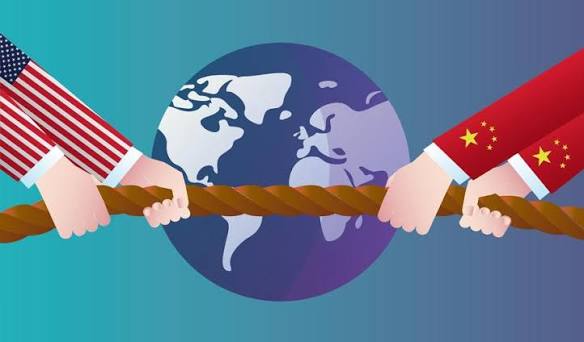
The US administration has escalated its scrutiny of global trade routes, accusing Chinese exporters of using third countries to circumvent American tariffs and warning that the practice is costing the US Treasury billions of dollars in lost customs revenue.
A new White House report estimates that goods, largely originating in China, are being rerouted through other countries before entering the United States, allowing exporters to avoid higher duties that would otherwise apply to Chinese products. The administration puts the annual loss of tariff revenue at between $19 billion and $26 billion.
At the centre of the dispute is a familiar trade compliance problem known as transshipment.
The practice itself is not automatically unlawful. Goods can legitimately pass through another country during international trade. The compliance issue arises when a shipment is deliberately routed through a third country, with little or no meaningful transformation, and its true country of origin is falsely declared in order to obtain a lower tariff rate.
That distinction is now becoming a major enforcement issue for importers, exporters, manufacturers, freight forwarders and customs brokers.
The route can change, but the origin may not
The White House report, titled The Great Transshipment Scam, argues that Chinese exporters adapted quickly after the United States imposed substantial tariffs on Chinese goods.
Rather than shipping products directly from China to the US, exporters increasingly began using countries with lower US tariff rates as intermediate destinations.
The report points to countries including Cambodia, Vietnam and Malaysia, among more than 40 nations identified as part of the broader transshipment network. The White House says Chinese goods can undergo minimal processing or changes in a third country before being shipped to the US with a different declared origin.
For customs authorities, this creates a difficult enforcement problem.
A shipping document can identify one country. A commercial invoice can identify another. The manufacturing history, however, may point somewhere else.
Determining the true origin can therefore require customs officials to look beyond the final shipping point and examine the entire supply chain.
This is a trade compliance problem, not simply a tariff problem
The significance of the White House allegations extends well beyond the value of lost tariff revenue.
Country-of-origin declarations are fundamental to international trade compliance. They influence tariff treatment, trade restrictions, quotas, sanctions, anti-dumping measures and other customs obligations.
If an importer knowingly submits an inaccurate declaration, the issue can move from tariff optimisation into customs fraud and enforcement territory.
That creates potentially serious consequences for businesses.
Companies importing goods into the US must be able to demonstrate where products were manufactured, where substantial transformation occurred and why the declared country of origin is accurate.
The more complicated the supply chain becomes, the greater the compliance burden.
A product may involve Chinese raw materials, components manufactured elsewhere, assembly in a third country and final shipment from yet another jurisdiction. Determining origin in such circumstances is not simply a matter of looking at the address on the shipping container.
The supply chain itself becomes evidence
The growing use of data analytics and artificial intelligence is changing how customs authorities approach this problem.
The White House says US Customs and Border Protection is deploying AI to examine shipment data, routing histories and inconsistencies in trade documentation. The administration has referred to the technology as “Detective Border”.bThat represents an important shift in enforcement.
Traditional customs check often relied heavily on documents supplied by traders. Increasingly, regulators can compare those documents against wider datasets.
If a manufacturer suddenly begins exporting large volumes of a product from a country that historically had little involvement in producing it, that could trigger scrutiny.
If the shipping route changes immediately after a tariff increase, that could also raise questions.
Likewise, discrepancies between declared origin, supplier information, production capacity, shipping volumes and historical trade patterns can create a risk signal.
The implication for companies is straightforward. Trade compliance is becoming increasingly data-driven.
More than 40 countries now face scrutiny
The White House has accused more than 40 countries of helping facilitate or enable Chinese tariff avoidance, although the degree of involvement varies significantly.
Countries identified in the administration’s analysis include major US trading partners such as Canada, Mexico, Japan and members of the European Union, alongside manufacturing and transit hubs in Asia.
That does not mean every shipment passing through those countries is fraudulent.
Nor does inclusion in the administration’s analysis establish that a government or company knowingly participated in tariff evasion.
This distinction matters for compliance reporting.
International supply chains are naturally complex, and legitimate transshipment is a normal feature of global commerce. The enforcement challenge is determining when a legitimate logistics arrangement becomes an attempt to disguise origin.
That is ultimately a question of evidence.
The compliance burden will move down the supply chain
The growing scrutiny means US importers are likely to face greater pressure to demonstrate that their suppliers and intermediaries are providing accurate information.
A company importing finished goods cannot necessarily treat its supplier’s country-of-origin declaration as the end of the compliance process.
Where tariffs are materially different between countries, the commercial incentive to misrepresent origin increases. That creates third-party risk.
Importers may need stronger supplier due diligence, more detailed manufacturing records, origin certifications, bills of materials and documentation showing where substantial transformation occurred.
Freight forwarders and customs brokers will also face pressure to ensure that the information they process is consistent and properly supported.
The weakest point in a supply chain can ultimately become the point at which customs enforcement begins.
Tariffs can create an unintended compliance incentive
There is an important economic dimension to the dispute.
When tariff rates differ dramatically between countries, companies have a strong financial incentive to restructure supply chains.
The White House sees the resulting rerouting as evidence of deliberate tariff evasion. Trade experts have also argued that the tariff structure itself can create incentives for businesses to find alternative routes. This creates a difficult regulatory balance.
Governments want tariffs to influence corporate behaviour and protect domestic industries. Businesses respond by changing sourcing, production and logistics arrangements.
Some of those changes are legitimate. Others may cross the line into unlawful circumvention.
The compliance challenge is therefore not simply to prevent companies from changing their supply chains. It is to ensure that legitimate restructuring does not become a vehicle for fraudulent origin declarations.
The financial consequences could be substantial
The White House estimates that the United States loses between $19 billion and $26 billion a year in tariff revenue because of transshipped goods. Other estimates cited by the administration and external sources put the potential value of goods involved at substantially higher levels, ranging from tens of billions to as much as $303 billion annually.
The range itself illustrates the difficulty of measuring the problem.
Transshipment designed to evade tariffs is inherently difficult to quantify because the activity is intended to obscure the true movement and origin of goods.
For compliance teams, however, the exact national figure may be less important than the direction of enforcement.
The United States is signalling that customs authorities will increasingly investigate whether the declared origin of goods accurately reflects their production history.
Compliance takeaway
The China tariff dispute demonstrates how trade compliance is becoming a supply chain governance issue.
Companies cannot treat customs declarations as routine paperwork. Country-of-origin information, manufacturing records, supplier documentation and shipping routes can all become evidence in a customs investigation.
For importers, the risk extends beyond the supplier’s conduct. A company can face regulatory consequences if the information submitted to customs is inaccurate, inadequately supported or deliberately misleading.
The emergence of AI-assisted customs enforcement makes the risk more significant. Regulators are increasingly capable of comparing trade documents with large datasets to identify unusual routes, inconsistent declarations and unexplained changes in supply patterns.
The message for global businesses is clear. Changing the route does not necessarily change the origin.
Where a product remains substantially Chinese in origin, moving it through another country does not automatically make it a product of that country. Companies that fail to understand that distinction could find themselves facing additional duties, customs penalties, investigations and potentially much more serious allegations of trade fraud.
For compliance officers, procurement executives and supply chain managers, the new priority is therefore not simply knowing where goods are shipped from, but being able to prove where they actually come from.
Trade Compliance, Customs Compliance, Supply Chain Compliance, International Trade, Import Compliance, Export Controls, Tariff Enforcement, Trade Fraud, Customs Enforcement, Regulatory Risk







No Comment! Be the first one.