





Al Shabaab’s $200m Money Machine Exposes East Africa’s AML Weaknesses
Al Shabaab is no longer simply a terrorist organisation collecting money to finance attacks. It has built something much more durable, a revenue system that reaches into legitimate commerce, informal...
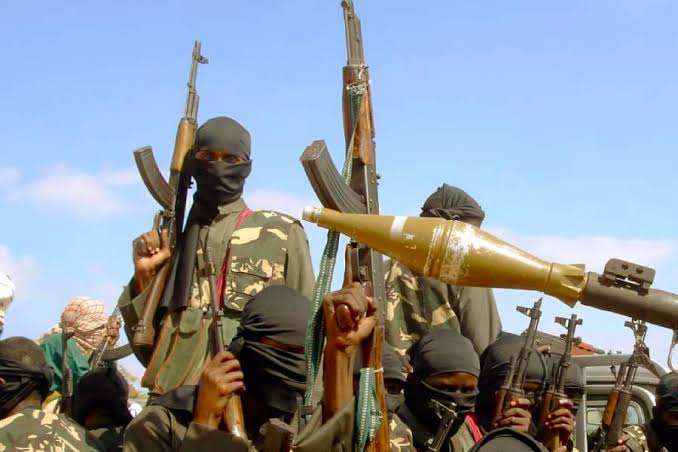
Al Shabaab is no longer simply a terrorist organisation collecting money to finance attacks. It has built something much more durable, a revenue system that reaches into legitimate commerce, informal finance, mobile money, real estate and cross border trade.
That is the uncomfortable conclusion emerging from a new analysis by the Africa Center for Strategic Studies, published through AllAfrica. The assessment puts the group’s annual revenues at up to $200 million, while warning that its increasingly sophisticated financial networks are exploiting gaps between countries, regulators and enforcement agencies.
For compliance professionals, the important part of the story is not simply the size of the money involved. It is how difficult the money has become to follow.
Al Shabaab’s revenue reportedly comes largely from extortion and illicit taxation across wide sections of Somalia’s economy. The group imposes charges on goods and services, roads and ports and has also generated income from property transactions and investments through intermediaries and proxies.
That makes the organisation’s financial activity look less like a conventional terrorist financing operation and more like a hybrid criminal economy.
The Africa Center describes Al Shabaab as an organisation that increasingly blurs the distinction between terrorism and transnational organised crime. Its financial interests extend into illicit trade, smuggling, trafficking and money laundering, with networks operating across East Africa and beyond.
That distinction matters enormously for banks, money transfer businesses and mobile money operators.
Traditional AML systems are often designed around the assumption that suspicious money will eventually pass through a recognisable financial institution. But terrorist organisations operating in fragile and highly informal economies do not necessarily need to rely on a conventional banking relationship.
They can use mobile money, hawala networks, remittance companies, front businesses, investments and charities. The Africa Center identifies all of these as channels through which Al Shabaab conceals or moves revenue.
The US government’s Rewards for Justice programme similarly identifies hawala transfers, money laundering, personal couriers, mobile money and commercial activity among the methods associated with Al Shabaab’s financial network.
This creates a difficult compliance problem.
A transaction may not look suspicious in isolation. A small transfer, a remittance payment, a business investment or a property transaction can appear entirely ordinary. The risk becomes clearer only when the transaction is connected to other activity, counterparties or jurisdictions.
That is where transaction monitoring can struggle.
The problem is bigger than technical compliance
Somalia has made progress in strengthening its AML and counter terrorism financing framework. The Africa Center notes that authorities have frozen terrorist linked bank accounts, suspended mobile money accounts and prosecuted individuals accused of terrorism financing.
But the report makes a crucial distinction between having the right rules and being able to use them effectively.
Technical compliance is not the same as operational effectiveness.
A financial institution can have an AML policy, customer due diligence procedures, sanctions screening and suspicious transaction reporting requirements and still fail to identify sophisticated financial networks.
The weakness may lie somewhere else.
Investigators may not have access to the necessary transaction data. Different agencies may hold pieces of the same financial picture without connecting them. Information may not move quickly enough across borders. Financial intelligence may be generated but not converted into an investigation that results in asset seizure or prosecution.
That is the real compliance challenge.
The money does not respect the jurisdictional boundaries of the regulators trying to trace it.
The Africa Center says Al Shabaab’s financial strategy has become increasingly transnational, while regional coordination remains limited and capacity gaps continue to affect investigations, interdiction and asset forfeiture.
For compliance teams, that should be a warning against treating AML as a purely domestic exercise.
A customer may be based in Kenya. The payment may involve Somalia. A remittance business may be registered somewhere else. A commercial entity may have links to the Gulf. The beneficial owner may sit in another jurisdiction entirely.
Each individual relationship can appear legitimate.
The network may not.
Mobile money changes the equation
East Africa’s mobile money ecosystem is one of the region’s great financial inclusion successes. It is also an increasingly important part of the financial crime conversation.
The answer cannot be to treat mobile money itself as suspicious. That would be both impractical and damaging to financial inclusion.
The compliance question is more precise. Can providers identify unusual patterns without creating unnecessary friction for legitimate customers? Can they detect accounts being used as intermediaries for others? Can they identify relationships between apparently unrelated accounts? Can they respond quickly when law enforcement or intelligence agencies provide information about a suspected network? And, crucially, can providers preserve reliable records that investigators can actually use?
Those questions become more important as terrorist groups and organised criminals become more comfortable operating across formal and informal financial channels.
Hawala remains a difficult blind spot
Hawala presents another challenge because it operates differently from conventional banking.
It is a legitimate and deeply established means of transferring money in many communities. But its informal structure can make financial flows more difficult for regulators and investigators to trace than transactions moving through conventional banking systems.
That does not mean hawala should be treated as inherently criminal. It means the sector requires effective supervision, customer identification, record keeping and intelligence sharing.
The same principle applies to charities, businesses and other entities that can be abused as financial vehicles.
The compliance risk is not the existence of these sectors. It is the possibility that legitimate economic activity becomes mixed with illicit money without the controls being strong enough to separate the two.
Sanctions are only useful if institutions can act on them
There is also a sanctions dimension.
The US Treasury has previously targeted individuals and businesses linked to Al Shabaab’s financial networks, including people involved in laundering funds, facilitating payments and using businesses to support the organisation. Treasury has described Al Shabaab as generating more than $100 million annually through extortion and support from affiliated businesspeople.
The United Nations has since reported estimates of annual Al Shabaab revenues ranging between $100 million and $200 million. It estimated that roughly 70 per cent of those revenues were spent on operations and about 30 per cent on investments.
Those figures should be treated as estimates rather than precise accounts. But even the lower end demonstrates the scale of the financial infrastructure supporting the organisation.
For regulated firms, sanctions screening therefore cannot be reduced to checking a name against a list at onboarding. The more difficult task is understanding ownership, control, counterparties, transaction patterns and connections between entities.
A sanctioned individual may not appear directly in a payment. The relationship may sit several layers away through a company, intermediary or associate. That is why beneficial ownership information and network analysis matter.
The compliance lesson
The East African experience exposes a weakness that exists well beyond the region. AML programmes can become too focused on process.
Did the institution complete customer due diligence? Did it file the suspicious transaction report? Did it screen the customer? Did it keep the required records? Those questions matter. But they do not tell the whole story.
The more important question is whether the institution’s controls can actually identify and disrupt the financial behaviour they are designed to detect.
Al Shabaab’s reported financial model demonstrates why that distinction matters. The organisation has developed multiple revenue streams and multiple ways of moving money. Its finances do not sit neatly inside one bank, one country or one payment system.
The response therefore cannot sit inside one compliance department either.
Banks, mobile money operators, money transfer businesses, customs authorities, tax agencies, financial intelligence units, law enforcement and regulators need mechanisms for sharing relevant intelligence quickly and lawfully.
Regional cooperation is not a nice addition to the AML framework in this environment. It is part of the control framework.
The uncomfortable lesson is that Al Shabaab appears to understand the region’s financial fragmentation extremely well.
The compliance industry needs to understand it just as well.
The objective should not simply be to produce more suspicious transaction reports or more sanctions alerts. It should be to turn financial information into intelligence, intelligence into investigations and investigations into disruption.
That is the difference between AML compliance on paper and AML effectiveness in the real world.






No Comment! Be the first one.