




Africa’s $88bn Illicit Financial Flow Challenge Spurs Push for Stronger AML/CFT Collaboration
Stakeholders call for risk-based regulation, stronger public-private partnerships and improved financial intelligence coordination to protect Africa’s financial system while safeguarding legitimate...
Stakeholders call for risk-based regulation, stronger public-private partnerships and improved financial intelligence coordination to protect Africa’s financial system while safeguarding legitimate non-profit operations.
Africa’s growing exposure to illicit financial flows (IFFs) has intensified calls for stronger collaboration among governments, regulators, financial institutions, law enforcement agencies and civil society organisations to strengthen anti-money laundering and counter-terrorist financing (AML/CFT) frameworks across the continent.
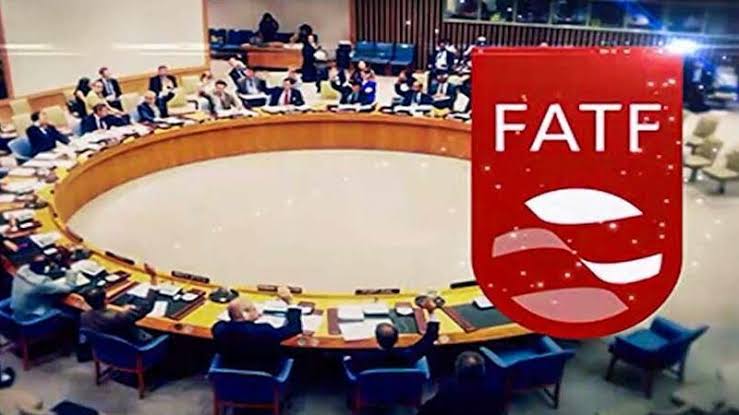
Stakeholders made the call at the 3rd Africa High-Level Civil Society Anti-Money Laundering and Counter-Terrorist Financing (AML/CFT) Conference held in Abuja, where policymakers and compliance experts examined the effective implementation of the Financial Action Task Force (FATF) Recommendation 8.
The conference, themed “Implementing FATF Recommendation 8 Correctly: Practices, Lessons Learned and Opportunities for Reform,” was organised by Spaces for Change (S4C) West Africa and Civic Advisory Hub in collaboration with the Special Control Unit Against Money Laundering (SCUML), an arm of the Economic and Financial Crimes Commission (EFCC).
Participants highlighted that Africa loses between $88 billion and $89 billion annually through illicit financial flows, resources that could otherwise support critical sectors such as healthcare, education, infrastructure and economic development.
Board Chairman of Spaces for Change, Samuel Diminas, said addressing illicit financial flows requires collective action, noting that governments and regulators cannot tackle financial crimes effectively without collaboration with financial institutions and civil society stakeholders.
He stressed that the objective should be to strengthen financial integrity while ensuring that compliance frameworks do not unintentionally restrict legitimate non-profit organisations through excessive regulatory burdens, account restrictions or financial exclusion.
Executive Director of Spaces for Change, Victoria Ibezim-Ohaeri, said illicit financial flows continue to undermine Africa’s economic growth, representing a significant loss of resources required for sustainable development.
She noted that while countries must strengthen AML/CFT controls, regulatory approaches should remain proportionate and risk-based. According to her, poorly implemented regulations can create unintended consequences for genuine non-profit organisations by limiting access to banking services and disrupting humanitarian and development activities.
Ibezim-Ohaeri said the conference was aimed at building trust between regulators, financial institutions and civil society while promoting compliance solutions that reflect Africa’s regulatory realities.
She also highlighted Nigeria’s progress in strengthening its AML/CFT architecture through improved coordination among agencies, stronger national risk assessments and increased engagement between regulators and non-state actors. She noted that Nigeria’s reform experience is attracting interest from other West African countries seeking to enhance their financial integrity frameworks.
Speaking on behalf of EFCC Chairman Olanipekun Olukoyede, SCUML Director Harry Erin said FATF Recommendation 8 should not be interpreted as a blanket regulatory measure for all non-profit organisations.
He explained that the standard requires countries to identify organisations that are genuinely vulnerable to terrorist financing risks and apply targeted supervisory measures based on evidence and risk assessments.
According to Erin, Nigeria’s terrorist financing risk assessment of the non-profit sector involved consultations among the EFCC, Nigerian Financial Intelligence Unit (NFIU), Office of the National Security Adviser, Corporate Affairs Commission and civil society representatives. The process, he said, helped the country adopt a more focused approach to identifying vulnerabilities while allowing legitimate organisations to continue their operations.
United Nations Special Rapporteur on human rights while countering terrorism, Prof. Ben Saul, noted that several countries had previously misapplied FATF Recommendation 8 by imposing excessive compliance obligations on the entire non-profit sector.
He welcomed the 2023 revision of the recommendation, which clarified the need for targeted, risk-based measures rather than broad restrictions. Saul warned that overregulation, weak risk assessments and disproportionate compliance demands could contribute to financial exclusion and undermine humanitarian activities.
He also pointed to FATF’s “unintended consequences” procedure as an important mechanism for addressing cases where international AML/CFT standards are incorrectly applied.
The discussions reinforced the need for African regulators and financial institutions to adopt compliance models that combine effective financial crime prevention with financial inclusion and institutional accountability. As jurisdictions continue to strengthen AML/CFT regimes, stakeholders emphasised that collaboration, intelligence sharing and proportionate supervision will remain critical to protecting the integrity of Africa’s financial system.






No Comment! Be the first one.