





DIRTY MONEY, EXPENSIVE ROOFS: How Nigeria’s Property Market Is Becoming a Laundromat for Illicit Wealth
Ikechukwu, a young professional in Lagos earns ₦250,000 monthly. After months of searching, he finds a modest two-bedroom apartment, only to be confronted with an annual rent of ₦3.5 million, agency...
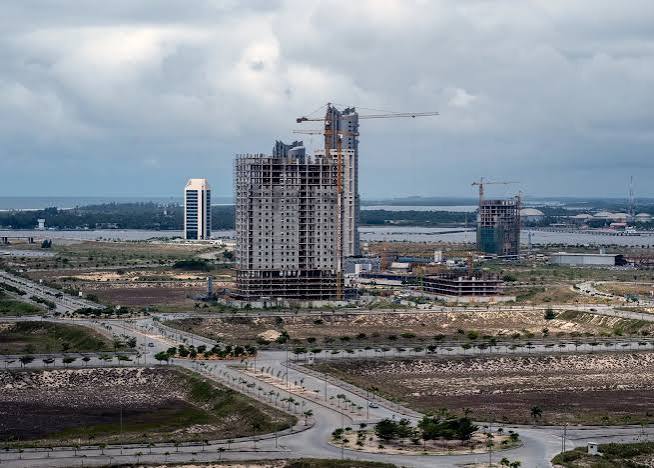
Ikechukwu, a young professional in Lagos earns ₦250,000 monthly. After months of searching, he finds a modest two-bedroom apartment, only to be confronted with an annual rent of ₦3.5 million, agency and legal fees, caution deposits and other charges. He cannot afford it. A family that has occupied the same apartment for years is equally anxious as the landlord announces another rent increase.
A few kilometres away, an apartment in an upscale neighbourhood remains unoccupied. Its owner appears in no hurry to find a tenant. The property is not necessarily an investment in rental income. It may be something else: a store of wealth, a status symbol, or an asset acquired with money whose origins are difficult to explain.
This is one of the troubling contradictions of Nigeria’s real estate market. Millions struggle to secure decent accommodation, while expensive properties change hands, sometimes at values disconnected from their economic realities. In between are opaque transactions, questionable valuations, concealed ownership and professionals who may be willing to look the other way.
The question is no longer simply why Nigerian property is so expensive. It is whether a portion of the market has become a convenient financial sanctuary for proceeds of corruption, internet fraud, embezzlement, drug trafficking and other criminal activities.
The architecture of a property laundering operation…
Money laundering through real estate is not necessarily dramatic. It can happen through an ordinary-looking sale agreement, a tenancy arrangement or the purchase of land through an intermediary.
The mechanics are relatively straightforward. Money generated from criminal activity is moved through third parties, relatives, associates, corporate entities or proxies. It is then used to acquire land, houses, commercial buildings or development projects.
In other cases, property values are deliberately manipulated. A property worth ₦100 million may be documented at ₦200 million, with the difference used to disguise the movement of illicit funds. Conversely, an artificially low declared value can conceal the true consideration, facilitate tax evasion or obscure the financial trail.
There are also suspicious arrangements involving fictitious tenancies, inflated rental payments, advance rent, unexplained cash purchases, multiple transfers and properties held in names different from those of their actual beneficiaries.
The objective is to transform money that cannot easily be explained into an asset that appears legitimate. Once acquired, the property can be rented, resold, mortgaged, transferred or simply held as a repository of wealth.
The danger is that an apparently legitimate transaction can provide a respectable cover for an illegitimate fortune.
The Independent Corrupt Practices and Other Related Offences Commission (ICPC) has previously identified these vulnerabilities. In a 2022 presentation on illicit financial flows, its Director of Asset Tracing, Recovery and Management, Adedayo Kayode, disclosed that the commission was investigating completed but abandoned estates in the Federal Capital Territory to determine whether they were instruments of illicit financial flows.
Kayode identified cash purchases, foreign exchange transactions and failure to update property ownership records as methods through which illicit wealth is concealed.
He observed that real estate’s informal and inadequately regulated character makes it attractive to those seeking to launder illicit wealth.
The warning is significant because It demonstrates that the problem is not merely speculative or an industry rumour; it has attracted the attention of Nigeria’s anti-corruption authorities.
When estate agents become gatekeepers of dirty money…
A property transaction ordinarily involves several players: estate agents, brokers, developers, lawyers, valuers, landlords, buyers, financial institutions and land registry officials.
Each has a responsibility to protect the integrity of the transaction. Yet, where professional standards collapse, these same actors can become facilitators.
Consider an agent who introduces a buyer with no verifiable income, negotiates a multimillion-naira property transaction, accepts payment through unrelated third parties and makes no meaningful attempt to establish the buyer’s identity or the source of funds.
Or a property manager who knowingly processes an inflated tenancy agreement to create a false rental income trail.
Such conduct is not simply professional negligence. Depending on the circumstances and evidence, it may constitute participation in money laundering or other financial crimes.
The responsibility of professional associations is therefore particularly important. Associations cannot restrict their mandate to membership recruitment, training, dispute resolution and the protection of commercial interests. They must also insist on ethical conduct, enforce professional discipline and cooperate with regulators.
The Nigerian Financial Intelligence Unit’s 2022 National Inherent Risk Assessment identified the involvement of third parties, cash transactions and inadequate information about ultimate beneficial owners as vulnerabilities in real estate transactions.
The ICPC has also pointed to collaboration between developers and accomplices in land administration as a potential avenue for illicit financial flows.
The implications are serious: the person whose name appears on a title document may not be the person who provided the money or ultimately controls the property.
Three cities, one affordability crisis…
The scale of the market is illustrated by advertised property prices across three important Nigerian markets.
According to the Nigeria Property Centre’s fourth-quarter 2026 market report, the median advertised figures are as follows:
| Location | Median annual rent | Median property sale asking price |
| Lagos | ₦13 million | ₦340 million |
| Abuja | ₦13 million | ₦350 million |
| Port Harcourt | ₦5.53 million | ₦220 million |
These are market-wide asking-price medians across property types, not verified completed transaction prices. They nevertheless offer a useful picture of the financial barriers facing prospective tenants and buyers.
The figures become even more revealing when examined alongside demand and supply conditions.
In Lagos, the report recorded 34,926 rental listings and 71,930 sale listings. Abuja had 5,338 rental listings and 13,699 sale listings, while Rivers State recorded 251 rental listings and 1,301 sale listings.
The report also recorded a 38.2 per cent quarter-on-quarter increase in median rental asking prices in Rivers State, compared with no change in Lagos and a 3.7 per cent decline in Abuja.
These differences show that the affordability problem is not uniform. Local demand, supply, infrastructure, construction costs and purchasing power all matter.
But there is another issue: when properties are deliberately priced beyond reasonable market benchmarks to accommodate questionable funds, genuine buyers and tenants are forced to compete in a distorted market.
The invisible tax on ordinary Nigerians…
Property-related money laundering has consequences that extend beyond the individuals directly involved.
First, it can distort market prices. Where buyers with unexplained wealth are prepared to pay inflated prices, sellers and agents then begin using those transactions as benchmarks for subsequent negotiations, as evident in the market today.
Landlords then cite higher property values to justify rent increases. Developers use inflated comparable prices to market new projects. Other property owners follow suit.
The result is a cycle in which legitimate demand is increasingly priced against the purchasing power of illicit wealth.
Second, it undermines housing affordability. A civil servant, teacher, nurse or young entrepreneur cannot compete with someone whose purchasing power is disconnected from legitimate earnings.
Third, it creates an uneven investment environment. Developers who rely on legitimate financing, realistic valuations and commercial returns are disadvantaged against operators whose capital may have questionable origins.
Fourth, it weakens government revenue. Under-declared transactions, concealed ownership and inaccurate valuations can compromise capital gains tax, stamp duties, land charges and other statutory revenue.
The ICPC chairman, Dr. Musa Adamu Aliyu, SAN, has warned that illicit financial flows deprive governments of resources that could otherwise finance public services and infrastructure.
He noted that such leakages undermine programmes intended to improve the welfare of citizens, particularly the poor.
There is also a broader economic consequence. Property speculation can redirect capital away from productive businesses, manufacturing, agriculture and employment-generating enterprises. Instead of financing businesses that create jobs and expand output, money becomes locked in expensive buildings and land.
This can worsen inequality and reduce the economy’s capacity to generate broad-based prosperity.
The EFCC is watching. But is the industry listening?
The Economic and Financial Crimes Commission (EFCC) has also raised concerns about the use of real estate to conceal criminal proceeds.
In February 2026, EFCC Chairman Ola Olukoyede warned real estate and property managers against facilitating money laundering.
“We have noted with grave concern that fraudsters are laundering money and hiding proceeds of crime through real estate and property. People now defraud the government and individuals and invest in real estate,” he said.
The warning followed a meeting with executives of the Association of Real Estate and Property Managers in Edo State.
It is particularly relevant in an era when proceeds from cyber-enabled fraud, including internet scams popularly associated with the term Yahoo, can be converted into land, luxury homes, commercial buildings and other high-value assets.
However, internet fraudsters are only one category of potential perpetrators. Corrupt public officials, embezzlers, organised criminal networks and other individuals with unexplained wealth can exploit the same weaknesses.
The issue is not the identity or social status of the buyer. It is the source of the money, the transparency of the transaction and the identity of the person who ultimately benefits.
The law is there. Enforcement is the challenge
Nigeria’s Money Laundering (Prevention and Prohibition) Act 2022 and the relevant SCUML regulations place real estate agents, brokers, developers and other designated non-financial businesses and professions within the anti-money laundering compliance framework.
Their obligations include customer identification, beneficial ownership checks, record-keeping, internal controls and reporting suspicious transactions.
A transaction that has no apparent economic justification, involves unusual complexity or raises reasonable suspicion of criminal proceeds should not simply be processed as another commission-earning opportunity.
Yet, compliance cannot be left to legislation alone.
SCUML and the EFCC must strengthen supervision, inspect the compliance records of real estate businesses and sanction persistent offenders. Professional associations must make registration, ethical standards and compliance training meaningful rather than ceremonial.
Land registries should improve digital records and ensure that beneficial ownership information is accessible to competent authorities. Property valuation standards should be strengthened, while tax authorities should investigate discrepancies between declared consideration, market value and actual payments.
Financial institutions also have a responsibility to scrutinise unusual property-related payments, particularly where the source of funds, beneficial owner or transaction structure raises concerns.
Importantly, enforcement must be evidence-based. High property prices, vacant buildings and cash transactions may warrant scrutiny, but none independently proves money laundering.
A roof over the head, not a hiding place for stolen wealth
Ultimately, the real estate market should be a vehicle for wealth creation, housing delivery, employment and economic development. It should not become a safe deposit box for the proceeds of crime.
For the Nigerian family struggling to renew a tenancy, the consequences of market distortion are not abstract. They are the additional months of salary surrendered to rent, the school fees sacrificed, the business expansion postponed and the quality of life steadily diminished.
For the young professional unable to purchase a home, they represent a future increasingly out of reach.
And for the economy, they represent capital misallocated, revenue lost, inequality entrenched and confidence weakened.
The question confronting Nigeria is whether its property market will remain an avenue for legitimate investment or become a respectable façade behind which criminal fortunes are preserved.
A nation cannot build an affordable housing market on opaque transactions, manipulated valuations and unexplained wealth.
A house should be a home, an investment or a productive asset. It should never be a laundering machine for stolen money.



No Comment! Be the first one.