



US Returns $2.5m in Corruption Proceeds Linked to Yahya Jammeh to The Gambia for Victim Compensation
The United States has returned approximately $2.5 million in alleged corruption proceeds traced to the family of former Gambian President Yahya Jammeh, with the funds earmarked to compensate victims...
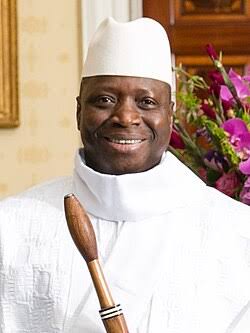
The United States has returned approximately $2.5 million in alleged corruption proceeds traced to the family of former Gambian President Yahya Jammeh, with the funds earmarked to compensate victims of corruption and abuses committed during his regime.
The US Department of Justice announced the return of $2,507,911.73 to the Republic of The Gambia, marking another case of international cooperation to recover assets linked to alleged corruption and channel them towards victims.
According to the African Center for Governance, Asset Recovery and Sustainable Development, the money was recovered following civil forfeiture proceedings involving a mansion in Potomac, Maryland, which US authorities said was purchased with proceeds linked to embezzled public funds and bribes.
The repatriated funds will be distributed to eligible victims under The Gambia’s Victims Reparations Act of 2023.
US Investigation Traces Funds to Maryland Property
According to the US Department of Justice, Yahya Jammeh and his wife, Zineb Jammeh, allegedly used public funds and bribes obtained from businesses seeking monopoly rights in sectors of the Gambian economy to purchase the Maryland property.
Investigators said the funds were moved through a network of shell companies and offshore trusts before being used to acquire the mansion.
US authorities subsequently pursued civil forfeiture proceedings, resulting in the property’s sale and the recovery of net proceeds amounting to $2,507,911.73.
Civil forfeiture allows authorities, subject to applicable legal requirements, to pursue assets believed to be connected to criminal activity. The proceedings can target property rather than requiring a criminal prosecution of the property owner in the same case.
The recovery demonstrates how assets allegedly linked to corruption can be traced across borders and confiscated through legal proceedings in jurisdictions where they are held.
Victims to Receive Recovered Funds
Under a bilateral agreement between the United States and The Gambia, the recovered money will be allocated to eligible victims of corruption and abuses associated with Jammeh’s regime.
The Gambia’s Victims Reparations Act of 2023 provides a legal framework for distributing the funds, helping ensure that the return is tied to a recognised compensation mechanism.
The arrangement places victim compensation at the centre of the recovery process, rather than treating the return of assets as a purely government-to-government financial transaction.
However, the announcement does not specify the number of beneficiaries, individual compensation amounts or the timetable for disbursement.
Cross-Border Cooperation Drives Recovery
The investigation was led by Homeland Security Investigations’ Illicit Proceeds and Foreign Corruption Group in Miami, working with HSI Baltimore, the agency’s attaché in Dakar and Gambian authorities.
The US Department of Justice also credited cooperation involving the US Department of State, the Treasury Department and its Office of International Affairs.
The case illustrates the importance of information-sharing, coordinated investigations and legal assistance between countries when suspected corruption proceeds are transferred through international financial systems.
Lessons for Africa’s Asset Recovery Efforts
The African Center for Governance, Asset Recovery and Sustainable Development said the case offers lessons for African countries seeking to recover funds allegedly stolen by public officials and their associates.
One key lesson is the importance of maintaining effective mutual legal assistance arrangements that enable authorities to trace assets, share evidence, freeze property and pursue forfeiture proceedings in foreign jurisdictions.
The case also highlights the need for clear domestic laws governing the receipt and management of returned assets. Without an established legal framework, recovered funds can face delays, disputes or weak accountability mechanisms.
Another issue is the use of shell companies, offshore trusts and real estate to conceal the origin and ownership of suspected illicit wealth. Investigators must often follow complex financial trails across multiple jurisdictions before assets can be recovered.
For The Gambia, the agreement provides a mechanism to direct recovered proceeds towards eligible victims. For other African countries, it offers an example of how international asset recovery can be connected to reparations and public accountability.
The return of the $2.5 million does not resolve the broader challenges of recovering assets linked to corruption, but it demonstrates how international cooperation and domestic legislation can combine to facilitate the return of funds and provide a basis for victim compensation.



No Comment! Be the first one.