





Nigerian Companies Seek SEC Clarity on New IFRS Sustainability Reporting Deadline
Nigerian public companies and significant public-interest capital market operators are seeking greater clarity over a new Securities and Exchange Commission (SEC) directive requiring them to...
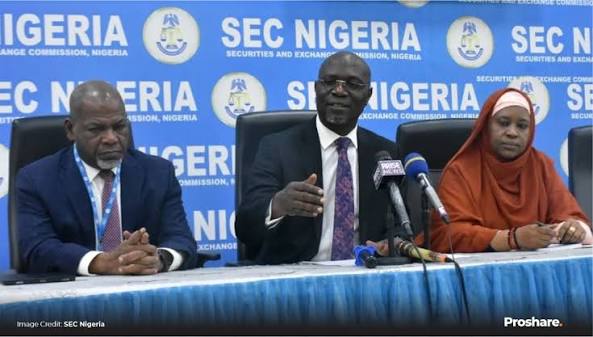
Nigerian public companies and significant public-interest capital market operators are seeking greater clarity over a new Securities and Exchange Commission (SEC) directive requiring them to submit implementation plans for IFRS Sustainability Disclosure Standards by October 15, 2026.
The SEC issued the directive on September 23 as part of Nigeria’s phased adoption of IFRS S1 and IFRS S2, the international standards covering sustainability and climate-related financial disclosures. The Commission said the requirement is intended to enable it to monitor the preparedness of regulated entities ahead of mandatory sustainability reporting.
Under the SEC circular, affected entities must submit an implementation plan addressing governance and board oversight, a gap assessment against IFRS S1 and IFRS S2, implementation timelines, data-collection and reporting systems, internal controls and assurance arrangements, training plans, the expected year of first sustainability reporting and anticipated implementation challenges.
The requirement has generated questions among companies because Nigeria’s Financial Reporting Council (FRC) has already established a phased roadmap for adopting the standards.
The FRC’s amended 2026 roadmap provides for early adoption, voluntary adoption and mandatory adoption. Public-interest entities, including public companies and significant public-interest capital market operators, are scheduled to begin mandatory reporting for accounting periods starting on or after January 1, 2028, while small and medium-sized entities are scheduled for mandatory adoption from January 1, 2030.
The compliance concern is therefore not whether companies ultimately have to comply with IFRS S1 and IFRS S2. That requirement is already embedded in Nigeria’s adoption framework. The immediate question is how the SEC’s October 15 implementation-plan requirement fits within the FRC’s phased approach.
Some companies and market participants have questioned whether the SEC expects all elements of the implementation process to be submitted at once, even where the FRC roadmap envisages different stages of preparation.
The issue is particularly relevant for entities that have not voluntarily adopted the standards. Under the FRC framework, companies that have not opted for voluntary adoption remain within the timetable for mandatory implementation. The SEC circular, however, now requires covered entities to demonstrate their preparedness through an implementation plan.
The distinction between preparation for compliance and actual mandatory reporting is therefore important. The October 15 deadline does not bring forward the January 2028 mandatory reporting date for public-interest entities. Rather, it requires regulated entities to provide the SEC with information on how they intend to prepare for implementation.
From a corporate compliance perspective, the directive places sustainability reporting firmly within the responsibilities of boards, management, finance teams, risk functions and internal-control structures.
Companies will need to determine whether existing systems can capture reliable sustainability and climate-related information, identify gaps in governance and reporting processes, establish responsibility for disclosures and assess whether independent assurance mechanisms will be required.
The SEC’s requirement also raises an important governance issue: whether boards are sufficiently involved in overseeing sustainability-related financial information.
The Commission specifically requires implementation plans to address board oversight, internal controls and assurance arrangements. This indicates that sustainability reporting is increasingly being treated as a financial-reporting and governance matter rather than simply an environmental or corporate-social-responsibility exercise.
The FRC has also sought to provide greater implementation clarity. Its amended 2026 roadmap and Sustainability Reporting Guideline were introduced following stakeholder consultations and are intended to clarify reporting timelines, assurance requirements and the practical process for adopting the standards. Federal Radio Corporation of Nigeria
For companies, the immediate compliance priority is therefore to reconcile the SEC directive with the FRC roadmap and ensure that the implementation plan submitted by October 15 accurately reflects the entity’s adoption status, governance arrangements, readiness gaps and proposed timetable.
Another issue is regulatory coordination. The SEC and FRC have complementary responsibilities in Nigeria’s financial-reporting ecosystem, making consistency between their requirements important for regulated entities.
Questions over the October 15 deadline are therefore largely questions of regulatory interpretation and implementation rather than a rejection of the underlying sustainability-reporting framework.
The SEC has said it will continue engaging regulated entities and monitoring compliance with the implementation timelines as part of its oversight of financial reporting and corporate governance in the Nigerian capital market.
For boards and compliance officers, the development presents an immediate reporting obligation and a longer-term governance challenge. Companies will need to move beyond policy statements and demonstrate that they have systems capable of producing reliable, comparable and auditable sustainability-related information.
The regulatory direction is increasingly clear: sustainability information is becoming part of mainstream corporate reporting in Nigeria. The outstanding question for companies is how quickly their governance, data, controls and assurance systems can be brought into line with the timetable established by the regulators.







No Comment! Be the first one.