





UN Warns Terrorists Are Using Drones, Cryptocurrency to Escalate Attacks in Nigeria
The United Nations has warned that terrorist groups operating in northern Nigeria and across the West African and Sahel region are becoming increasingly sophisticated, deploying drones, encrypted...
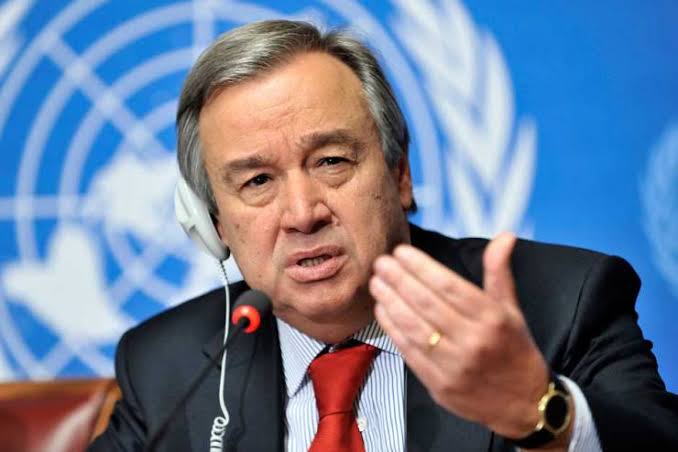
The United Nations has warned that terrorist groups operating in northern Nigeria and across the West African and Sahel region are becoming increasingly sophisticated, deploying drones, encrypted communications and cryptocurrencies to finance and coordinate attacks. The warning was delivered to the UN Security Council by the Special Representative of the Secretary-General for West Africa and the Sahel, Leonardo Simão, during the presentation of the Secretary-General’s latest report on developments in the region.
According to the UN, terrorist organisations are increasingly combining emerging technologies with transnational organised crime to strengthen territorial control, finance operations and undermine public confidence in state institutions. The report notes that insecurity across the region has displaced about 6.8 million people, while more than 1.2 million have become refugees or asylum seekers, with Nigeria, Niger and Burkina Faso continuing to bear the brunt of attacks.
The briefing comes amid growing concern over the evolution of terrorist capabilities. The UN also welcomed renewed diplomatic engagement among West African countries, including the reopening of the Nigeria-Niger border, while stressing that military operations alone will not defeat violent extremism. Instead, it urged governments to complement security operations with poverty reduction, governance reforms, education and job creation to address the root causes of radicalisation.
Analysis
The UN’s warning signals that terrorism in Nigeria and across West Africa is no longer simply a conventional security challenge—it is rapidly becoming a technology, financial crime and governance challenge. The growing use of commercial drones, cryptocurrencies and sophisticated communications demonstrates that extremist groups are adapting to the digital age faster than many regulatory and security institutions. As terrorist networks become more decentralised and technologically enabled, traditional counter-insurgency approaches centred on military force alone are proving increasingly inadequate.
For Nigeria, the report highlights an emerging convergence between national security and regulatory compliance. Terrorist financing is moving beyond cash couriers and informal channels into digital assets that can be transferred across borders with greater speed and anonymity. This places greater responsibility on financial institutions, fintech companies, cryptocurrency service providers and regulators to strengthen anti-money laundering (AML) controls, counter-terrorist financing (CTF) frameworks, customer due diligence and suspicious transaction monitoring. Financial crime compliance is no longer confined to protecting banks from fraud; it has become a frontline defence against national security threats.
The increasing use of drones by terrorist groups presents another major governance challenge. Commercial drone technology, originally developed for agriculture, logistics and infrastructure inspection, is now being repurposed by non-state actors for reconnaissance, intelligence gathering and attacks. This raises important questions about Nigeria’s regulatory framework governing drone registration, licensing, importation, airspace management and operational oversight. Regulators may need to strengthen coordination between aviation authorities, security agencies, customs authorities and telecommunications regulators to prevent the misuse of emerging technologies while supporting legitimate commercial innovation.
The report also reinforces the growing importance of cybersecurity and digital governance. Terrorist organisations are increasingly exploiting encrypted communication platforms, digital payment systems and online recruitment channels to coordinate activities across national borders. As a result, governments and private sector organisations alike will face greater expectations to improve cyber resilience, protect critical infrastructure, strengthen data-sharing arrangements and develop intelligence-led compliance systems capable of identifying emerging threats before they materialise.
For corporate Nigeria, particularly organisations operating in banking, telecommunications, energy, logistics and critical infrastructure, the evolving threat landscape has significant governance implications. Enterprise risk management frameworks can no longer separate cyber risk, financial crime, operational resilience and physical security into isolated functions. Boards will increasingly be expected to oversee integrated risk management strategies that incorporate geopolitical risk, terrorism financing, cybersecurity and supply chain resilience as part of broader corporate governance responsibilities. Investors and insurers are also placing greater emphasis on operational resilience, making security governance an increasingly important component of ESG and business continuity planning.
The warning carries implications beyond Nigeria. Across Africa, the rapid adoption of financial technology, digital payments and commercial drone technology has created enormous opportunities for economic growth. However, these innovations also expose regulatory gaps that can be exploited by organised crime and violent extremist groups. Countries seeking to build digital economies must therefore strengthen regulatory oversight without stifling innovation. This will require closer collaboration among financial intelligence units, central banks, telecommunications regulators, aviation authorities and regional security institutions.
The UN’s emphasis on renewed regional diplomacy is equally significant. Terrorist groups operate across porous borders, often exploiting differences in national regulations and weak cross-border enforcement. Strengthening regional cooperation through intelligence sharing, harmonised financial crime regulations and coordinated border management may prove just as important as military operations. The reopening of the Nigeria-Niger border illustrates that diplomatic engagement and regional cooperation remain essential components of long-term security and economic stability.
Ultimately, the UN report demonstrates that modern terrorism is becoming increasingly digital, decentralised and financially sophisticated. The challenge facing governments is no longer simply defeating armed groups on the battlefield, but building resilient institutions capable of regulating emerging technologies, disrupting illicit financial networks and strengthening governance. For Nigeria and Africa, the future of counter-terrorism will depend as much on compliance, technology regulation and financial intelligence as on conventional security operations.
Compliance Takeaway
The UN warning underscores that counter-terrorism is increasingly becoming a compliance issue. Regulators, financial institutions, fintech firms, cryptocurrency platforms, telecommunications operators and critical infrastructure providers should expect heightened scrutiny around anti-money laundering, counter-terrorist financing, digital asset regulation, cybersecurity, drone governance, sanctions compliance and enterprise risk management. Organisations that strengthen customer due diligence, transaction monitoring, cyber resilience and technology governance will be better positioned to meet evolving regulatory expectations while contributing to national and regional security.







No Comment! Be the first one.