





Lebanon’s CFT Dilemma: When Disrupting Terrorist Finance Pushes Networks Underground
Abstract Cutting off terrorist financing does not always make the money disappear. It can force financial networks to change shape. Hezbollah’s financial infrastructure provides a useful case study...
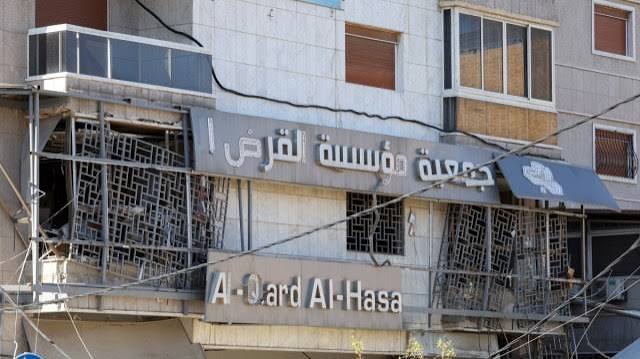
- Lebanon faces a difficult counter-terrorist financing challenge as pressure on Hezbollah’s financial infrastructure forces money networks to become more fragmented and harder to monitor. The case illustrates a broader problem for financial intelligence and compliance authorities: disrupting a financing channel can push activity into less visible systems, creating new risks for banks, money transfer businesses and informal financial networks.
Abstract
Cutting off terrorist financing does not always make the money disappear. It can force financial networks to change shape. Hezbollah’s financial infrastructure provides a useful case study of how a financing system can become more fragmented when established channels come under pressure. For Lebanon, the challenge is to prevent terrorist financing without driving legitimate financial activity further into informal channels. For banks and other financial institutions, the lesson is equally important. Financial crime controls must look beyond names and accounts to understand networks, relationships, ownership and unusual patterns of movement.
Analysis
The financial war surrounding Hezbollah demonstrates one of the hardest problems in counter-terrorist financing, CFT. Disrupting a known financial channel can weaken a network, but it can also encourage the network to adapt.
This report and analysis focus on Al Qard Al Hassan, a Hezbollah-linked financial institution that has come under sustained pressure. As established financial infrastructure becomes harder to operate, Hezbollah faces incentives to fragment its financial arrangements and seek alternative channels. This creates a dilemma for Lebanon.
The country’s authorities have to distinguish between legitimate financial activity and transactions that support a designated terrorist organisation, while operating in an environment where financial networks can become increasingly opaque.
The central compliance lesson is that financial disruption can change behaviour without eliminating the underlying threat.
When formal channels are closed, money can migrate towards cash, informal remittance networks, intermediaries, front companies, commodities and other mechanisms that are harder for conventional transaction monitoring systems to detect.
Compliance implications
For financial institutions, the risk goes beyond conventional sanctions screening.
A fragmented financing network may not present itself through an obvious connection to a designated organisation. Instead, risk may emerge through unusual relationships between accounts, unexplained transfers, common beneficial ownership, cash-intensive businesses or transactions that make little commercial sense. This makes network analysis increasingly important.
Banks and money service businesses should be capable of identifying relationships between apparently unrelated customers and investigating transactions that become suspicious when viewed collectively rather than individually.
Correspondent banks also face heightened exposure where transactions involve jurisdictions or sectors affected by terrorist financing concerns.
The Lebanese case reinforces the importance of strong customer due diligence, beneficial ownership checks, transaction monitoring, suspicious transaction reporting and effective information sharing between financial institutions and financial intelligence authorities.
Why the update matters
The case demonstrates that CFT is not simply about freezing an account or blocking a transaction. It is a contest between financial controls and adaptation.
When one channel is disrupted, a sophisticated network may attempt to develop another. That means compliance systems must continuously update their understanding of risk rather than relying exclusively on static watchlists or previously identified accounts.
For regulators, the challenge is even greater. Excessive restrictions can push legitimate economic activity towards informal systems, while weak controls can allow terrorist financing to exploit the same informal economy.
The objective must therefore be targeted disruption, backed by intelligence and proportionate controls.
Compliance Takeaway
Terrorist financing networks adapt when financial controls become effective. The strongest CFT frameworks therefore combine sanctions screening with network analysis, beneficial ownership intelligence, transaction monitoring and cooperation between financial institutions, FIUs and law enforcement.
For Nigeria and other jurisdictions facing terrorism and insurgency financing risks, the lesson is particularly relevant. Disrupting the visible financial channel is only the beginning. Compliance authorities must also anticipate where the money will move next.







No Comment! Be the first one.