




Presidential Absence: The Constitutional Compliance Questions Nigeria Must Answer
President Bola Tinubu’s extended stay outside Nigeria has moved beyond a question of presidential travel and into a wider debate about constitutional procedure, executive accountability and...
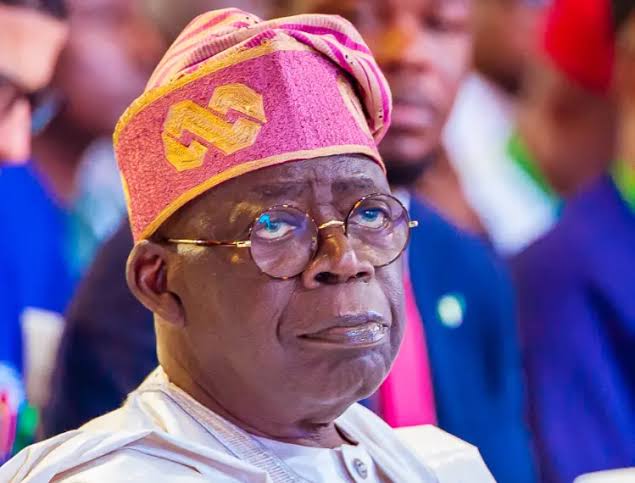
President Bola Tinubu’s extended stay outside Nigeria has moved beyond a question of presidential travel and into a wider debate about constitutional procedure, executive accountability and continuity of government.
Tinubu left Nigeria on August 30 for what the Presidency described as a three-week working vacation, travelling first to London and later to Paris. On September 21, the State House announced that he had extended the trip by a few days and was expected to return at the weekend.
The original three-week period expired on September 20. That date acquired particular significance because Vice-President Kashim Shettima left Nigeria the same day for New York to represent the President at the 81st United Nations General Assembly. Shettima delivered Nigeria’s national statement and participate in high-level diplomatic engagements.
That coincidence has produced a question that is constitutional as much as it is political: who was formally exercising the functions of the President while both the President and Vice-President were outside Nigeria?
The question is not simply about where either official was physically located. It concerns the constitutional instrument, if any, through which presidential authority was temporarily transferred.
Section 145(1) of Nigeria’s 1999 Constitution provides that whenever the President is proceeding on vacation or is otherwise unable to discharge the functions of his office, he is to transmit a written declaration to the President of the Senate and the Speaker of the House of Representatives. Upon that declaration, the Vice-President performs the functions of the President as Acting President until the President transmits another declaration that he is ready to resume those functions.
The Constitution also contains a further safeguard. Section 145(2) provides that where the President fails to transmit the declaration within 21 days, the National Assembly may, by a simple majority of each chamber, mandate the Vice-President to perform the functions of President as Acting President until the President communicates his readiness to resume.
The significance of the 21-day provision is therefore procedural. It does not state that a President is constitutionally permitted to remain abroad for only 21 days. Rather, it establishes a mechanism for addressing a situation in which a President is on vacation or otherwise unable to perform his functions and has not transmitted the required declaration.
The current dispute is whether that constitutional mechanism has been followed.
The Presidency has maintained that Tinubu remains engaged with government affairs while abroad. In announcing the extension of his vacation, the State House said the President had continued directing the affairs of government, citing his order for an independent investigation into the deaths of 37 suspected illegal miners in Minna. It also said the President had delegated Shettima to represent him at some official functions, while Secretary to the Government of the Federation George Akume continued to represent the President at other events after Shettima travelled to New York. State House
The government has also said that Shettima’s representation at the UNGA carries the President’s mandate and that there is no leadership vacuum. Senate President Godswill Akpabio has similarly rejected the suggestion that the country is without executive leadership, arguing that Tinubu remains in charge and continues to direct government from abroad.
But the constitutional question has not disappeared.
Former Vice-President Atiku Abubakar publicly asked, “Who is in charge?” after the 21-day period elapsed. He argued that Nigerians had not been shown a written declaration transferring presidential functions to Shettima and called for the document to be made public if it exists.
Some lawmakers have raised similar concerns. Members of the House of Representatives under the Save Democracy Group called on the National Assembly leadership to disclose whether the required declaration had been received and to consider the constitutional mechanism under Section 145(2) if it had not. Premium Times Nigeria
Other voices have gone further. Human-rights lawyer Inibehe Effiong described the simultaneous absence of Tinubu and Shettima as a constitutional violation, while constitutional lawyer Chidi Odinkalu has argued that the prolonged absence has created constitutional and political difficulties. These are legal and political interpretations, rather than judicial determinations. Channels Television+1
There is also a political dimension that cannot be separated from the constitutional debate.
Peter Obi, now a presidential candidate for the Nigeria Democratic Congress, has separately questioned Tinubu’s absence from the UNGA. Reacting to Ghanaian President John Mahama’s address to the General Assembly, Obi asked why the President of Nigeria, Africa’s most populous country, was not personally present at the global gathering. “Although our Vice President, Kashim Shettima, was present, the question remains: Where is the President?” Obi said. Tribune Online
Obi had also criticised Tinubu’s decision to spend his vacation abroad earlier in September, arguing that Nigeria’s domestic challenges warranted the President’s attention. Channels Television His intervention is politically significant because he is a declared presidential contender, but the constitutional questions being raised are broader than his political position.
The same questions have been raised by actors outside Obi’s political camp.
The African Democratic Congress has questioned the simultaneous absence of Tinubu and Shettima and asked whether the constitutional procedure for transferring executive authority has been followed. Channels Television Former presidential candidate Omoyele Sowore has also called on the National Assembly to act, citing the 21-day provision in Section 145.
The controversy also raises a less frequently examined question: who, precisely, did Tinubu hand over to?
The Presidency has said Shettima was mandated to represent the President at the UNGA and that Akume would continue representing Tinubu at some official events after Shettima left Nigeria. But representing the President at an event is not necessarily the same constitutional function as becoming Acting President.
That distinction matters for compliance purposes.
The Constitution does not provide that the Secretary to the Government of the Federation automatically assumes presidential powers when both the President and Vice-President are abroad. Nor does the simultaneous absence of the President and Vice-President automatically make the Senate President Acting President.
Section 146 deals with a different circumstance: a vacancy in the office of President arising from death, resignation, impeachment, permanent incapacity or removal. It provides for the Vice-President to assume the office in such circumstances and establishes further succession arrangements where both offices become vacant.
The present situation is therefore not, on its face, a constitutional vacancy. Tinubu remains President and Shettima remains Vice-President.
The unresolved issue is temporary authority. The constitutional history makes the question particularly sensitive. Nigeria’s experience during the prolonged absence of the late President Umaru Musa Yar’Adua exposed weaknesses in the previous constitutional arrangement. In 2010, constitutional amendments strengthened the procedure surrounding presidential absence and introduced the 21-day mechanism now contained in Section 145(2).
That history raises another question for today’s political institutions: was the constitutional safeguard created after the Yar’Adua episode intended precisely to prevent uncertainty of this kind?
There is, has remained in contact with officials in Nigeria and continued issuing directives. Supporters of that interpretation point to modern communications technology and the fact that government institutions continue to operate even when senior officials are however, another interpretation.
Some constitutional and governance voices argue that the physical location of the President should not automatically determine whether he is capable of governing. The Presidency says Tinubu has remained in contact with officials in Nigeria and continued issuing directives. Supporters of that interpretation point to modern communications technology and the fact that government institutions continue to operate even when senior officials are travelling.
That raises an equally important compliance question: does directing government remotely satisfy the constitutional requirement when the President is on vacation, or does Section 145 require a formal written transfer regardless of technological capability?
The Constitution’s wording will remain central to that debate.
There is also the question of disclosure. If a written declaration was transmitted to the Senate President and Speaker, should Nigerians be able to see it? If it was not transmitted, has the National Assembly formally considered the 21-day mechanism? If the National Assembly has not acted, what is the constitutional basis for the present arrangement?
And if the President and Vice-President are simultaneously abroad, what happens in an emergency requiring an immediate presidential decision? Who has authority to act, and under what written instrument?
These questions have become more consequential because the country is entering an election year. Presidential absence is inevitably being interpreted through competing political interests, but constitutional compliance should not depend on which party is asking the question.
The underlying issue is institutional rather than partisan: what rules govern the temporary exercise of presidential power when the elected President is abroad, the Vice-President is also abroad on official assignment, and the President’s original vacation period has been extended beyond three weeks?
The Presidency says there is no leadership vacuum. Critics say the public has not been given sufficient evidence of the constitutional basis for the arrangement.
Both positions can be tested against documents rather than political rhetoric.
The most straightforward route to clarity would be publication or confirmation of the relevant constitutional declaration, clarification from the leadership of both chambers of the National Assembly on whether any declaration was received, and a clear explanation of the legal status of executive authority while both principal officeholders are outside Nigeria.
Until those questions are answered, the controversy is unlikely to be settled by photographs from Paris, speeches in New York or assurances that government is functioning.
For a constitutional democracy, the more fundamental question is not merely where the President is.
It is under what legal authority the functions of the presidency are being exercised in his absence.




No Comment! Be the first one.