




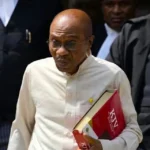
SERAP Gives CBN Seven Days to Account for $6.23m Election-Linked Payment
The Socio-Economic Rights and Accountability Project (SERAP) has given the Central Bank of Nigeria (CBN) seven days to explain the whereabouts and handling of $6.23 million reportedly spent on...
The Socio-Economic Rights and Accountability Project (SERAP) has given the Central Bank of Nigeria (CBN) seven days to explain the whereabouts and handling of $6.23 million reportedly spent on election-related funding, following concerns contained in the Auditor-General of the Federation’s 2023 Annual Report.
The demand, contained in a September 26, 2026 letter to CBN Governor Olayemi Cardoso, also covers more than ₦1.63 trillion in other public funds that SERAP says were identified in the Auditor-General’s report as unrecovered, unaccounted for or requiring further explanation.
At the centre of the dollar-denominated issue is a transaction at the CBN’s Abuja branch involving $6.23 million. According to SERAP’s account of the Auditor-General’s findings, the bank’s internal audit raised concerns that the money had been spent following a purported request for election funding made in the name of former President Muhammadu Buhari.
The Auditor-General reportedly sought access to the CBN’s investigation report on the transaction but was unable to obtain it for audit verification. The audit subsequently raised concerns about whether the funds had been lost and whether the payment was fraudulent, recommending recovery and remittance to the treasury.
The compliance significance of the case lies not only in the amount involved but also in the audit trail surrounding the transaction. A public institution handling funds of this magnitude is expected to maintain records capable of establishing the authority for a payment, the identity of its beneficiaries, the purpose for which the funds were released and the controls applied before disbursement.
SERAP is asking the CBN to publish the findings of its internal investigation, disclose measures taken to recover the money and identify those responsible where wrongdoing is established. It has also called for an independent forensic reconciliation of the sums identified by the Auditor-General.
The organisation’s wider demand concerns several other categories of CBN-related public funds.
SERAP says the Auditor-General identified more than ₦1.25 trillion in intervention loans to state governments that had not been recovered. It also cited ₦116.18 billion in loans to distressed and liquidated banks and ₦262.86 billion disbursed under the Anchor Borrowers’ Programme.
For the intervention loans, SERAP wants the CBN to disclose beneficiaries, amounts disbursed and recovery measures. In relation to the Anchor Borrowers’ Programme, it is seeking information on beneficiaries and participating anchors, utilisation of the funds, monitoring arrangements and recovery efforts.
From a regulatory and governance perspective, the issues raised by the audit point to several control questions: whether disbursement procedures were properly followed, whether supporting documentation was independently verified, whether management responded adequately to internal-audit findings and whether outstanding public funds are being actively tracked and recovered.
The controversy also highlights the importance of maintaining a complete audit trail when public institutions conduct sensitive transactions, particularly payments connected to elections or other politically significant activities.
The Auditor-General’s findings, as cited by SERAP, concern transactions and financial management issues covering various periods in 2023. They constitute audit observations and recommendations and do not by themselves establish criminal liability against any individual.
SERAP has asked the CBN to identify persons or entities responsible for affected funds, take disciplinary action where appropriate and refer suspected criminal conduct to relevant law-enforcement agencies, including the Economic and Financial Crimes Commission and the Independent Corrupt Practices and Other Related Offences Commission.
The organisation has warned that it will consider legal action if the CBN does not respond within seven days.
The immediate compliance test is therefore whether the CBN can produce the underlying documentation needed to reconcile the $6.23 million transaction and the other sums identified by the Auditor-General. That includes establishing the authorisation chain, recipients or beneficiaries, purpose of expenditure, accounting treatment, investigation findings and recovery status.
Until those records are publicly clarified, the central issue remains one of financial accountability and audit compliance: whether public funds identified in the Auditor-General’s report can be fully traced from authorisation and disbursement through utilisation, investigation and, where necessary, recovery.


No Comment! Be the first one.