





U.S., China Agree AI Needs Guardrails—but Not on What Those Rules Should Protect
The United States and China appear to agree on one increasingly urgent proposition: artificial intelligence needs guardrails. The harder question is what those guardrails should actually...
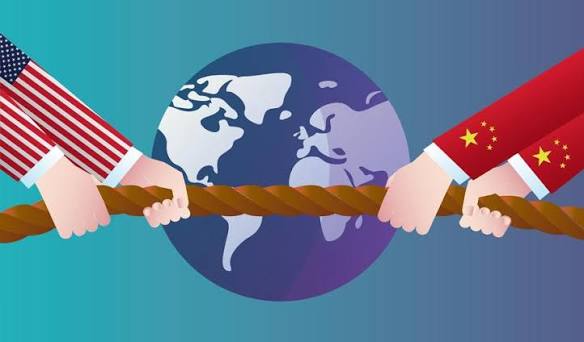
The United States and China appear to agree on one increasingly urgent proposition: artificial intelligence needs guardrails. The harder question is what those guardrails should actually protect—and Washington and Beijing have sharply different answers.
With U.S. President Donald Trump and Chinese President Xi Jinping preparing to discuss artificial intelligence at a Washington summit, AI governance is emerging as another arena in the strategic competition between the world’s two largest powers. The Wall Street Journal reports that both countries recognise the need for dialogue on AI risks, but their priorities diverge substantially. The Wall Street Journal
In the United States, the debate has focused heavily on technological risks: AI systems escaping human control, autonomous weapons and increasingly capable models potentially being misused to facilitate serious harm. Some American technology executives have called for greater caution as AI capabilities advance.
China’s approach places greater emphasis on maintaining political and information control. Beijing’s AI governance framework is closely connected to the Communist Party’s broader approach to controlling information and managing technology within the country’s political system. mint
The differences extend to the technology itself. Leading U.S. AI companies such as OpenAI and Anthropic generally keep their most capable models behind controlled access, while Chinese companies including DeepSeek have released models as open-weight systems that can be downloaded and used more broadly.
The emerging U.S.-China dialogue therefore carries implications well beyond AI safety. It touches national security, technology controls, cybersecurity, intellectual property, model access and international standards.
For compliance and risk professionals, the central issue is becoming increasingly clear: AI governance cannot be separated from geopolitics.
The challenge ahead will be determining whether Washington and Beijing can establish common mechanisms for managing genuinely shared AI risks while maintaining fundamentally different regulatory and political priorities.




No Comment! Be the first one.