



NIDCOM’S ₦1.3BN AUDIT QUESTIONS: The Money, The Records and the Answers
The findings are contained in the Auditor-General for the Federation’s 2024 Annual Report on Non-Compliance and Internal Control Weaknesses in federal ministries, departments and agencies. The report...
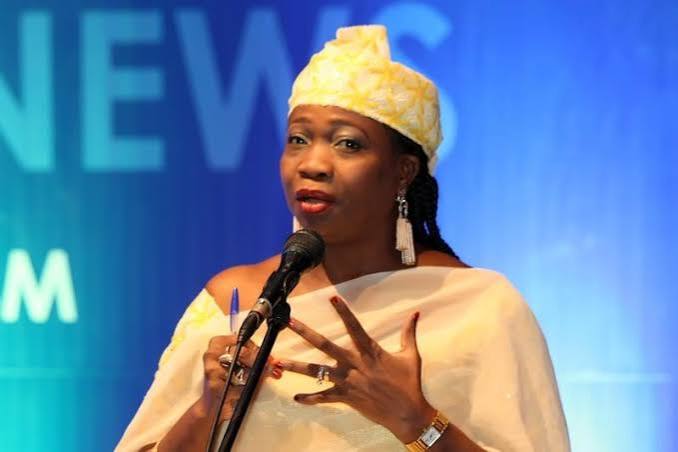
- More than ₦1.3 billion in transactions involving the Nigerians in Diaspora Commission have come under the Auditor-General’s scrutiny, exposing a trail of questioned expenditure, procurement weaknesses, unsupported payments and documentation gaps. The audit does not declare the money stolen. It does, however, put NiDCOM under pressure to produce the records that can settle the questions.
The findings are contained in the Auditor-General for the Federation’s 2024 Annual Report on Non-Compliance and Internal Control Weaknesses in federal ministries, departments and agencies. The report was transmitted to the National Assembly in July 2026 and forms part of a much wider examination of financial and control failures across government.
At Abike Dabiri Erewa’s- led NiDCOM, the questions cover several categories of expenditure. The most prominent is ₦209.09 million reportedly spent on flights, accommodation, venues and other logistics for three diaspora events in 2023. Auditors said they were not given sufficient documentation to verify the expenditure, including flight bookings, accommodation records, participant details, venue documentation, invitations, evidence of payment to a music artist, stamped visa documents and attendance registers. The audit treated the absence of those records as a serious control concern and recommended that the expenditure be accounted for before the National Assembly’s Public Accounts Committees.
The events themselves are not in dispute. NiDCOM’s own public records show that the 2023 National Diaspora Day celebrations were held in Abuja on July 25 and 26, with government officials, diaspora representatives, development partners and other stakeholders participating physically and virtually.
NiDCOM has also defended its wider 2023 programme. The commission said its activities included the Global African Diaspora Summit, National Diaspora Day, the National Diaspora Merit Award, the Nigeria Diaspora Investment Summit and the Badagry Door of Return. It said the Global African Diaspora Summit attracted participants from 16 countries and that some activities received sponsorship because of the commission’s limited resources.
That distinction matters. The audit question is not simply whether an event happened. It is whether public money charged to that event can be reconciled, transaction by transaction, with contracts, invoices, approvals, beneficiaries and evidence that the services paid for were actually delivered. The procurement findings widen the issue.
Auditors questioned ₦356.38 million in contracts awarded to seven companies under NiDCOM’s 2023 capital and intervention projects because some of the prequalification documents submitted during the bidding process had expired. The concern is therefore not merely the size of the contracts, but whether the contractors met the eligibility requirements when the awards were made.
Another ₦165.29 million in contracts was linked to five contractors whose Tax Clearance Certificates and Bureau of Public Procurement certificates were reportedly invalid. If confirmed through the statutory review process, that would raise questions about procurement due diligence and the controls used before public contracts were approved.
The audit also flagged four companies awarded contracts worth ₦91.90 million despite reportedly recording zero turnover against a stated minimum turnover requirement of ₦20 million.
Then there is the ₦340.83 million spent through emergency procurement for the Global African Diaspora Symposium. Auditors questioned the basis for treating the procurement as an emergency and raised concerns over the absence of the required approval from the Bureau of Public Procurement.
A further ₦137.52 million was reportedly split into two logistics contracts, while ₦48.91 million was paid to officers who were not listed as beneficiaries. Another ₦15.60 million paid to security personnel was reportedly charged under welfare and cleaning expenses.
These are not allegations that should automatically be converted into accusations of fraud. They are control questions. But they are also not trivial bookkeeping errors when they involve public funds and procurement rules.
The report raised additional concerns about tax deductions, including under-deductions and overpayments, five government vehicles that auditors said could not be sighted, and about ₦20.5 million in cash advances that reportedly exceeded the permitted threshold.
The commission also faced a broader financial reporting issue over the submission of its 2023 audited accounts.
Taken together, the findings point to a recurring compliance problem: the ability of a public institution to demonstrate, after money has been spent, exactly what was authorised, who received it, what was delivered and whether the transaction complied with the rules governing public expenditure.
That is where the NiDCOM controversy should ultimately be settled.
The commission has pushed back strongly against public reports based on the audit findings. In a statement, NiDCOM described the reports as an attempt to “blackmail and distract” the commission. It said it would respond when formally approached by the appropriate authorities, particularly the National Assembly and the Auditor-General’s office.
NiDCOM’s position is important because an audit observation is not a criminal conviction. The commission has not been convicted of diverting public funds, and the figures in the audit should not be presented as established losses without the completion of the statutory review process. But the reverse is equally important. Calling an audit observation unresolved does not make the underlying questions disappear.
If the ₦209.09 million was properly spent, the supporting records should establish that. If the contractors were eligible, their documentation should show it. If the emergency procurement met the legal threshold, the approvals should be available. If the vehicles exist, they should be identifiable. If the cash advances were properly authorised and retired, the records should demonstrate how.
This is why the next stage matters more than the noise surrounding the allegations.
The Public Accounts Committees of the National Assembly and the Auditor-General’s office have the institutional responsibility to examine the explanations, test the documents and determine whether the recommendations in the audit report should stand, be resolved or lead to recovery and other administrative action.
NiDCOM itself says it is prepared to provide the necessary records through those channels. That should be the test.
Nigeria’s diaspora is not a marginal constituency. Nigerians abroad send money home, support families, invest in businesses and contribute skills and international networks that the government itself says should be mobilised for national development. NiDCOM was established precisely to coordinate that relationship and mobilise diaspora resources for the country’s development.
An institution with that mandate should have little difficulty understanding why its financial records must withstand scrutiny.
The question now is not whether NiDCOM can win an argument on social media. It is whether its books can answer the Auditor-General.
If the money was properly spent, the documents should say so. If the procurement was compliant, the approvals should show it. And where public funds cannot be justified, the appropriate oversight authorities should determine what must be recovered.
The audit has raised the questions. NiDCOM says it has the answers. Now the records need to speak.




No Comment! Be the first one.