





KSH1.57BN TREASURY SCANDAL: FORGED PAPERS, SECRET BANK ACCOUNT AND FARM FUND MONEY TRAIL ROCK KENYA
Kenya’s anti-corruption authorities have uncovered an alleged KSh1.57 billion fraud scheme involving National Treasury officials and private businesses, exposing how forged documents and an...
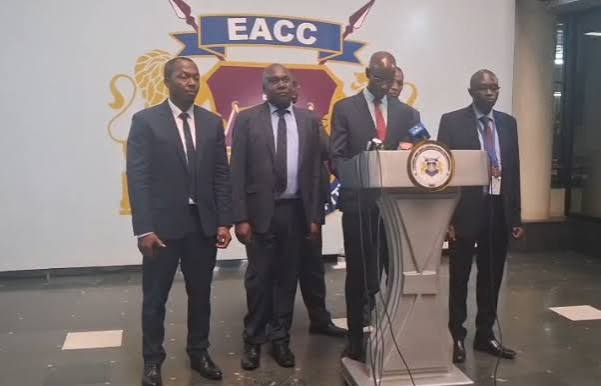
Kenya’s anti-corruption authorities have uncovered an alleged KSh1.57 billion fraud scheme involving National Treasury officials and private businesses, exposing how forged documents and an unauthorised bank account were allegedly used to divert funds meant to support small scale farmers.
The Ethics and Anti-Corruption Commission, EACC, says nine suspects were arraigned at the Milimani Anti-Corruption Court after investigations into the Rural Outreach of Financial Innovations and Technologies Programme, PROFIT, a National Treasury programme funded by the International Fund for Agricultural Development, IFAD.
EACC investigators allege that KSh1.569 billion was fraudulently disbursed from the National Treasury Development Account and subsequently channelled to 23 private entities, comprising 15 business names and eight companies, for goods and services that investigators say were never supplied.
The alleged scheme did not stop at questionable procurement.
Investigators say programme officials used false and forged documents to account for the money and irregularly created a Kenya Commercial Bank account in the name of the PROFIT Programme. That unauthorised account received approximately KSh175.3 million, which EACC says was subsequently used to launder and embezzle funds, with a substantial amount withdrawn in cash.
Two National Treasury officials, Senior Assistant Accountant General Nemwel Moturi Motanya and Senior Accountant John Maina Muriithi, are accused of irregularly authorising the creation of an IFMIS number for the KCB account between August and October 2022.
The investigation also identified financial links between programme officials and some of the private entities receiving funds, raising questions over conflicts of interest, procurement controls and the effectiveness of Treasury level monitoring.
The case has now moved firmly into the financial crime arena. Suspects face charges including unlawful acquisition of public property, abuse of office, money laundering, acquisition of proceeds of crime and uttering false documents. EACC said the Director of Public Prosecutions approved prosecution involving 20 public officials, companies and company directors, while arrest warrants were issued for 11 suspects who remain at large.
The alleged use of an unauthorised bank account is particularly significant for compliance professionals. A government programme account should be subject to strict institutional controls, clear signatory authority, reconciliation procedures and independent oversight. The alleged creation and use of another account demonstrates how a weakness in financial controls can become an entry point for large scale diversion.
The case also shows why transaction monitoring cannot end with the initial payment. Once public money moves into private entities, investigators need to examine the ultimate beneficiaries, ownership structures, related parties, subsequent transfers and cash withdrawals.
For banks, accountants, auditors and public sector compliance teams, the KSh175.3 million flowing through an unauthorised account represents a critical red flag. Account opening controls, mandate verification, unusual transaction monitoring and beneficial ownership checks can provide the first line of defence against the misuse of public funds.
The allegations remain before the courts, and the accused are presumed innocent unless proven guilty.
Kenya’s latest Treasury scandal delivers a blunt compliance warning: when forged paperwork meets weak account controls, billions intended for development can become a financial crime pipeline.
Compliance takeaway
The case highlights the need for strict segregation of duties, independent verification of government accounts, continuous monitoring of public disbursements, beneficial ownership checks on suppliers and immediate escalation of unauthorised accounts or unexplained cash withdrawals.







No Comment! Be the first one.