





The Big Story- Football’s AML Test Is Getting Serious as FIFA’s Governance Crisis Deepens
Football has a money problem that is no longer easy to dismiss as somebody else’s concern. The European Union has already decided that professional football clubs and football agents belong inside...
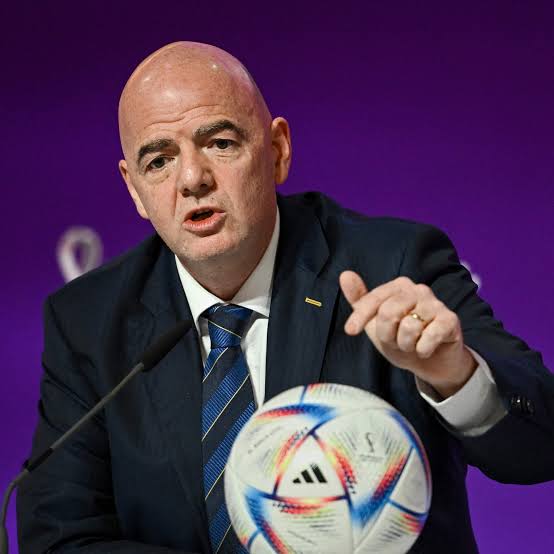
Football has a money problem that is no longer easy to dismiss as somebody else’s concern.
The European Union has already decided that professional football clubs and football agents belong inside the anti-money laundering perimeter. From July 2029, covered clubs and agents will become obliged entities under the EU’s new AML framework, bringing them into a system built around customer due diligence, beneficial ownership checks, transaction monitoring and suspicious activity reporting.
The timing could hardly be more revealing.
At the very moment European regulators are asking football to explain where its money comes from and who ultimately controls it, FIFA is fighting a governance crisis over a proposed $4.2 billion private investment into its future commercial rights.
The proposal, known as FIFA Forward Enterprise, would have created a new commercial vehicle valued at about $20 billion and offered investors up to a 20 percent stake. The project was backed by FIFA President Gianni Infantino and was eventually abandoned after fierce opposition from UEFA and other football bodies. UEFA is now seeking documents from FIFA and investor Joshua Kushner’s Thrive Capital through a US court as it prepares a potential criminal complaint in Switzerland. UEFA alleges that the proposal was developed secretly, bypassing required approvals and potentially undervaluing FIFA’s commercial rights. FIFA has rejected the criticism and maintained that the project was designed to increase funding for football development.
Kushner has since acknowledged that the investors underestimated the politics of world football. He said his firm would have avoided the project had it understood how complicated the situation would become.
That admission is telling from a compliance perspective.
Football is not merely a sport anymore. It is a sprawling financial ecosystem involving sovereign wealth, private equity, broadcasting contracts, sponsorships, agents, player transfers, image rights, hospitality, betting and cross border investment.
The numbers are enormous. FIFA reported $2.66 billion in revenue and other income in 2025 alone, while its reserves stood at about $2.7 billion at year end. FIFA says its Forward programme has allocated $2.25 billion for football development during the 2023 to 2026 cycle, on top of about $2.8 billion made available during its first two cycles.
The Premier League is even bigger as a commercial market. English top flight clubs generated £6.8 billion in aggregate revenue in the 2024/25 season, according to Deloitte. That was an 8 percent increase, or £490 million, in a single year. Deloitte expects annual revenue to exceed £7 billion in 2025/26. This is why the EU intervention matters.
The regulatory concern is not that football clubs are inherently criminal organisations. It is that the sector contains many of the characteristics that make financial crime attractive.
Transfer fees can be enormous. Player valuations are subjective. Ownership structures can span several jurisdictions. Agents can sit between clubs and players. Sponsorship agreements can involve companies with complicated ownership. Investment can arrive through holding companies, private vehicles or offshore structures.
The compliance question is therefore not simply, “Who is paying?”
It is, “Who is really behind the payment, where did the money come from, and why is this transaction structured this way?”
Under the EU framework, clubs will have to take those questions seriously.
A club receiving investment from a corporate vehicle, for example, cannot stop at identifying the company on the contract. It needs to establish the beneficial owner behind that company. If the investor is connected to a politically exposed person, that creates another layer of scrutiny. If funds originate from a jurisdiction carrying significant corruption or sanctions risk, the source of wealth and source of funds become critical.
The same applies to sponsorship.
A football club accepting millions from an unfamiliar sponsor should know who owns the sponsoring company, how the company generated its wealth and whether the commercial relationship makes sense. A sponsor paying far above market value for limited commercial exposure should not automatically be treated as a generous business partner. It can be a red flag.
Player transfers create another set of problems.
A transfer can involve a selling club, buying club, player, agent, sub agent, lawyers, tax advisers, image rights companies and sometimes additional corporate entities. Money can pass through several jurisdictions before reaching its final beneficiary.
For a compliance officer, that means a transfer file cannot simply contain a contract and proof of payment. The institution needs a clear audit trail showing who was paid, why they were paid, who ultimately benefited and whether the transaction matches the risk profile of the parties involved.
Football agents are particularly important because they can sit at the intersection of several financial relationships.
The EU rules recognise this. From 2029, football agents will fall within the AML regime alongside professional clubs. That means their obligations will extend beyond traditional sporting representation. Their financial relationships and transactions will become part of the regulated AML environment
The development comes against the backdrop of football’s much older governance problems.
The sport has spent more than a decade trying to recover from the corruption scandal that engulfed FIFA under Sepp Blatter. The reforms that followed were supposed to create stronger governance, greater transparency and better controls.
Yet the latest crisis has reopened uncomfortable questions.
UEFA says Infantino’s abandoned commercial project was pursued without sufficient consultation and has called for an independent external investigation. It has also taken steps in the United States to obtain evidence that could support a criminal complaint in Switzerland. FIFA, meanwhile, has said the project has been permanently abandoned and has resisted the suggestion that its internal handling requires the kind of external scrutiny UEFA wants.
There is no finding of criminal wrongdoing against Infantino arising from the FFE proposal. That distinction matters.
But compliance systems are built precisely because organisations should not wait for criminal wrongdoing to be proven before asking difficult questions.
The controversy also highlights the difference between legal compliance and good governance.
A transaction can be technically legal and still create serious governance concerns if the process is opaque, conflicts of interest are poorly managed or decision makers have too much control over assets they are supposed to oversee.
That is where the football story becomes familiar to financial crime professionals.
A strong AML framework is not simply a checklist. It is supposed to make unusual relationships visible.
The same principle applies to football governance.
Who proposed the deal? Who negotiated it? Who stood to benefit? Who approved it? Was the valuation independently tested? Were competing investors considered? Were conflicts of interest disclosed? Were the relevant governing bodies given enough information before being asked to approve the transaction?
Those are governance questions, but they look remarkably similar to the questions a serious compliance team would ask about a high-risk financial transaction.
There is another warning from Argentina. The Argentine Football Association, AFA, has faced scrutiny over its financial activities in the United States. Reports have said US investigators are examining how more than $300 million connected to AFA commercial operations moved through the US financial system and whether any transactions could involve money laundering or bank fraud. The AFA has disputed reports that its president Claudio Tapia or treasurer Pablo Toviggino were personally summoned or had devices seized, saying those claims were false.
Again, allegations are not convictions. But the case illustrates something important. Once football money enters the banking system, it becomes subject to the scrutiny of financial crime authorities far beyond football’s own disciplinary structures.
That is the direction of travel.
The Premier League presents perhaps the clearest example.
Its clubs generated £6.8 billion last season. Its global audience and commercial reach make it one of the most valuable sports competitions anywhere. Yet the league is outside the EU’s new AML regime because the United Kingdom is no longer part of the EU.
That does not mean English football operates without regulation. The UK has its own economic crime framework and is establishing an Independent Football Regulator. The Premier League has also introduced its own financial rules. But the regulatory architecture is different from the EU’s decision to place clubs and agents directly inside the AML perimeter. That difference matters.
A European club receiving £100 million from an investor will face the new EU AML requirements. An English club dealing with an investor does not automatically become subject to those EU obligations simply because the money crosses the Channel.
Money, however, does not respect regulatory borders.
An ownership structure can involve a British club, a European holding company, a Gulf investor, a Swiss intermediary and a bank in New York. A player can be contracted in England, owned economically through several commercial arrangements and represented by an agent operating from another jurisdiction.
The transaction is global even when the football club is not.
That creates a particular challenge for banks.
Financial institutions dealing with football clients will need to understand the commercial ecosystem around the account. A large incoming payment described as a transfer fee may be perfectly legitimate. But an unexplained payment from an unrelated company, a commission paid to an obscure intermediary or funds routed through a high-risk jurisdiction should trigger questions.
The same goes for clubs.
The compliance department should not be the last person in the building to learn that a new investor has arrived.
For Africa, the implications are even more direct.
FIFA’s development system sends billions into football across member associations. The organisation says more than $5 billion has been allocated through FIFA Forward across the first three cycles and the current decade of Infantino’s presidency. FIFA says the current cycle alone provides up to $8 million for each member association between 2023 and 2026.
That is a substantial flow of public facing football money into countries where governance, procurement and financial controls can vary widely.
African football associations therefore have a compliance problem of their own.
They need credible procurement controls. They need documented beneficiaries. They need proper segregation of duties. They need conflict of interest declarations. They need reliable audits and evidence showing that development money was spent on the projects for which it was approved.
The point is not to criminalise football. It is to recognise that once billions of dollars move through a sport, football becomes exposed to the same weaknesses that trouble banks, charities, governments and multinational companies.
FIFA’s current crisis makes that harder to ignore.
The proposed $4.2 billion private investment deal has gone. UEFA’s boycott threat has been suspended. FIFA says the project is permanently abandoned. But UEFA is still pursuing evidence and demanding an independent review.
The compliance lesson is uncomfortable. Football does not need another scandal before it takes financial crime controls seriously. It needs systems that can withstand the transaction before the allegation arrives.
That means knowing the beneficial owner before accepting the money. Knowing the source of wealth before celebrating the investment. Knowing the intermediary before paying the commission. Knowing the political connections before signing the sponsorship. And documenting the decision before somebody asks why it was made.
The beautiful game has become a very complicated business.
The regulators have finally started treating it that way.







No Comment! Be the first one.