





The Money Trail Behind East Africa’s Terror Threat: How al Shabaab Built a Financial Machine
Analysis The most revealing number in the latest assessment of terrorism financing in East Africa may be $200 million. That is the estimated annual revenue that al Shabaab can generate, according to...
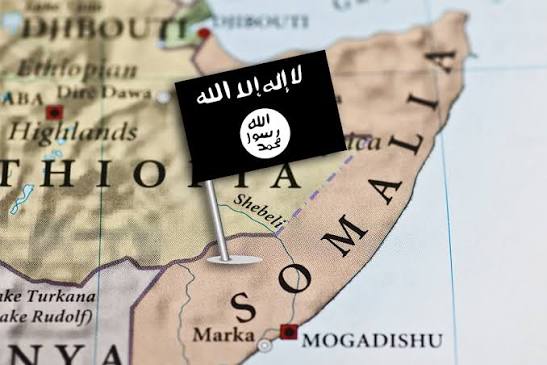
- Terrorist groups in East Africa are no longer relying on sacks of cash or a handful of sympathetic financiers. Al Shabaab has built a revenue system that reaches into taxation, real estate, smuggling, mobile money, hawala and legitimate businesses. The bigger problem for regulators is that much of this money moves through the same financial infrastructure used by ordinary people.
Analysis
The most revealing number in the latest assessment of terrorism financing in East Africa may be $200 million.
That is the estimated annual revenue that al Shabaab can generate, according to the Africa Center for Strategic Studies. The figure puts a different face on the organisation. It is not simply an armed group collecting donations and stealing whatever it needs to survive. It has developed something closer to a diversified criminal economy.
The Africa Center’s August 2026 assessment by Daisy Muibu and Nicole Mazurova describes al Shabaab as a hybrid organisation whose activities increasingly blur the line between terrorism and transnational organised crime. Its money comes from extortion, illicit taxation, smuggling, trafficking, money laundering and investments, including through intermediaries and proxies.
That makes the financial fight considerably harder than the military one.
A terrorist organisation that depends entirely on foreign donations can potentially be squeezed by sanctions, banking restrictions and disruption of its external financiers. An organisation that can tax businesses, collect money at checkpoints, invest in property and exploit informal financial networks has a much deeper reservoir to draw from.
Al Shabaab’s taxation system is particularly striking. The group reportedly imposes fees and levies across large parts of Somalia’s economy, including trade routes, ports, goods and services and property transactions. The Africa Center says the group has also imposed a mandatory 2.5 percent wealth tax, or zakat, in territories it controls.
Real estate has become another source of revenue.
The group reportedly taxes private property transactions and has invested in property through intermediaries and proxies. That matters from a compliance perspective because real estate has historically presented money laundering challenges precisely because ownership can be layered behind companies, nominees and third parties.
The money does not remain in one place.
Al Shabaab reportedly uses mobile money platforms, hawala networks, remittance companies, front businesses, charities and NGOs to move or conceal funds across Somalia and beyond. Its financial networks extend across East Africa and into the Arabian Peninsula.
That creates a difficult problem for banks and regulators.
The same mobile money system that allows a Somali trader to send money home can also become useful to criminals. The same hawala network that supports legitimate remittances can be abused to transfer value outside conventional banking channels.
The answer cannot simply be to shut down informal finance. Millions of people depend on it.
The compliance challenge is identifying where legitimate financial activity ends and illicit activity begins.
The IS Somalia Problem
Al Shabaab is not the only concern. The Islamic State in Somalia, IS Somalia, has developed its own financial networks. The Africa Center estimates that the group generated between $100,000 and $360,000 a month through extortion and illicit taxation during 2023 and 2024.
Its networks have extended into Kenya, Uganda, Tanzania and South Africa, while the group has also used cryptocurrency, gold smuggling and other illicit trade to generate or move value. That geographical spread is important.
A terrorist financing investigation that begins in Somalia can quickly become a Kenyan, Ugandan, Tanzanian or South African financial investigation.
National AML systems are often built around national boundaries. Terrorist financing is not.
The Reporting Problem
East African governments have made progress establishing financial intelligence units and strengthening AML and counterterrorist financing frameworks. The region’s FIUs cooperate through structures including the Eastern and Southern Africa Anti-Money Laundering Group, ESAAMLG, while international cooperation also takes place through the Egmont Group and other networks.
But having an FIU is not the same thing as having useful financial intelligence.
The Africa Center identifies a problem familiar to compliance officers everywhere: suspicious transaction reports are sometimes submitted late, contain insufficient detail or are filed simply because institutions want to demonstrate that they have met a reporting obligation. Some businesses also engage in defensive reporting, sending large numbers of reports without enough analysis to distinguish meaningful risk from ordinary activity.
That creates a peculiar AML problem. Too little reporting leaves criminals invisible. Too much poor-quality reporting buries the important information. The answer is not necessarily more STRs. It is better STRs.
A useful suspicious transaction report should help investigators understand what happened, why it matters and where they should look next.
The Digital Gap
The financial system is changing faster than the regulatory architecture designed to police it.
Mobile money, digital wallets, cryptocurrency exchanges and online gambling platforms have opened new channels for moving value. Terrorist groups are adapting to those channels.
Regulators are trying to catch up.
The Africa Center argues that open-source intelligence, blockchain analytics, machine learning and artificial intelligence could help investigators connect financial activity with communications, networks, businesses and other publicly available information. But technology alone will not solve the problem. The region still faces shortages of specialist skills, technology and sustained investment.
That is an important warning for governments tempted by expensive technology.
A sophisticated analytics platform is of limited value if investigators cannot interpret its findings, prosecutors cannot use the evidence in court or agencies cannot share information with one another.
The Last Mile of AML
Perhaps the biggest weakness is what happens after intelligence has been collected.
The Africa Center notes that even where FIUs produce useful intelligence, asset seizures, prosecutions and enforcement can remain uneven. Investigators may struggle with evidence collection, digital forensics and chain of custody. Prosecutors can then inherit files that contain intelligence but not evidence capable of surviving a courtroom challenge.
That is where the AML system either works or fails. A suspicious transaction report is not a conviction. A frozen account is not an asset forfeiture. An intelligence report is not a prosecution.
There has to be a functioning chain connecting all three.
Kenya offers an example of what stronger coordination can look like. Its financial intelligence and law enforcement institutions have developed interagency mechanisms involving the Financial Reporting Centre, Anti-Terrorism Police Unit, Directorate of Criminal Investigations, Office of the Director of Public Prosecutions and Asset Recovery Agency.
Other countries in the region are moving in the same direction, but the Africa Center’s assessment makes clear that regional cooperation remains uneven.
That matters because terrorist financing networks exploit precisely those gaps.
Compliance Implications
For financial institutions, the lesson is uncomfortable. Terrorist financing risk cannot be assessed only by looking for a suspicious name on a sanctions list.
Risk can sit inside ordinary transactions.
A small business, remittance company, charity, property transaction or mobile money account may appear legitimate when viewed alone. The warning can emerge only when the transaction is connected to other accounts, beneficiaries, locations or businesses.
That makes beneficial ownership, customer risk assessment, transaction monitoring and cross border information sharing critical.
It also means compliance teams need to understand informal value transfer systems rather than treating them as peripheral.
For governments, the lesson is broader.
The financial fight against terrorism cannot be separated from the criminal justice system. FIUs, police, intelligence agencies, customs authorities, prosecutors, regulators and financial institutions need mechanisms that allow information to move quickly and lawfully between them.
The Africa Center’s argument is ultimately quite simple. East Africa has built more AML/CFT institutions, but terrorist groups have evolved faster.
The next phase of the fight will be about closing that gap.
Compliance Takeaway: The East African terrorism financing problem shows why AML effectiveness cannot be measured by the number of regulations, FIUs or suspicious transaction reports filed. The real test is whether financial intelligence identifies networks, triggers timely asset disruption and produces evidence that investigators and prosecutors can use. Better reporting, stronger cross border cooperation and specialist digital investigation capacity are becoming essential.





No Comment! Be the first one.