





Minnesota Money Transmitter Employee Accused of Laundering $750,000 for Mexican Cartel
A Minnesota money transmitter employee allegedly exploited his knowledge of his employer’s AML controls to move at least $750,000 in drug proceeds to Mexico. The case is a sharp reminder that...
A Minnesota money transmitter employee allegedly exploited his knowledge of his employer’s AML controls to move at least $750,000 in drug proceeds to Mexico. The case is a sharp reminder that sometimes the biggest compliance vulnerability is not the customer. It is the person sitting behind the counter.
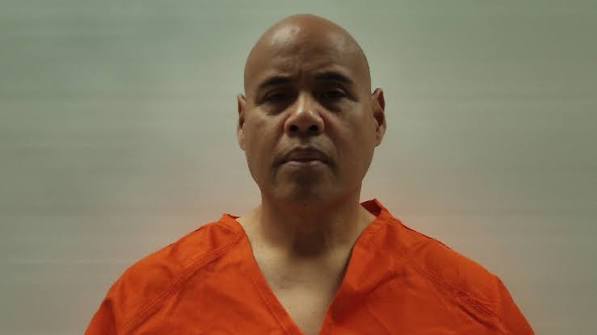
US federal prosecutors have charged Christopher A. Bravo Marin, 46, a Minnesota based money transmitter employee, with allegedly helping launder at least $750,000 in drug proceeds for the Cártel de Jalisco Nueva Generación, CJNG, one of Mexico’s major drug trafficking organisations.
According to the indictment, Bravo allegedly worked with a CJNG distribution cell in Minnesota between February 2023 and February 2026, using his position and knowledge of his employer’s compliance procedures to move the money to cartel associates in Mexico. He was allegedly paid $40 to $50 per transfer.
The alleged method was strikingly simple. Transfers were split into amounts just below $1,000, the threshold that required the money transmitter to collect and verify customer identification. Prosecutors allege Bravo created fictitious sender names, used straw beneficiaries in Mexico and later forged senders’ signatures on payment receipts.
Bravo was arrested recently after a federal grand jury returned the indictment. He faces one count of conspiracy to launder money, carrying a potential maximum sentence of 20 years if convicted. An indictment remains an allegation, and Bravo is presumed innocent unless proven guilty.
Compliance Analysis
This is not simply another drug money laundering case. It is an insider control failure.
The alleged conduct shows how a well-designed AML programme can be undermined when an employee understands exactly where its thresholds and weaknesses sit.
The alleged sub-$1,000 structuring is particularly important. A threshold intended to trigger identification became, according to prosecutors, a target to remain below. That should concern money service businesses everywhere.
Compliance teams need controls capable of identifying patterns across multiple transactions, rather than treating each transfer as an isolated event. Employee access also deserves scrutiny. Where staff can override, process or influence transactions, internal monitoring, segregation of duties, audit trails and unusual employee activity can become just as important as customer due diligence.
The case also exposes the danger of assuming that compliance knowledge automatically produces compliance behaviour. Sometimes it does the opposite.
AML Takeaway: Money transmitters need to monitor not only customers but the people operating the system. Repeated sub-threshold transfers, fictitious identities, common beneficiaries, unusual transaction patterns and employee involvement should trigger scrutiny. The person who understands the control can sometimes be the person best positioned to defeat it.







No Comment! Be the first one.