




Brazil’s PCC Faces Sanctions as Cocaine Network Fuels Money Laundering Across Europe
Abstract A major Brazilian criminal organisation is facing sanctions as authorities move against its role in trafficking drugs into Europe and generating illicit proceeds. The network’s...
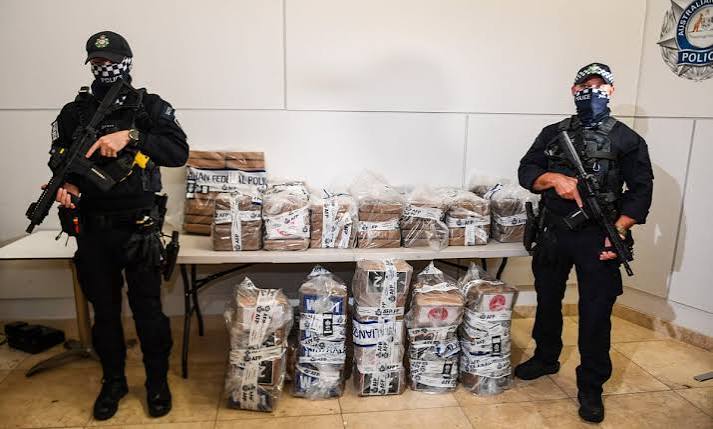
- A powerful Brazilian organised crime network is facing intensified international pressure as authorities target its role in the cocaine trade and the laundering of criminal proceeds across Europe. The case highlights how drug trafficking, logistics, legitimate businesses and financial networks increasingly operate as one cross-border criminal ecosystem. For compliance teams, the warning is clear: sanctions exposure can emerge far beyond a customer’s immediate geography.
Abstract
A major Brazilian criminal organisation is facing sanctions as authorities move against its role in trafficking drugs into Europe and generating illicit proceeds. The network’s activities illustrate how organised crime can stretch across continents, using legitimate businesses, financial channels and commercial infrastructure to move and conceal criminal money. The case matters beyond Brazil and Europe. West Africa sits along important Atlantic trafficking routes, creating potential exposure for banks, payment firms, shipping companies, logistics businesses and other financial and commercial institutions operating in the region.
Analysis
The latest action against a Brazilian organised crime group demonstrates how the modern drug economy has become a financial crime problem as much as a law enforcement problem.
Sanctions and law enforcement authorities are targeting a major Brazilian criminal organisation accused of fuelling money laundering across Europe, with Portugal identified as a particularly important destination.
The significance lies in the network’s international character. Cocaine originating in South America can move through complex maritime and commercial routes before reaching European markets. West Africa has also been identified as an important transit region in the Brazil to Europe cocaine supply chain. Research by the Global Initiative Against Transnational Organized Crime has specifically examined the role of Brazil’s Primeiro Comando da Capital, or PCC, in cocaine flows between Brazil, West Africa and Europe.
This creates a difficult compliance environment because the criminal proceeds do not necessarily remain close to the underlying crime.
Drug money can move through companies, trade transactions, property, cash-intensive businesses, informal value transfer systems and financial accounts before entering apparently legitimate economic activity.
Compliance implications
The sanctions action reinforces the importance of identifying indirect exposure.
Financial institutions should not limit screening to customers directly named on sanctions lists. They also need to understand ownership structures, controllers, beneficial owners, counterparties and transaction relationships.
A logistics company with apparently legitimate trade could present risk if its ownership or counterparties connect to sanctioned or criminal networks. The same applies to importers, exporters, shipping businesses, money service businesses and companies operating around major ports.
Transaction monitoring should also consider unusual cross-border flows, unexplained payments involving high-risk jurisdictions, complex corporate structures and activity inconsistent with a customer’s stated business.
For Nigerian institutions, the West Africa connection is particularly relevant. The region’s role in Atlantic cocaine trafficking means financial crime controls cannot treat Latin American organised crime as a distant risk.
Why the update matters
The case shows why sanctions, AML and organised crime enforcement are increasingly converging.
A criminal organisation involved in drug trafficking can simultaneously become a sanctions risk, a money laundering risk, a beneficial ownership risk and a supply-chain risk. That makes traditional siloed compliance increasingly inadequate.
The Brazilian case also reinforces the importance of international cooperation. Europol has previously documented Brazilian organised crime networks operating across several European countries, demonstrating the scale of the cross-border threat.
For Africa, the message is uncomfortable but important. The continent is not merely an external observer of the Brazil-Europe criminal economy. West African trafficking routes can create direct exposure for local financial institutions and legitimate businesses.
Compliance Takeaway
Criminal networks are global, so compliance risk must be global too. Nigerian banks, fintechs, payment companies, shipping and logistics businesses should assess exposure to Latin American organised crime through customers, beneficial owners, counterparties, trade routes and transaction patterns. Sanctions screening should be combined with broader AML intelligence because a criminal network may appear in a transaction long before its name appears in an obvious customer relationship.






No Comment! Be the first one.