


THE BIG STORY- The Luxury Mask: What the KC Luxury Cocaine Case Reveals About Nigeria’s Compliance Blind Spots
The Meat of the Story… On 18 August 2026, the NDLEA announced what it described as its largest cocaine seizure from a courier company, 184.5kg worth an estimated N39 billion. Two suspects were...
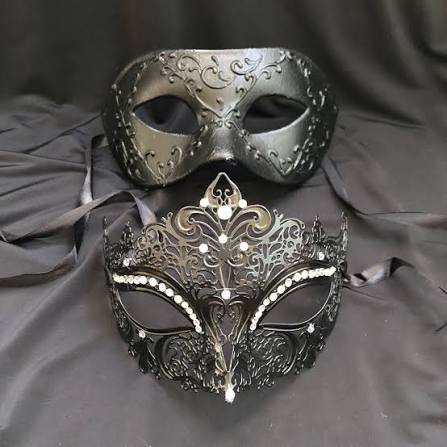
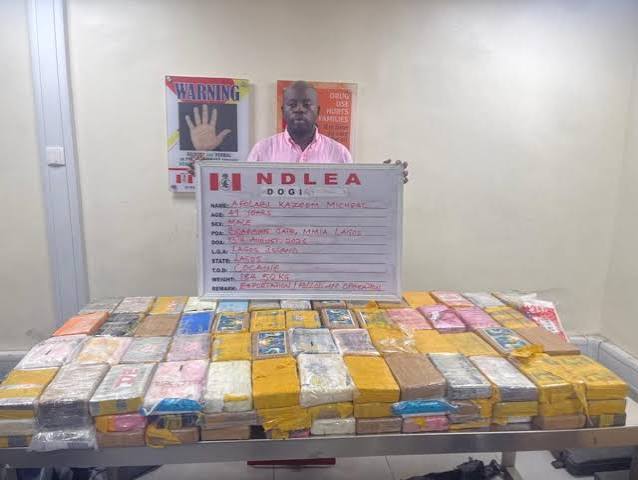
- A 184.5kg cocaine seizure, a social media celebrity, a courier employee and an alleged international trafficking pipeline raise a bigger question: how does illicit wealth move from the street into the respectable economy?
The Meat of the Story…
On 18 August 2026, the NDLEA announced what it described as its largest cocaine seizure from a courier company, 184.5kg worth an estimated N39 billion. Two suspects were arrested, including social media personality Afolabi Kazeem Michael, known as KC Luxury. Investigators say the network used false identities, intermediaries and a logistics employee to move consignments towards Europe and Asia. The case is about drugs, but it is also about money, luxury and the systems that can allow suspicious wealth to look legitimate.
Analysis
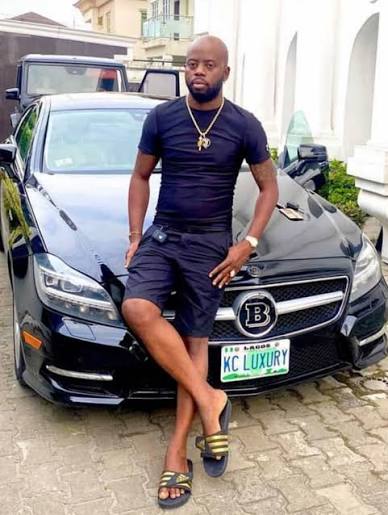
At first glance, the story looks familiar. A wealthy Lagos social media personality. Luxury goods. Expensive cars. International travel. A glamorous public image. Then, suddenly, an arrest. But the details announced by the National Drug Law Enforcement Agency yesterday, suggest something much larger than the arrest of a man with an extravagant lifestyle.
The NDLEA says it seized 184.5 kilogrammes of cocaine from a courier logistics company in Lagos, describing it as the largest cocaine seizure ever made from a courier company by the agency. It says the consignment could have generated about N39 billion for the alleged trafficking network. Two suspects have so far been identified publicly, Afolabi Kazeem Michael, popularly known as KC Luxury, and Lawal Mujab Kehinde, an employee of the logistics company.
The story becomes more revealing when the cocaine is removed from the centre of the picture. What remains is a network.
According to NDLEA Chairman Mohamed Buba Marwa, investigators believe the operation involved intermediary companies and individuals, false identities, a logistics employee who allegedly processed consignments for the syndicate, financial facilitators and international contacts. The agency says the network moved shipments towards the United Kingdom, other parts of Europe and Asia.
That is where the case becomes a compliance story. Because illicit wealth rarely stays in the form in which it was earned.
The courier company was only one door….
The most striking element of the investigation is the alleged use of an ordinary logistics channel.
A courier company is designed to make goods move efficiently. That is precisely what makes such businesses attractive to legitimate commerce, and potentially attractive to criminals.
According to the NDLEA account, Lawal Kehinde allegedly had a sustained relationship with the Nigerian coordinator of the network and processed consignments for the syndicate. He was allegedly paid in cash. This raises questions that extend beyond narcotics enforcement.
Who was paying him? How often? Were payments consistent with his legitimate income? Were there companies repeatedly sending unusual consignments? Did the paperwork identify the real consignor? Were the goods consistent with the stated purpose of the shipment?
These are not questions only for the NDLEA. They are questions for banks, Chief Compliance Officer of banks and fintechs, payment companies, logistics businesses, customs professionals, insurers, accountants and other gatekeepers of the legitimate economy.
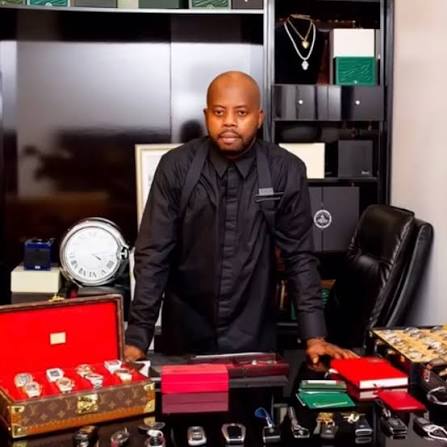
Then came the luxury lifestyle….
The second arrest brought the story into sharper focus. NDLEA says Michael, known online as KC Luxury, was arrested at the boarding gate of Murtala Muhammed International Airport on the night of 13 August 2026, after intelligence indicated that he intended to leave Nigeria on a business-class flight to Paris.
The agency says officers recovered €7,750, £2,800 and N100,000, as well as expensive jewellery. It subsequently searched his luxury apartment on Banana Island, Ikoyi, where exotic vehicles were reportedly recovered.
None of those possessions, by themselves, proves criminal conduct. That distinction matters. Luxury is not a crime. Wealth is not a crime. International travel is not a crime. Social media influence is certainly not a crime. But for compliance professionals, unexplained wealth can become a risk signal when it does not fit the known economic profile of the individual.
That is the uncomfortable question this case puts on the table: what did the financial system see before law enforcement arrived?
The Hushpuppi comparison……
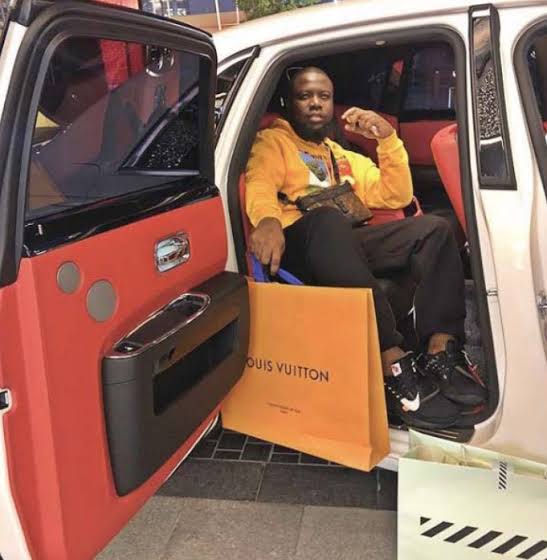
Nigeria has seen this movie before, although the alleged underlying crime was different.
Ramon Olorunwa Abbas, better known as Hushpuppi, is currently serving an 11-year sentence in a United States federal prison. He built an enormous social media cult following around luxury. His Instagram account displayed designer clothing, expensive watches, cars and an extravagant international lifestyle.
In June 2020, he was arrested in Dubai. In November 2022, a US federal court sentenced him to 135 months, or 11 years and three months, in prison after he pleaded guilty to conspiracy to launder money from online fraud schemes. The US Department of Justice said he had laundered proceeds from cybercrime and other fraud schemes and ordered him to pay more than $1.7 million in restitution.
The comparison should not be pushed too far. Hushpuppi was convicted in the United States. KC Luxury has been arrested in Nigeria and the allegations against him remain allegations unless and until established in court.
But there is a valuable lesson in putting the two stories beside each other. In both cases, public visibility and conspicuous consumption became part of the story. The social media feed showed the lifestyle. The enforcement investigation attempted to establish what was behind it.
That gap between what a person appears to own and how that wealth was generated is precisely where financial crime controls are supposed to operate.
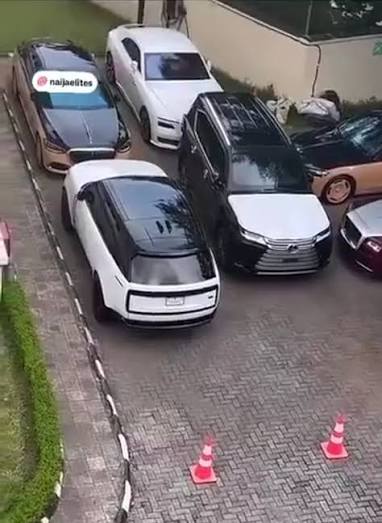
The money trail may be bigger than the drugs…
The NDLEA says the cocaine network used financial facilitators who moved billions of naira on its behalf. It also says investigators uncovered international contacts, some of whom have allegedly been arrested in the United Kingdom in connection with the same syndicate.
If that account is ultimately established, the 184.5kg seizure may be only one visible part of a much larger financial network.
A drug shipment has a value. Someone has to finance its acquisition. Someone pays for transport. Someone receives the proceeds. Someone converts or transfers the money. Someone buys assets. Someone may invest in legitimate businesses. That is why the financial investigation can be as important as the seizure itself.
The real prize for enforcement is not simply taking drugs off the street. It is identifying the people who finance the network, the businesses that facilitate it and the assets purchased with its proceeds.
The compliance question: where were the red flags?
A sophisticated compliance investigation would not necessarily begin with the question, “Is this person a drug trafficker?” It would begin with simpler questions. Does the customer’s income support the lifestyle? Are there large cash deposits that have no obvious explanation? Are payments moving between unrelated individuals and companies? Are businesses receiving money that does not match their stated activities? Are there rapid transfers through several accounts? Are luxury goods being purchased without a credible source of funds? Are companies being used as intermediaries without a clear commercial reason? Are logistics employees receiving unexplained payments? None of these signals proves a crime. Together, however, they can create a picture that deserves attention.
The Nigerian financial system has spent years strengthening its anti-money laundering framework, particularly following the country’s removal from the FATF grey list. That progress means the focus now has to move from having rules to demonstrating that those rules work in real cases.
The wider compliance lesson…..
The KC Luxury case is a reminder that financial crime does not respect industry boundaries. The drugs may move through logistics,and proceeds through bank accounts. The lifestyle may appear on Instagram, with the assets sitting in luxury apartments and vehicles. The international movement may involve airlines and foreign counterparties. No single institution necessarily sees the entire picture.
That is why cooperation between law enforcement, financial institutions, customs, logistics companies and international authorities matters.
It is also why suspicious transaction reporting should not be viewed as an accusation. It is a mechanism for connecting fragments of information that may appear insignificant when viewed separately.
The case now moves beyond the headlines. The crucial question is whether investigators can follow the N39 billion trail, identify the financial beneficiaries and establish how the alleged network converted criminal proceeds into apparently legitimate wealth.
If they can, the cocaine seizure will have achieved something much more important than taking one shipment off the market. It will have exposed the financial infrastructure behind it.
Compliance Takeaway
The biggest red flag may not be the cocaine. It may be the money left behind.
For banks, fintechs, logistics companies and other regulated businesses, the lesson is to look beyond the transaction and understand the person, company, source of funds, business purpose and wider relationships behind it.
A luxury lifestyle is not evidence of a crime. But where wealth cannot be reasonably explained, compliance teams should be asking questions before law enforcement is forced to ask them later.


No Comment! Be the first one.