




US Appeals Court Gives DJI Fresh Chance to Challenge Chinese Military Company Listing
Meat of the Story… Chinese drone maker DJI has won a partial victory in its fight against being labelled a “Chinese military company” by the US government. A US appeals court said the Pentagon did...
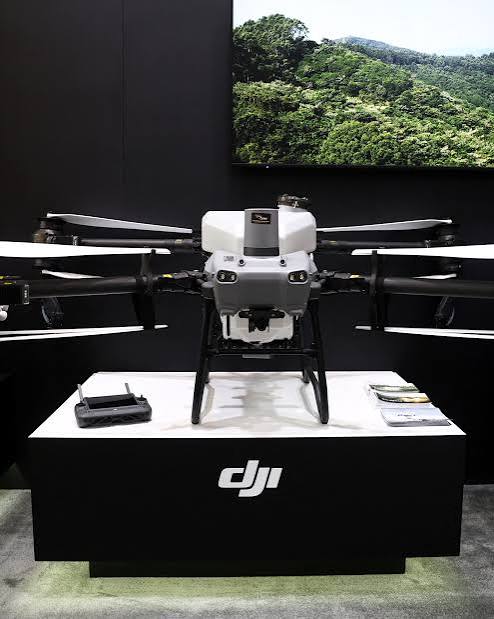
- The D.C. Circuit rejects three of DJI’s arguments but sends the case back for a closer review of whether the Pentagon adequately justified its designation.
Meat of the Story…
Chinese drone maker DJI has won a partial victory in its fight against being labelled a “Chinese military company” by the US government. A US appeals court said the Pentagon did not publicly explain enough to show why DJI contributes to China’s defence industry and ordered further review. The ruling does not remove DJI from the list, but it gives the company another opportunity to challenge the designation. For businesses, the case shows how a government listing can affect contracts, reputation and access to markets.
Analysis
The US Court of Appeals for the District of Columbia Circuit haspartially allowed an appeal by SZ DJI Technology and its subsidiary, sending part of the dispute back to a lower court for further review.
DJI has been repeatedly placed on the US Department of Defense’s list of “Chinese military companies” under Section 1260H of the National Defense Authorization Act. The designation carries significant commercial consequences. Listed companies cannot contract with the US Departments of Defense and Homeland Security and face restrictions involving certain Department of Energy grants, contracts and loans. The court also recognised that being publicly identified can damage a company’s reputation.
The appeals court rejected three of DJI’s four main arguments. It found that DJI had not established a sufficient due process claim, rejected its challenge to the evidence that it received assistance from the Chinese government through certain technology initiatives, and rejected its argument that the Pentagon had improperly treated it differently from similar companies.
However, the court agreed with DJI on a crucial fourth issue. The lower court had relied on an unclassified record to uphold the Pentagon’s conclusion that DJI contributes to China’s defence industrial base. The appeals court found that the public record contained no stated reasoning explaining that particular conclusion.
The court therefore sent the matter back to the lower court. That court can examine the classified material and decide whether the Pentagon’s conclusion can ultimately be upheld.
Importantly, the ruling does not remove DJI from the list. The June 2026 list continued to include the company and provided additional reasons for its designation, including alleged affiliations with Chinese government and military-related bodies.
Compliance implications
The case is important for companies that deal with Chinese technology businesses because a designation under Section 1260H can create commercial restrictions even though it is not the same thing as a conventional financial sanctions listing.
Businesses should therefore distinguish between different US restriction lists and understand what each designation actually prohibits. Treating every US government list as identical can lead to either unnecessary business disruption or inadequate controls.
Companies supplying technology, drones, components or services to government customers should pay particular attention to procurement restrictions involving listed Chinese companies. They should also review suppliers, distributors and business partners where ownership, control or government affiliations may create additional risk.
The case further demonstrates why accurate ownership and corporate relationship checks matter. A company’s name alone may not tell the full story.
Why the update matters
The DJI case sits within a wider US effort to restrict perceived links between Chinese commercial companies and China’s military and defence industries. The Pentagon’s 2026 list has expanded significantly, increasing the compliance burden for businesses operating across the US-China technology supply chain.
For DJI, the immediate commercial restrictions remain in place despite the court’s ruling. For other companies, the case shows that being placed on a government list can have consequences far beyond a legal label. It can affect customers, government contracts, business relationships and reputation.
The ruling also highlights an important principle for regulatory decision-making. Where a government takes action against a company, the reasons supporting that decision can matter just as much as the designation itself.
Compliance Takeaway
Do not look only at whether a company appears on a US restricted-party list. Understand why it is listed, what the designation restricts and whether the restrictions apply to the proposed transaction.The DJI case shows that regulatory classifications can evolve through litigation, making continuous screening and legal review increasingly important.







No Comment! Be the first one.