




World Bank Sanctions Nigerian Firms: Kenoster, Chez Aviv and Abou Ghazaleh Hit With Procurement Bans
Nigerian companies feature prominently among firms and individuals barred from participating in World Bank financed contracts, placing procurement integrity, fraud prevention and corporate compliance...
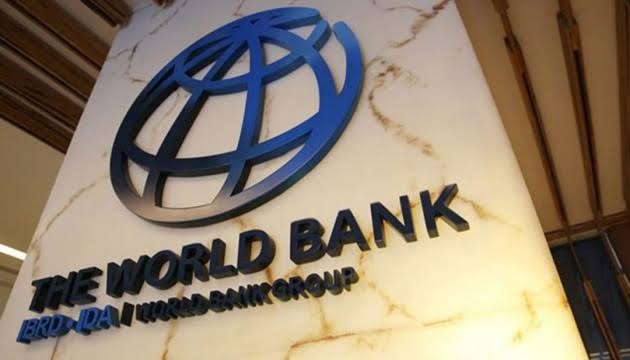
Nigerian companies feature prominently among firms and individuals barred from participating in World Bank financed contracts, placing procurement integrity, fraud prevention and corporate compliance firmly back under the spotlight.
The World Bank’s current Listing of Ineligible Firms and Individuals, updated on 11 August 2026, states that firms and individuals on its debarment list are ineligible to participate in World Bank financed contracts for the periods specified. The sanctions can arise from the Bank’s own administrative process or through cross debarment arrangements with other multilateral development banks.
The Nigerian exposure is not simply historical. The wider debarment ecosystem includes Nigerian entities subject to continuing periods of ineligibility. Among those identified through the World Bank Group sanctions system are Chez Aviv Nigeria Limited, which was debarred for fraud and corruption for nine years, and other Nigerian respondents sanctioned for prohibited conduct in Bank financed projects.
The World Bank’s sanctions architecture also reaches beyond companies to individuals and controlled affiliates. Its published notes make clear that, in certain cases, a period of ineligibility can extend to entities directly or indirectly controlled by a sanctioned firm or individual. That makes ownership, control and corporate structure important parts of procurement due diligence.
One Nigerian case illustrates how seriously the Bank treats procurement integrity. In its decision involving Kenoster (Nigeria) Limited and an individual respondent, the World Bank Sanctions Board found that a false bid security had been submitted in connection with a Bank financed project. The conduct was classified as fraudulent practice, with the firm and individual receiving debarment with conditional release after a minimum period.
Another case involving Abou Ghazaleh Contracting Nigeria Limited resulted in a six month debarment for collusive practices. The World Bank’s FY21 sanctions report records the company alongside two Nigerian individuals involved in the case.
The significance for Nigerian businesses goes beyond the loss of access to a particular World Bank tender.
A World Bank debarment can operate within a broader multilateral development bank framework. The Bank’s cross debarment arrangement provides for mutual enforcement of certain debarment decisions involving the World Bank, African Development Bank, Asian Development Bank, European Bank for Reconstruction and Development and Inter-American Development Bank.
That can transform what appears to be a single procurement sanction into a much wider market access problem.
For a Nigerian contractor, consultant, supplier or infrastructure company dependent on development finance, eligibility is itself a commercial asset. Losing it can affect participation in projects financed by major international development institutions and can raise questions among lenders, partners, insurers and prospective clients.
The compliance issue is therefore bigger than corruption alone.
It encompasses bid integrity, conflict of interest controls, beneficial ownership, third party due diligence, document authenticity, procurement governance, subcontractor oversight and internal reporting mechanisms.
The World Bank’s own list demonstrates why corporate compliance cannot be treated merely as a policy document. The sanctions system identifies prohibited practices and, in certain cases, provides a route towards conditional release where remedial measures and an effective integrity compliance programme are demonstrated.
That creates an important distinction between punishment and remediation.
For Nigerian companies seeking international contracts, the objective should not simply be to avoid appearing on a blacklist. It should be to establish procurement controls capable of demonstrating that bids are genuine, credentials are verifiable, intermediaries are properly screened, conflicts are disclosed and payments can be traced.
The reputational dimension is equally important.
International procurement is increasingly connected. A company operating in Nigeria may compete for contracts financed by institutions headquartered thousands of kilometres away, while its shareholders, directors, consultants, suppliers or affiliates may have relationships across several jurisdictions.
A procurement failure can therefore become a cross border compliance event.
The Nigerian Compliance Signal
The presence of Nigerian firms on the World Bank’s ineligible list should be read as a warning to companies competing for development financed contracts.
International procurement is now a compliance market.
Eligibility depends not only on price, technical capacity and experience, but increasingly on whether a company can demonstrate credible systems for preventing fraud, corruption, collusion and other prohibited practices.
For Nigerian businesses, the message is straightforward: winning the contract begins with being able to prove that the company deserves to remain eligible for the next one.
Compliance Takeaway
Procurement compliance is market access compliance. Nigerian firms pursuing World Bank, AfDB and other development bank financed projects should maintain robust anti-fraud and anti-corruption controls, conduct due diligence on agents and partners, verify bid documentation, monitor ownership and affiliates, and maintain evidence of remediation where previous compliance weaknesses have been identified.





No Comment! Be the first one.