





UK Tightens Sanctions Noose on Russia, Targeting Banks and the Shadow Fleet
Britain has widened its sanctions campaign against Russia, targeting banks, shipping interests and businesses accused of supporting Moscow’s war economy. The latest package adds 19 entries,...
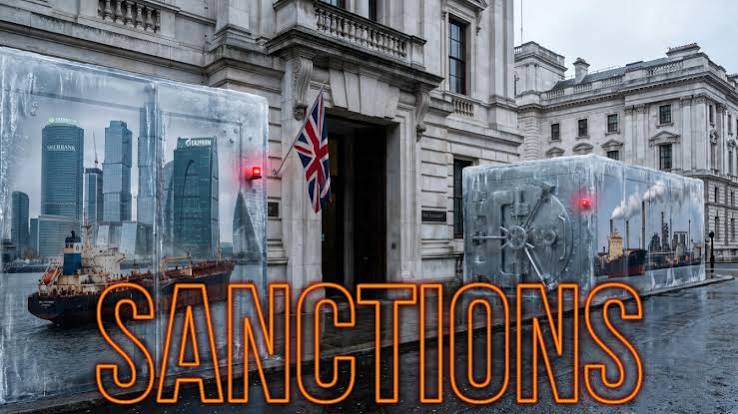
Britain has widened its sanctions campaign against Russia, targeting banks, shipping interests and businesses accused of supporting Moscow’s war economy. The latest package adds 19 entries, including Russian financial institutions, six vessels and companies linked to Russia’s oil trade, reinforcing London’s strategy of attacking both the financial channels and maritime infrastructure that help sustain sanctioned energy revenues.
The measures announced on 6 August include six Russian banks, six shadow fleet vessels and an India based ship management company. The UK government said the sanctions are intended to disrupt revenue streams supporting Russia’s war effort, particularly those connected to oil exports.
The financial targets include Ozon Bank, Realist Bank, Teleport Bank, Bank Stavr, Center-Invest and the State Specialised Russian Export-Import Bank. Their designation places additional pressure on Russia’s financial infrastructure and increases the screening burden for banks and businesses maintaining correspondent, payment or trade relationships with exposed counterparties.
But the more consequential compliance signal may be the continued targeting of Russia’s so-called shadow fleet, the network of vessels used to transport Russian oil while attempting to circumvent Western sanctions and restrictions.
This is not Britain’s first major attempt to disrupt that network. In June, the UK designated 27 vessels linked to Russian oil and LNG shipments and targeted shipping insurers and other maritime service providers. That package brought the number of shadow fleet and Russian LNG vessels sanctioned by the UK to more than 600.
The Compliance Story Is Moving Offshore
The evolution of the Russian sanctions regime is significant because enforcement is increasingly moving beyond obvious Russian corporate names and directly into the infrastructure supporting international trade.
A tanker does not need to be owned by a Russian company to create sanctions exposure. Ship managers, insurers, charterers, brokers, commodity traders, flag states, beneficial owners and financial institutions can all become part of the compliance chain.
That makes maritime due diligence increasingly important.
For banks and commodity traders, screening the legal owner of a vessel may no longer be sufficient. Compliance teams need to understand the vessel’s ownership history, management company, flag, insurance arrangements, cargo, charterer, trading route and ultimate beneficial ownership.
The risk is particularly acute where vessels change names, flags, ownership structures or management companies, potentially obscuring their connection to sanctioned Russian trade.
A Wider Sanctions Squeeze
The latest UK action also fits into a broader Western effort to make sanctions harder to evade. The EU adopted its 21st Russia sanctions package in July, with measures covering energy, shipping, financial services, crypto, trade and Russia’s military industrial complex.
The result is a sanctions environment in which enforcement increasingly targets ecosystems rather than isolated entities.
A bank can be targeted for financing. A tanker can be designated for transporting sanctioned oil. An insurer can be targeted for supporting maritime activity. A trading company can face restrictions for facilitating transactions. A third country intermediary can become exposed because of its role in a sanctions evasion network.
For African businesses, this matters.
Companies involved in commodity trading, shipping, marine insurance, petroleum logistics, banking and international payments can encounter Russian sanctions exposure even without dealing directly with Russia. The UK’s earlier sanctions packages have already targeted third country entities involved in Russia’s military procurement and financial networks, including an entity based in Nigeria linked to the A7 sanctions evasion network.
Compliance Takeaway
The sanctions risk is moving from the Russian entity to the entire transaction ecosystem.
Banks, insurers, freight companies, commodity traders and shipping businesses should therefore treat vessel screening, beneficial ownership checks, voyage and cargo analysis, sanctions screening and third-party due diligence as interconnected controls.
The central question is no longer simply whether a Russian bank or company appears on a sanctions list.
It is whether a seemingly ordinary transaction is helping a sanctioned financial or maritime network move money, goods or oil.
Compliance Signal
High. The UK’s latest measures reinforce a clear enforcement trend: sanctions authorities are increasingly targeting the financial, maritime and intermediary networks that enable sanctions evasion, rather than concentrating solely on Russian state entities.






No Comment! Be the first one.