




Former Bank of America Employee Sentenced to 18 Months for Laundering $8 Million in Fraud Proceeds
A former bank relationship manager has been sentenced to 18 months in prison after using his position to help a transnational criminal organisation move more than $8 million in proceeds from a major...
A former bank relationship manager has been sentenced to 18 months in prison after using his position to help a transnational criminal organisation move more than $8 million in proceeds from a major healthcare fraud scheme through the US banking system.
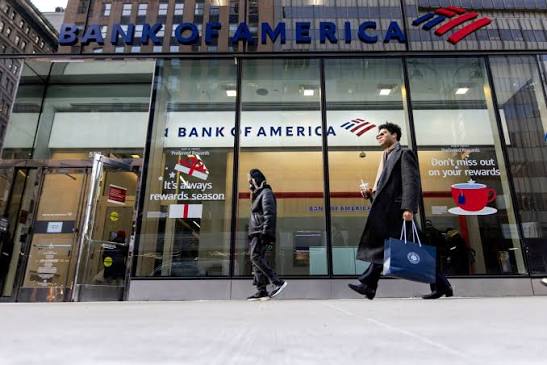
Renat Abramov, 37, of Brooklyn, New York, was sentenced on 11 August after pleading guilty earlier this year to conspiracy to commit money laundering, according to the US Department of Justice. Abramov previously worked as a relationship manager at a bank branch in Brooklyn’s Sheepshead Bay area. The bank was identified in earlier reporting as Bank of America.
Prosecutors said Abramov used his position to assist a Russia-based and other overseas members of a transnational criminal organisation involved in a multibillion-dollar healthcare fraud and money-laundering operation.
The underlying scheme targeted Medicare and private health insurers through dozens of medical-equipment companies. According to court documents, the companies were nominally owned by individuals acting as nominees, concealing the organisation’s alleged control of the businesses.
The criminal network submitted fraudulent claims for durable medical equipment, with the wider investigation involving more than $10 billion in allegedly fraudulent Medicare claims and the identities of more than one million Americans, according to the Department of Health and Human Services Office of Inspector General.
Abramov’s role was on the financial side of the operation.
Prosecutors said he acted as a “concierge banker”, opening accounts for nominee owners of several medical-equipment companies. Those accounts subsequently received more than $8 million in healthcare-fraud proceeds.
The money was then transferred to offshore accounts, according to the Justice Department. Abramov also assisted with wire transactions and provided information about the status of the accounts to members of the criminal organisation.
The case highlights a particularly serious financial-crime risk for banks: the possibility that an employee with legitimate access to the financial system can become a facilitator for the very activity the institution’s controls are designed to prevent.
Abramov was not an external fraudster attempting to penetrate the banking system. He was a bank employee who, according to prosecutors, used his position and knowledge of banking procedures to help customers associated with a criminal organisation establish accounts and move funds.
That distinction makes the case significant for financial-crime compliance teams.
An insider risk problem
The case demonstrates how insider risk can intersect with traditional anti-money-laundering controls.
Know-your-customer and customer-due-diligence programmes may identify unusual corporate structures, questionable ownership arrangements or unexplained transaction activity. But those controls become less effective if an employee deliberately helps a customer navigate around them.
According to the Justice Department, Abramov opened accounts for individuals who presented themselves as owners of medical-equipment companies, despite circumstances that prosecutors said indicated the individuals were acting as nominees for the wider criminal organisation.
The alleged use of nominee owners was particularly important because it obscured beneficial ownership and allowed the criminal organisation to operate through apparently legitimate companies.
For banks, the lesson is straightforward: identifying the person standing in front of the institution is not necessarily the same as identifying the person who ultimately controls or benefits from the account.
The healthcare fraud connection
The laundering case is part of the much larger Operation Gold Rush investigation into healthcare fraud.
Federal authorities have described the underlying enterprise as one of the largest healthcare fraud schemes prosecuted by the Justice Department. The organisation allegedly used medical-equipment companies to submit fraudulent claims to Medicare and private insurers before moving the proceeds through the financial system.
The wider 2025 National Health Care Fraud Takedown involved 324 defendants and more than $14.6 billion in allegedly fraudulent claims across multiple schemes. Operation Gold Rush was one of the major investigations within that enforcement effort.
Abramov’s conviction adds another dimension to that enforcement strategy.
Federal prosecutors are not only pursuing the individuals who allegedly generate fraudulent claims. They are also targeting the financial facilitators who help convert those proceeds into usable funds and move them beyond the reach of investigators.
The Department of Justice said this case marked the first time its Health Care Fraud Unit had charged and convicted a former bank employee for conspiring to launder healthcare-fraud proceeds.
Why the case matters for banks
For financial institutions, the case raises questions about employee oversight, escalation procedures and the ability of compliance systems to identify when an employee is facilitating suspicious activity rather than reporting it.
The alleged conduct also illustrates why beneficial-ownership information remains central to financial-crime controls.
A company can appear legitimate on paper while the individuals listed as its owners may have little genuine control over the business. If those individuals are being used as nominees, the bank may be dealing with a customer structure that obscures the real source of funds and the ultimate beneficiaries.
The risk becomes greater when that structure is combined with rapid movement of funds, international transfers, healthcare-related payments and other indicators associated with financial crime.
In this case, prosecutors alleged that more than $8 million in fraudulent healthcare proceeds entered accounts Abramov helped establish before being transferred offshore.
Enforcement message
The sentence also sends a clear message about the government’s approach to financial-crime facilitation.
Assistant Attorney General Colin M. McDonald of the Justice Department’s National Fraud Enforcement Division said the department would hold accountable individuals who abuse the US financial system to facilitate fraud.
That enforcement posture matters because financial institutions occupy a critical position between the generation of criminal proceeds and their movement through the legitimate economy.
The Abramov case demonstrates that prosecutors are prepared to pursue individuals inside that infrastructure when they allegedly cross the line from facilitating legitimate banking activity into knowingly assisting criminal transactions.
The result is also a reminder that financial-crime risk is not confined to customers.
Employees themselves can become part of the threat landscape.
For banks, effective AML programmes therefore require more than transaction-monitoring systems and customer due diligence. They also require strong employee controls, escalation mechanisms, surveillance and a culture in which staff understand that helping a customer circumvent controls can itself become a criminal liability.
Abramov’s 18-month sentence closes one chapter of the case, but the broader investigation illustrates a continuing challenge for financial institutions: criminal organisations do not always try to break through the banking system. Sometimes, they look for someone inside who will open the door.
The case was investigated by the FBI and the Department of Health and Human Services Office of Inspector General, with assistance from Homeland Security Investigations in New York.






No Comment! Be the first one.