





Giles Thomson Takes the FATF Helm as the Fight Against Financial Crime Enters a New Phase
The incoming FATF President inherits a global system under pressure from fraud, digital assets, sanctions evasion and complex illicit finance networks. For compliance teams, his tenure could reshape...
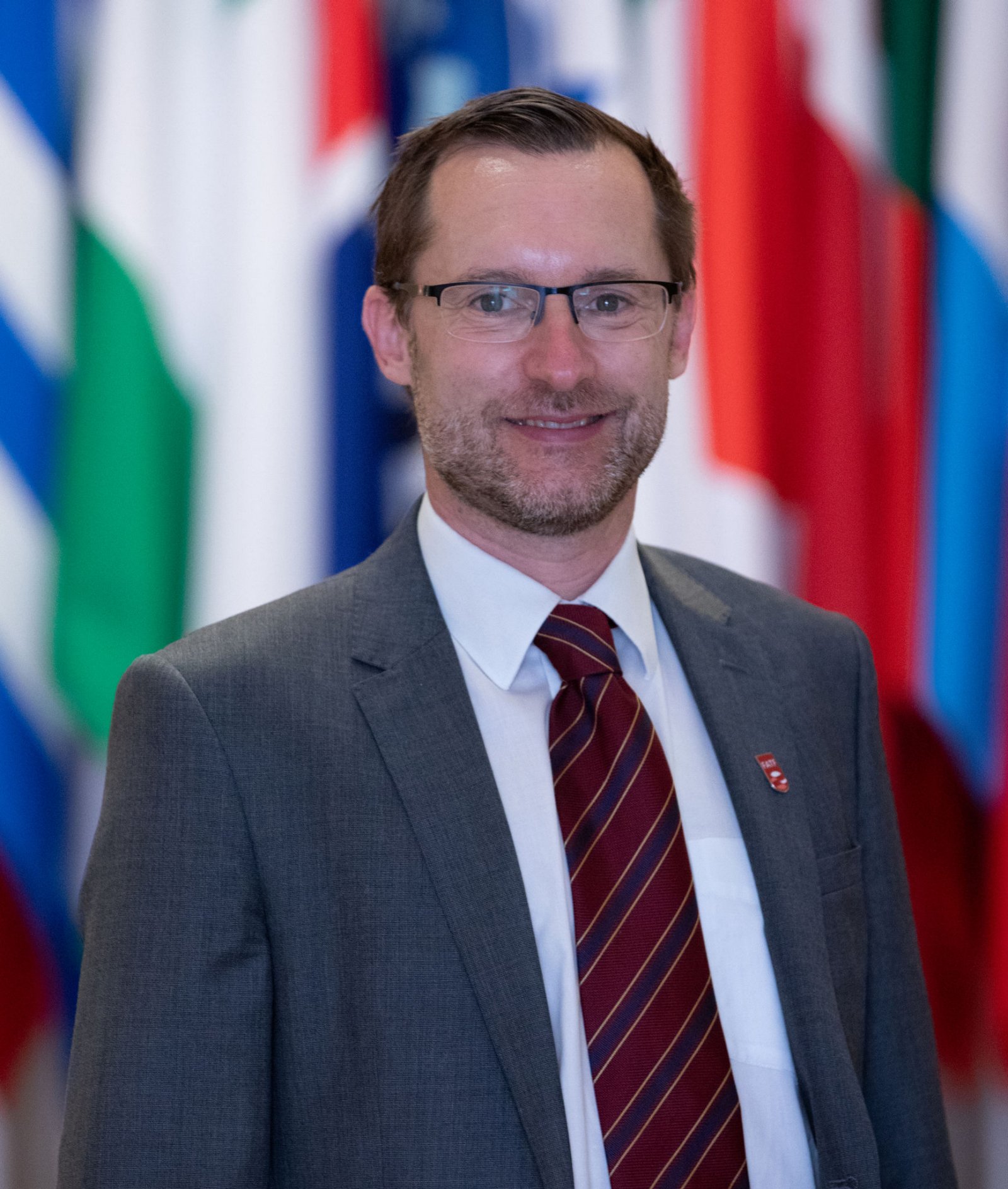
Table Of Content
- The incoming FATF President inherits a global system under pressure from fraud, digital assets, sanctions evasion and complex illicit finance networks. For compliance teams, his tenure could reshape how risk, supervision and information sharing are approached.
- From Money Laundering to Fraud, the Risk Landscape Is Expanding
- Information Sharing Becomes a Compliance Priority
- Virtual Assets Remain a Major Test
- A Focus on Effectiveness, Not Just Compliance
- What Compliance Teams Should Watch
- The Bigger Question for FATF
The incoming FATF President inherits a global system under pressure from fraud, digital assets, sanctions evasion and complex illicit finance networks. For compliance teams, his tenure could reshape how risk, supervision and information sharing are approached.
By Compliance News Desk
The next chapter of global financial crime regulation will be shaped by a familiar challenge: criminals are moving faster than the systems designed to stop them.
Against that backdrop, the appointment of Giles Thomson of the United Kingdom as the next President of the Financial Action Task Force (FATF) places a veteran financial crime policymaker at the centre of the international response to money laundering, terrorist financing and emerging illicit finance threats. Thomson will take over the FATF presidency for the 2026 to 2028 term, succeeding Mexico’s Elisa de Anda Madrazo.
For banks, fintech companies, regulators and compliance professionals, the change is more than a leadership transition.
The FATF presidency often signals where the global compliance agenda may move next. The president chairs FATF Plenary and Steering Group meetings, represents the organisation internationally and helps drive strategic priorities across a network of more than 200 jurisdictions.
Thomson arrives with extensive experience in financial crime policy. He currently serves as Director for Economic Crime and Sanctions at HM Treasury and has led the United Kingdom’s FATF delegation since 2016. He was also involved in the UK’s 2018 mutual evaluation and previously served as co-chair of FATF’s Global Network Coordination Group.
That background matters because the next phase of AML enforcement will not be defined only by traditional money laundering risks.
The pressure points are changing.
Fraud has become one of the fastest growing sources of illicit proceeds globally. Criminal networks are exploiting digital platforms, instant payments, cryptocurrencies, online marketplaces and cross border financial channels to move stolen funds at unprecedented speed.
The question facing regulators is whether existing AML frameworks, built largely around banks and traditional financial institutions, can keep pace.
From Money Laundering to Fraud, the Risk Landscape Is Expanding
One likely focus area during Thomson’s presidency will be the growing connection between fraud and money laundering.
Historically, many AML frameworks focused heavily on drug trafficking, corruption, terrorism financing and organised crime. Those threats remain central, but large scale fraud has increasingly become a major generator of criminal proceeds.
Investment scams, business email compromise, romance fraud, identity theft and cyber enabled financial crime now generate billions in losses worldwide.
The compliance challenge is significant.
Fraud proceeds often move through legitimate financial channels. Criminals use money mules, digital wallets, payment platforms and international transfers to disguise the origin of funds. By the time suspicious activity is identified, the money may have passed through several jurisdictions.
Thomson has highlighted the need for stronger international cooperation, faster information sharing and a broader response to fraud threats. In discussing priorities for the UK FATF presidency, he pointed to the need to improve coordination, modernise AML tools and strengthen responses to the laundering of fraud proceeds.
For compliance officers, this suggests a possible shift.
Fraud detection and AML monitoring may become increasingly connected. Institutions that still treat fraud and financial crime as separate functions may need to rethink their operating models.
Information Sharing Becomes a Compliance Priority
A recurring challenge in global financial crime enforcement has been information sharing.
Banks often possess valuable intelligence about suspicious transactions, but privacy rules, legal restrictions and competitive concerns can limit cooperation between institutions and across borders.
Thomson has argued for breaking down information silos while ensuring data protection supports, rather than obstructs, financial crime prevention.
That issue will resonate strongly with compliance teams.
The future of AML is increasingly data driven. Artificial intelligence, advanced analytics and network analysis tools are becoming essential for detecting complex financial crime patterns.
But better technology depends on better information.
A bank may identify suspicious activity in isolation. A network of institutions sharing appropriate intelligence may identify an entire criminal operation.
The challenge for regulators will be finding the right balance between privacy, operational security and effective crime prevention.
Virtual Assets Remain a Major Test
Another major challenge will be the continued regulation of virtual assets.
Cryptocurrency markets have matured significantly, but criminals continue to exploit weaknesses in digital asset ecosystems, including unregulated platforms, privacy enhancing technologies and cross border transaction channels.
FATF has already developed standards covering virtual assets and virtual asset service providers, including requirements around customer information sharing and risk controls.
Under Thomson’s leadership, regulators are likely to maintain pressure on jurisdictions that have not fully implemented virtual asset controls.
For compliance officers working in digital finance, this means continued attention to:
Customer identification.
Blockchain analytics.
Travel Rule implementation.
Sanctions screening.
Counterparty risk management.
Source of funds verification.
The message from FATF has remained consistent: innovation in financial services cannot create blind spots for criminals.
A Focus on Effectiveness, Not Just Compliance
One of the biggest questions facing FATF is whether countries are becoming better at achieving real financial crime outcomes.
For years, jurisdictions have focused heavily on passing laws, creating regulations and establishing compliance frameworks. But FATF’s evaluation process increasingly looks at whether those systems actually work.
Are suspicious transactions being detected?
Are investigations leading to prosecutions?
Are criminal assets being recovered?
Are supervisors identifying weaknesses before they become failures?
Those questions will matter greatly for developing economies and countries seeking to strengthen their financial systems.
A technically compliant system that produces limited enforcement results will face increasing scrutiny.
What Compliance Teams Should Watch
For compliance professionals, the Thomson presidency is likely to bring several practical implications.
First, institutions should expect continued pressure to improve fraud related monitoring and investigation capabilities.
Second, regulators may increasingly examine whether financial institutions are using data effectively rather than simply collecting more information.
Third, firms operating across multiple jurisdictions should prepare for greater emphasis on international cooperation and consistent implementation of FATF standards.
Fourth, virtual assets, digital payments and emerging technologies will remain areas requiring specialist expertise.
The broader direction is clear.
Financial crime is becoming faster, more digital and more international. Regulatory responses will need to become equally connected.
The Bigger Question for FATF
The FATF was created to protect the global financial system from abuse by criminals and terrorists. Its mandate remains focused on strengthening international standards and coordinating global action against illicit finance.
But the organisation now faces a more complicated environment than ever before.
Criminal networks are using technology, speed and jurisdictional complexity as advantages. Regulators and financial institutions must respond with better intelligence, stronger cooperation and more effective controls.
Giles Thomson’s presidency will be judged not only by the standards FATF publishes, but by whether countries and institutions become better at preventing crime from moving through the financial system.
For compliance officers, the direction of travel is already visible.
The future of AML will belong to organisations that can combine regulation, technology, intelligence and cooperation.
The fight against financial crime is no longer only about identifying suspicious transactions.
It is about understanding the networks behind them.
Categories: AML/CFT, FATF, Financial Crime, Regulatory Compliance, Global Financial Regulation, Fraud Prevention, Virtual Assets, Sanctions Compliance, Banking Compliance
Keyword Tags: .






No Comment! Be the first one.