





The Task Before Wence Nwoga and the Next Chapter for Compliance Institute Nigeria
A decade of institution building has ended under Pattison Boleigha. Another chapter now begins. As Wence Wonga assumes leadership of the Compliance Institute, Nigeria, he inherits not simply an...
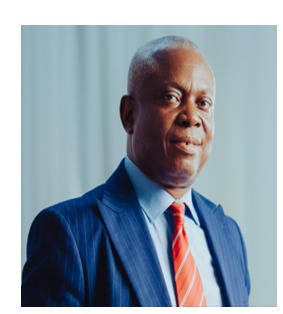
A decade of institution building has ended under Pattison Boleigha. Another chapter now begins. As Wence Wonga assumes leadership of the Compliance Institute, Nigeria, he inherits not simply an office, but the responsibility to elevate a respected national institution into a globally influential voice for compliance. Paul Uviase, Tamuno Gobiri and Adedayo Adejobi write….
Leadership transitions often reveal the true character of an institution. Founding leaders are remembered for building. Those who follow are judged by their ability to preserve momentum, deepen relevance and prepare the institution for challenges that did not exist when the foundations were first laid. As Dr. Wence Nwoga assumes office as President of the Compliance Institute, Nigeria, he steps into a role defined as much by opportunity as by expectation. He inherits an institution with credibility, a growing professional community and a clear sense of purpose. He also inherits an unfinished mission.





The first decade of the Compliance Institute, Nigeria was largely about legitimacy. It was about proving that compliance deserved recognition as a profession in its own right and not merely as a support function within financial institutions. Under the leadership of Pattison Boleigha and a committed Governing Council, the Institute evolved from an ambitious vision into a respected professional body that now occupies an important place within Nigeria’s governance ecosystem. Membership expanded, professional education matured, strategic partnerships were forged and the Institute became an increasingly trusted voice on ethics, governance and regulatory compliance.
That achievement deserves recognition, not because institutions should dwell on the past, but because every new chapter begins with an honest understanding of what has already been accomplished. The office Nwoga now occupies is no longer one of institutional establishment. It is one of institutional advancement. The challenge before him is fundamentally different from the one his predecessor confronted.


He assumes that responsibility with a profile that reflects both academic depth and practical experience. A Fellow of the Compliance Institute, Nigeria, the Chartered Institute of Bankers of Nigeria, the Institute of Chartered Accountants of Nigeria and the Chartered Institute of Taxation of Nigeria, Nwoga has built a career spanning compliance, finance, banking, corporate governance, cybersecurity, data protection and enterprise risk management. His qualifications, which include a doctorate in Development Economics, certifications in information systems auditing, information security management, enterprise IT governance and data protection, together with senior leadership roles across banking and other sectors, position him at the intersection of governance, regulation, technology and strategy. Equally significant is his relationship with the Institute long before assuming its highest office.
The compliance profession itself has entered a new era. Ten years ago, discussions centred largely on anti-money laundering, regulatory reporting and internal controls. Those subjects remain important, but the landscape has become significantly more complex. Artificial intelligence is redefining financial crime. Cybercriminals operate across jurisdictions with unprecedented sophistication. Digital assets continue to test regulatory frameworks. Data protection has become a boardroom issue rather than a technical concern. Environmental, social and governance expectations increasingly shape investment decisions. Sanctions regimes evolve rapidly in response to geopolitical tensions. Every one of these developments expands the responsibilities of compliance professionals.

This changing environment presents CIN with a defining question. Can it continue to respond to developments, or can it become one of the institutions helping to shape them?
That distinction may well define Nwoga’s presidency.
Professional institutes achieve enduring relevance not simply by producing members. They become influential when they generate knowledge, shape policy conversations and anticipate future challenges before they become today’s crises. Across the world, the most respected professional bodies invest heavily in research, publish influential reports, convene industry dialogue and provide intellectual leadership that extends well beyond certification programmes. The next phase of CIN’s evolution must move decisively in that direction.
For Nwoga, whose professional work has consistently focused on regulatory compliance, data protection, cybersecurity, anti-money laundering, corporate governance and risk management, this means placing research at the centre of institutional strategy. Having designed and delivered capacity building programmes across the public and private sectors, taught postgraduate students and facilitated executive level professional programmes, he understands that knowledge leadership has become as important as professional certification. Nigeria’s compliance environment is evolving faster than many organisations can fully understand.
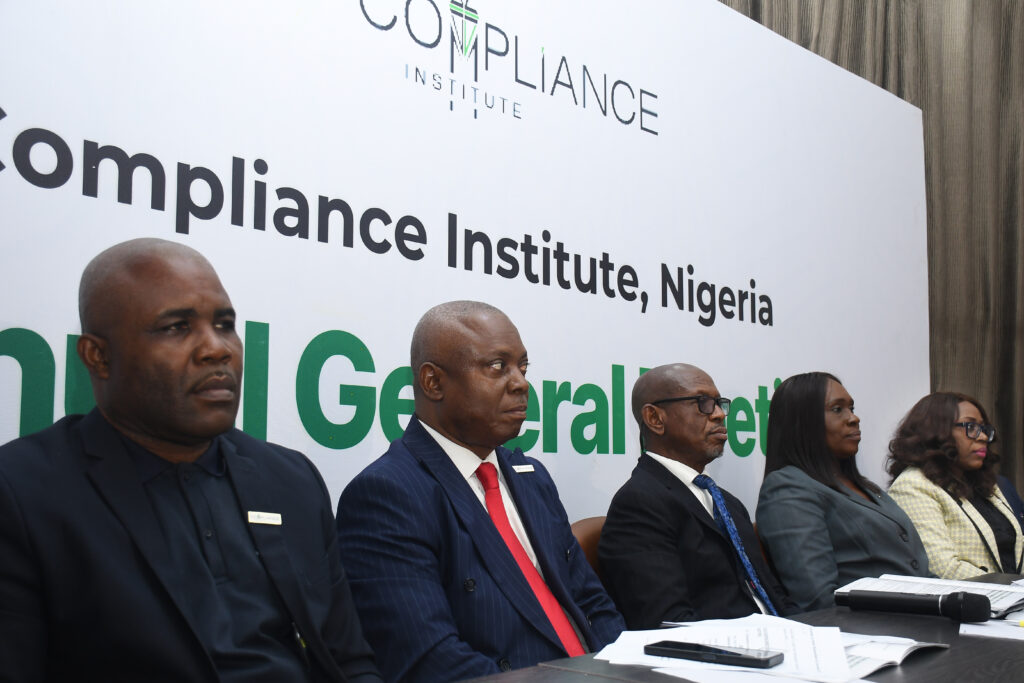
Financial technology, digital identity, virtual assets, cross border payments and artificial intelligence are creating risks that demand new thinking. The Institute is uniquely positioned to become the country’s leading source of practical insight on these issues. Producing authoritative research would strengthen its credibility, influence policymakers and provide members with knowledge that extends beyond classroom instruction.
Equally important is the question of international relevance. Under the previous administration, the Institute deliberately pursued relationships that exposed Nigerian professionals to global standards while maintaining local relevance. That ambition should now be expanded. Africa’s compliance landscape is becoming increasingly interconnected. Regulatory challenges facing Lagos are often similar to those confronting Nairobi, Accra, Kigali and Johannesburg. This presents an opportunity for CIN to become more than Nigeria’s compliance institute. It can become a continental centre for professional excellence, knowledge exchange and policy dialogue.
Nwoga’s own career reflects this increasingly multidisciplinary and international outlook. Beyond leading compliance functions in financial institutions, he has participated in major transformation initiatives, including enterprise risk management projects, technology modernisation programmes and regulatory engagements such as a successful Eurobond transaction. His experience across finance, technology, governance and regulation reflects the convergence that now defines modern compliance practice.



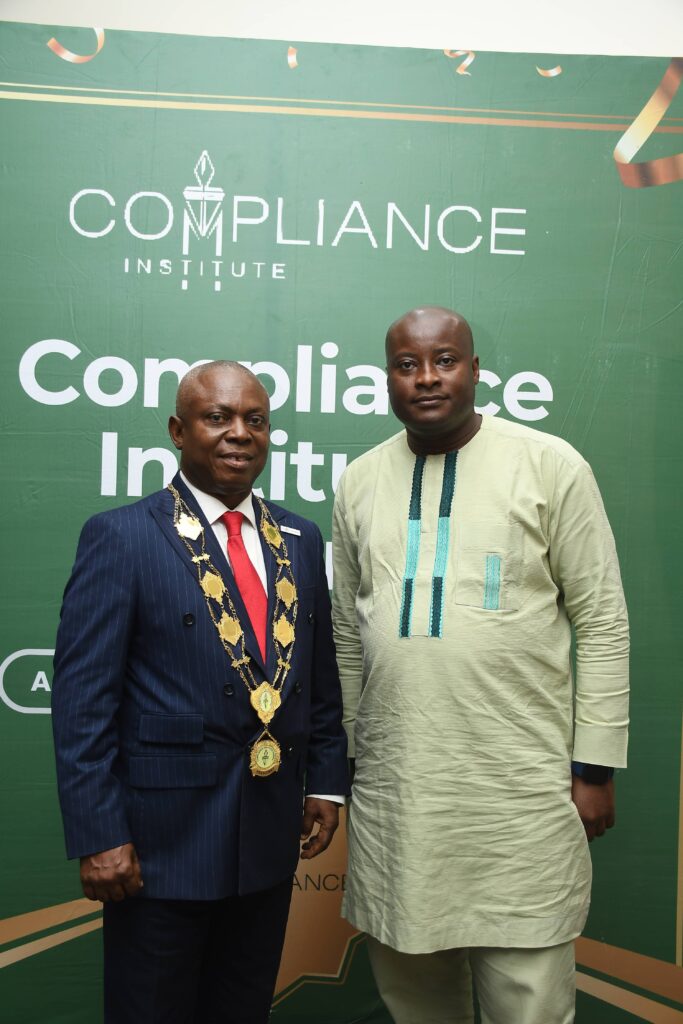
Achieving that broader vision will require stronger international engagement. Strategic collaborations with global professional bodies, universities, regulatory institutions and multilateral organisations should become a defining feature of the Institute’s next decade. Such partnerships are no longer optional. They are essential if Nigerian compliance professionals are to remain competitive in an increasingly interconnected financial system.
Technology must also become central to the Institute’s future. Professional education is undergoing profound transformation. Learning is increasingly digital, personalised and continuous. Members expect access to high quality education regardless of geography or time constraints. Nwoga’s administration has an opportunity to accelerate investment in digital learning platforms, virtual conferences, knowledge portals and professional communities that connect compliance practitioners across borders. Doing so would extend the Institute’s reach while reinforcing its relevance among younger professionals entering the field.
Another challenge lies in public influence. Compliance remains widely misunderstood outside professional circles. Too often it is viewed only through the lens of regulation and enforcement. Yet, compliance is fundamentally about trust. It protects institutions from financial crime, strengthens governance, supports investment confidence and contributes directly to economic stability. CIN has an important role to play in changing that public narrative. It should become a consistent voice in national conversations about financial integrity, corporate governance, digital trust and ethical leadership. Institutions earn authority when they are present in the debates that shape society.

There is also an opportunity to strengthen engagement with government, regulators and industry. The Institute occupies a unique position because it sits at the intersection of policy, practice and professional development. It should use that position to facilitate dialogue, contribute evidence-based recommendations and support the development of regulatory frameworks that are practical, forward looking and responsive to emerging risks. In doing so, CIN would reinforce its role as a partner in national development rather than simply a provider of professional certification.
None of these ambitions diminish the importance of the Institute’s traditional responsibilities. Capacity building, examinations, professional standards and ethical conduct will remain central to its identity. The difference is that these activities should now exist within a broader institutional vision. The next decade should be characterised not merely by growth in membership but by growth in influence.
Every presidency leaves its own imprint on an institution. Pattison Boleigha’s legacy was to establish credibility, build governance structures and create a professional home for compliance practitioners in Nigeria. Wence Nwoga now has the opportunity to define the Institute’s next chapter. His success will not be measured solely by programmes delivered or conferences organised. It will be measured by whether CIN becomes more influential in shaping the future of compliance across Africa and beyond.
History is often kinder to builders than to successors. Builders begin with little and are judged by what they create. Successors inherit functioning institutions and are judged by whether they move them to higher ground. That is the responsibility Wence Nwoga now carries.
He assumes office at a moment when compliance has become one of the defining disciplines of modern governance. His blend of academic scholarship, executive leadership, regulatory experience and technology expertise should provide a strong foundation for navigating an increasingly complex compliance landscape. Yet, credentials alone do not define a presidency. Vision, execution and the ability to build on an already solid foundation will.
Fortunately, he inherits more than an office. He inherits an institution strengthened by a decade of disciplined leadership, committed professionals and growing public confidence.
The foundation has been laid. The standard has been established. The task before Wence Nwoga is not to preserve the past, but to build a future that makes the first decade appear only the beginning.






No Comment! Be the first one.